It’s been tough go lately. I managed to find a new place to live, move most of my stuff into storage, re-align the business, loose a few team members, all the while keeping the dream alive.
I want to talk about the last one for a little bit: keeping the dream alive. At Seconds, we recently discovered a few things.
First, we indeed have built a kick ass mobile payment system. The thing just works, and it works ridiculously fast. People are very excited and using it repeatedly each month. We have grown each and every month we’ve been in operation.
Next, after a number of meetings with investors it became clear we were onto something but not yet fully baked. I kept hearing “but what market are you targeting? Seconds is helping which market become more efficient again?” This is the main reason we struggled to raised a seed round, we weren’t ready no matter how much I told my self otherwise.
Lastly, it’s tough to quit. Once you have a working product and have daily usage, it’s extremely difficult to walk away. Maybe I am programmed differently but I simply cannot quit something I have started just because it’s taking a bit longer than I originally thought.
Put all these together and what do you get? A kick ass product, not yet fully baked but its too early in the game to quit.
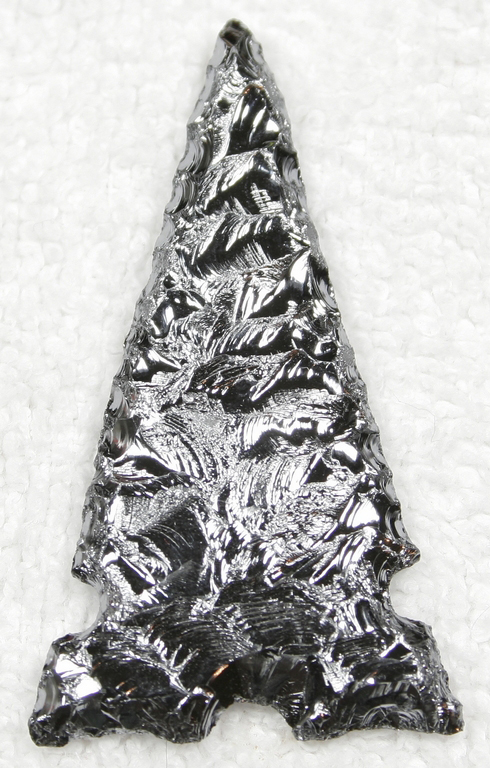
It then became clear if I was to keep the dream alive it was time to sharpen the arrow and get back in the game.
1. Redefine the vision
Seconds had to look in the mirror and ask itself “what type of payments system did it wanted to be?” We couldn’t be all things to all people so we are now choosing what specific market to zero in on and focus our energy, marketing and branding. Invert the arrow above and that is what your market focus should be. Extremely narrow at first, and only when you have nailed it with the first market do you extend your product to other markets and new customers to grow your business. It took me a while to figure out how sharp our arrowhead needed to be.
2. Re-engage the team
Anytime a team goes through challenges there will be falloffs. When sharpening the arrow a leader must revisit the commitment with each team member and determine if it’s still “go time”, or “time to go”. There’s no right answer here. All you are looking for is the maintained commitment of each member of the team. If it’s still there then re-engagement on the new direction is a refreshing feeling of excitement. If it’s time to go, all parties involved will feel better for parting ways respectfully. With Seconds, I have actually tightened the team and sharpened the edges to form a team that better fits our current development requirements.
3. Redesign the product
A new direction and tighter focus will result in needed product changes. We have been hard at work redesigning the features and functions of Seconds, focusing on the speedy payment functionality and clean user interface. Fred Wilson has a great post on determining “the atomic unit” of your product and doubling down on the specific functionality that makes up your unique product. In fact, focusing on that one function and stripping out all other frivolous features will lighten your product and create a better overall user experience.
As an entrepreneur you should always be sharpening your arrows.
The first major takeaway from Meeker’s latest talk is the astounding growth yet to be seen in smartphones worldwide. She illustrates the point on the following slide: approximately 953 million out of a total 6.1 billion devices are smartphones. Doing the math, one can see there is only a small portion, about 15% of the worldwide mobile devices, being considered smartphones. To put it bluntly: you are a minority in our world if you have anything more than a feature phone in your hand.
3G Wireless Penetration and Tablets
Another incredible observation involves 3G mobile wireless penetration. At last count, there were a little more than a billion people using 3G mobile wireless connections, again representing just a small fraction of all mobile users around the world.
Augmenting the rise in mobile usage is the adoption of mobile readers and tablets. A chart shows the rise in tablets dating back just a few short years. In Q2 of 2009, roughly 2% of adults owned tablets or eReaders. Comparing that to January 2012, where 29% of adults owned tablets, you start to see the tide rising—and fast.
Mobile Monitization Troubles
In addition to mobile growth, another data point Meeker brings forth is how the sea change of mobile drastically impacts monetization, both online and offline. Take, for instance, the difference between the time people spend using mobile devices versus ad spend on mobile. Time spent on mobile devices each week is estimated at 10% (and growing), yet only about 1% of ad spend is currently focused on mobile. Accordingly, Meeker says it represents a $20 billion+ opportunity in the U.S. alone.
In 10–20 years’ time, everyone on the planet has a smartphone, and/or some even smaller and more ubiquitous form of wireless access. Indeed, the whole notion of “online” disappears, as the Internet is woven into literally every facet of our waking life. As this happens, what company defines our identity, and becomes the gateway to every activity and every service?
The bigger business opportunity for leveraging the mobile device is to understand all the unique ways it fits into consumers’ daily life, and orient business models around and within those unique use cases. One of the most interesting monetization opportunities mobile presents is to augment the payment experience. From a previous article on mobile payments:
Virtual transactions—making payments without having to swipe, show, or display anything—will transform the payments landscape like never before. Since people carry their mobile devices with them everywhere, it makes the most sense to streamline transactions through the computer in their hands. True authentic mobile payments do not require any hardware outside of the mobile device. With cloud computing and offsite secure services holding payment credentials for every consumer, people can now make simple, quick, and easy mobile payments anywhere. As the consumer, the terminal is now in your hands.
Taking that a step further, the mobile platform is playing an ever-larger part in consumer shopping and buying processes. Even when consumers do not complete transactions via mobile, large numbers of shoppers use their phones to take pictures of potential purchases, access online reviews, compare prices, consult friends and family, locate nearby stores, add items to an online shopping list, or place an order. All of those actions can and will be augmented with business models outside of traditional display advertising.
This is a re-post from something I wrote more than a year ago…
See the lonely man there on the corner,
What he’s waiting for, I don’t know,
But he waits everyday now.
He’s just waiting for something to show.
Genesis – Man on the Corner
Disclaimer: What I am about to write is controversial. As you read please remember this does not insinuate I lack caring in my heart for human beings of all levels of society. It is merely my opinion of how a person chooses to live their life and what opportunities a person chooses to act upon. There are no right or wrongs here, just observations and thoughts. Also, it is important to note the thoughts below regard what people are choosing to do in the moment of poverty, not how they got into poverty in the first place. I anticipate differing perspectives and opinions to be shared in comments.
——————-
You’ve seen him. He’s the lonely man over there on the corner. What he is waiting for nobody knows. But he waits everyday, and he’s just waiting for something to show. The quotes throughout this article are lyrics from a song Man on the Corner by Genesis. The video is below and it’s a must listen. I recently listened to it and was shook by the emotions I felt during the song. And so I started to think deeper on the concept of poverty. I started to think about why some are rich; why some are poor; why I drive a nice car and some are stuck wearing the same clothes every day. I asked myself, “what could possibly be the difference?” And why some people find themselves on a street corner just waiting for ‘something to show’. You may differ in your perspective on poverty in this country, but I believe poverty and entrepreneurship are distant cousins.
This man chooses to sit on a corner and hold a sign. He has nothing (at least from what we know) and feels his best option is to do nothing, look desperate, and ask for money. His value proposition rests on the morality of another person feeling remorse when they pass him, forcing themselves to face their inner soul and ask “am I a bad person if I turn my head and don’t give him money?” He wants to be given something for nothing. He takes from the world, but does not give in return. He offers no product in which a dollar value can be placed on it and he has no service to offer another. He just sits and asks for help. He has chosen to do nothing.
And nobody knows him,
And nobody cares,
‘Cos there’s no hiding place,
There’s no hiding place – for you.
Genesis – Man on the Corner
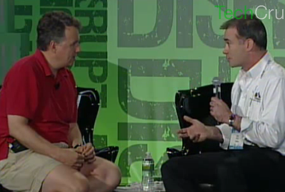
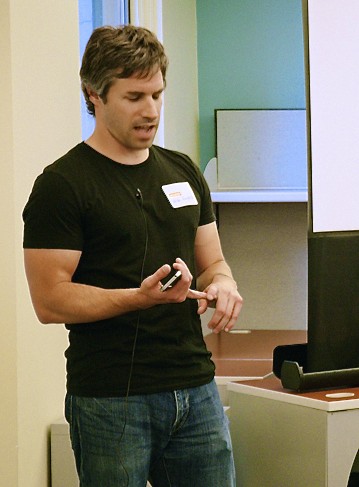
I will juxtapose the man on the corner with the man in the hot seat. What is the difference between the man in the image above and the man in the image to the left? The man in the hot seat has, in theory, the same intentions as the man on the corner. He is asking for money and he is looking for help. He believes he cannot make his dreams come true unless he receives a gift from someone else. His future, indeed, depends on another persons good faith. But that is about where the similarities end.
For those have not picked up on it, the man in the image at left is a person pitching Paul Graham (an investor in the red shirt) on a business idea in hopes he will invest money towards his vision. But in contrast to the man on the corner, the man on the hot seat does not believe in handouts or in receiving something for nothing. He believes in creating value through enterprise. He knows that if you have something, anything – a product, a service, a distribution channel, knowledge, land, a water source, natural elements, really anything – you can offer it to another for a profit. He chooses to live his life working hard to add value to society, not take away from it. He has taken ownership and responsibility for his life, understanding he can choose to do anything he wants with it. But with that decision he knows it is up to him, and only him to make it happen . The man in the hot seat is an entrepreneur.
Looking everywhere at no one,
He sees everything and nothing at all – oh.
When he shouts, nobody listens,
Where he leads no one will go – oh.
Genesis – Man on the Corner
At times entrepreneurs find themselves looking poverty straight in the face. It might be in a situation where their income (or lack thereof) cannot fulfill the demands of their debts, whether it is a roof for shelter, food for sustenance or gas for their travel. They choose to risk their current stability for the return of a better life. There is an eerie aspect of entrepreneurship and I think it’s due to its distant cousin of poverty. The mere thought of poverty can be the biggest moving force an entrepreneur receives. It is incredibly scary and immensely motivating at the same time. Only in risk one really experiences reward. So we endure the possibility of poverty for the reward of wealth.
For the record, I am quite privileged to have a roof over my head, food to sustain my health and a nice car to drive each day. I am doing fine but at this point in my life I hover right above to line, choosing to forgo a stable job for a chance to determine my own destiny. Also for the record I have stared poverty in the eye and experienced what it could be like. I have had my electricity turned off and creditors calling my phone for not paying bills on time. I have had to dig change out of my car to buy a $.99 hamburger. As a late-twenties ambitious entrepreneur who hadn’t “made it” yet – old enough to be established on my own but young enough to have not built sustainable wealth for myself – it’s was a tough slog. I’m a tweener as they call them.
When you leave a stable financial situation and leap towards your dream, you risk falling into poverty. Or should I say you learn how to operate with poverty as a strong possibility in your life. You learn how to acknowledge where your responsibilities lay in the equation of life. You start to realize your decisions will make or break you. It is through this experience I start to think about poverty in a new way. Whenever I drive by the man on the corner, I cannot help but think: “I could be out there right now. That could be me. As I am sitting here in my car it is unbeknownst to me how I will pay rent next month since I just took the leap and started my life as a full time entrepreneur. But I will find a way. I will find a way to not only pay rent but to grow my business as well. I will choose to do something, not sit and do nothing. ” I argue it is at this point of realization you really become an entrepreneur.
So Here’s the difference between poverty and success:
Man on Corner waits; man in hot seat acts
The man on the corner waits for something to fall into his lap, hands or box. He takes no responsibility for his actions and believes by just waiting, help will find it’s way to him. The man in the hot seat acts, on everything. He believes it is through doing something, anything really, value can be created. And when he creates value, wealth will find it’s way to him. It is by doing and acting we entrepreneurs find success.
Man on corner values nothing; man in hot seat values everything
The man on the corner values nothing, not even himself. If he did value himself, he would be doing something other than sitting desperately on a corner asking for a handout. He has lost the ability to place value on anything in his life, thus has nothing. The man in the hot seat values everything, especially himself. He has such a belief himself he is asking others to invest large sums of money into his enterprise. And he believes so strongly in himself he knows he can bring the investment amount times X back to the investor. It is through immense value in self an entrepreneur will be successful.
Man on corner plays victim; man in hot seat plays hero
The man on the corner has ultimately bought into the victim mentality, meaning their outer circumstances determine their inner self worth. A victim does not take responsibility for actions and outcomes, therefore they do nothing to change their circumstances. The man on the hot seat understands it is he who determines his destiny and thus plays the hero. A hero understands they are unique and hold power to orchestrate a positive outcome for all involved. By believing you as an entrepreneur are the hero, your self worth has nothing to do with outer circumstances. This frees you up to act according to your vision and experience success.
I am not sure Phil Collins would agree with my interpretation of Man on the Corner but I am curious if you do.
As I was chatting with another CEO friend of mine tonight he said something that caught me off guard.
He said:
“I was talking with another person and we determined as a CEO you push your people in just the right way to get things done… you’re like a coach. We realized that is a good thing and need to do more of that type of leading in our startups”
Some of you may be familiar with my history so being referred to as a coach might not be much of a surprise. But in light of the context in which this conversation took place it was a surprise to me. My CEO friend is farther down the startup path than I am and I tend look to him as a mento-friend. I appreciated the kind words and thanked him accordingly.
Yet this begged the question: what is a startup CEO anyway?
My take is my friend was exactly right: a coach.
Okay Nick, then what is a coach? A coach is a Leader. A coach is someone who is responsible for the outcome of the team – win or lose. The coach determines who plays on the team and who gets cut. Coaches push players to the brink and guide them in achieving levels of success previously thought impossible. Coaches know the most about each opponent and dictate the playbook accordingly. And most important, the coach evaluates each and every player, helping them identify where they are weak and exploiting where they are strong.
Ladies and gentleman – that’s a leader.
Given I am still at the beginnings of the exciting growth of Seconds and my personal journey as a CEO I will not take any credit of success – history will be the judge on that one. But I couldn’t help but notice myself in the exact moment of this conversation grasping a few lessons regarding leadership I think are important for CEO’s at the startup level.
Face it, you ARE a coach
Like it or not, as the CEO you are the coach. This should not be taken lightly and in the wrong hands it could lead to disaster. One of my favorite quotes from author John C. Maxwell is “everything rises and falls on Leadership.” The statement could be viewed as general toss-grass-in-the-wind pontification. I tend to just take it at face value – life happens because leaders make things happen. Or they don’t.
Leaders (CEO’s) determine the pace, structure and culture of a young startup company. Understanding this should weigh heavily on a CEO’s heart and mind as they relentlessly plow forward. What you say and what you do will hang like London fog within your small company. You should think twice about each and every word, positively and negatively directed toward cofounders or customers.
And whether you know it or not, your team is looking right at you to make decisions. These decisions can be as mundane as the color of text on your site and as crucial as choosing to relocate the company or adding a co-founder. Great leaders consistently make the right decision, and even better, teach and empower others to make the “right” decisions for them.
You are also a player
One of the toughest things about being CEO is the fact that you are a player – equal with other team members – at the same time being the coach with added intangible responsibilities. Highly self-aware CEO’s intuitively understand this dynamic and can navigate the waters accordingly. Some days you need to get your hands dirty with specs, feature fixes and other product oriented tasks – things you are probably drawn to more naturally as you flex your engineer or designer muscles. Other days you need to put your coach hat on to lead your team by dictating the vision, talking to investors, evaluating opponents, interviewing new hires, connecting with media or visiting customers.
These things may not come natural to you but believe me they are essential. I am convinced the drastically high level of failure experienced at startups is due to a failure of leadership. Delineation too far in any direction from a leader for too long spells doom for a fragile company being built on a hope and a prayer. If “everything rises and falls on leadership“, startup success must surely follow the same principles.
Leadership is in short supply
My friend mentioned something interesting as we were talking. He said “I just don’t feel I can push them very hard… I guess I have that Seattle passive thing going.”
I said, “look, people actually want to be led.” And it’s true, (most) people naturally want to be told what to do. Quite frankly, they are scared to make any important decisions so they naturally default to having someone else tell them what to do, in case it doesn’t work out and they have someone else to blame. That’s the harsh reality view. The more positive view is people want to be led and inspired, hoping that the time they are taking away from other important areas and people in their life is actually going to turn out to be something positive.
Unfortunately we have too many people more concerned with not pissing people off then accomplishing the current mission. Appropriate and authentic leadership is definitely in short supply. I am not advocating being a jerk or other unmentionable words. I am calling for people to get more in-tune with the dynamics of human nature and motivation. This is not rocket science, it’s all right there at the intersection of psychology, sociology and biology. Notice how I didn’t mention technology…
I also noted to my friend the most common reaction from anyone who worked for Steve Jobs. I said “dude, most people have said Steve Jobs was a jerk, an asshole, and generally not enjoyable to be around. They also follow that statement up with the fact that he actually inspired the best out of them and they were somehow able to perform and deliver well above levels they ever thought possible.”
That’s leadership. Steve Jobs might not have been best friends with most people he worked with but boy did he get the best out of them. Indeed, he was their coach.
Recently I have been using Craigslist more often and the other day I just sat back and took a moment to appreciate what the old gray haired “startup” has done. It has a achieved a virtual monopoly in the classified space all the while still looking like it did the first time it hit my radar back more than a decade ago.
After further thought, it occurred to me I could take away a few lessons as I continue to build Seconds.
1. Always make your product SUPER SIMPLE to use.
Today, it’s all about user experience – or how easy and simple a product is to use. Notice how using Craigslist borderlines on dummy-proof. That is how your product should work if you want millions of people to use it.
2. Don’t make your users do more work than necessary.
All the flashy designs and information buried in layers of profiles, accounts, tabs, windows just wastes my time as a user. With Craigslist, you go to the page and search through listings, clicking on ones you like. The amount of clicks to get something done has always stayed as minimal as possible.
3. If it ain’t broke… don’t fix it.
Although I am a proponent of innovation and forward product movement, Craigslist is an instance where they clearly nailed it and haven’t had to ‘expand’ into other markets. I am convinced staying the course is why they have a natural monopoly in online classifieds.
4. Create a BRAND.
If you are going to move, what online site do you always check? Need another job or searching for a side gig? Looking for someone to build you a website? Even though there are numerous sites that are arguably ‘better’ than Craigslist, millions of people still trust they will ultimately find what they need with Craigslist. I don’t see this changing for a while….
So, even as Craigslist is starting to gray a bit, you better believe there are some lessons to be learned on how they have stayed on top.
I had a few great conversations this morning and although they both happened independently there was a similar theme to the conversation.
I found myself thinking “I would rather be a player on the field than sitting on the sidelines.”
We were talking about how its such an awesome time in our society and such a great time to build a technology company, and the thought just hit me. I don’t want to be 50 yrs old siting there reminiscing about how back when I was 20 people started walking around with these things called cell phones.
“Son, back in my day them people used to dial a number and actually talk to someone through that there handset” I imagine I would be saying to my kids. “now look at all the things you kids do on those damn things. If I would’ve just been a little smarter and started something of my own I would been a millionaire… “
NO. I would rather tell my kids “…. and you know what, I chose to jump into the game and ride the wave of innovation rather than watch it go by. And It’s the been the best decision I ever made!”
The Player
The Fan
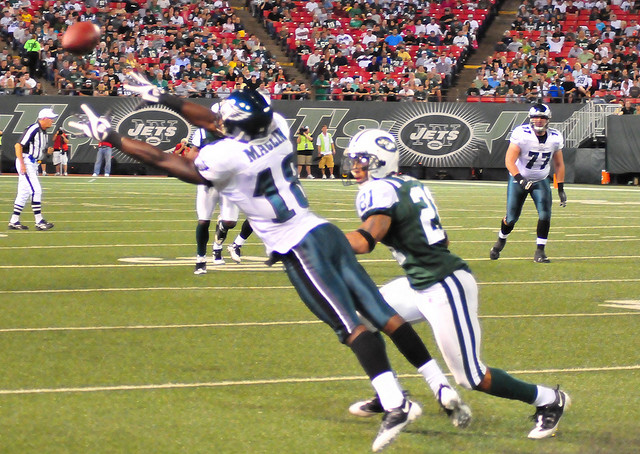
Being a player means actually getting your butt off the sidelines and into the game. It takes a lot more energy for an athlete to play in the game than for a fan to sit a watch. And you wonder why athletes are paid so much money? Ever try to get out in front of millions of people and catch that touchdown pass before it flies by your head in a split second… its tougher than you think.
It also takes courage to put yourself out there and compete in the game of business. Yes, you might fail. Yes, you will probably screw up the play.
Yet, it’s 100 times better than being a monday morning quarterback like all media outlets tend to do. And at least you are out there making something of yourself and hopefully adding value to the world.
It seems funny to me how crazy excited and into professional sports some fans get. What do they actually gain when their team actually wins? Besides beating the Vegas odds, not much.
Being a player is tough but it’s also way more exciting. Have you ever thought about what happens if you actually succeed? Who knows… but indeed it will be more than the satisfaction of your team beating the other team on any given Sunday.
Look at those two images and ask yourself which one you want to be.
How we interact with computers—and to an extent the rest of the world—is changing. As you know, we no longer log on or are required to go to a computer to get online. We now carry computers with us all day, every day; we are always connected.
We do not have to reidentify ourselves and re-enter our credentials each time we go online. And with the inception of Siri, along with other crude artificial intelligence (AI) interfaces, it is now apparent that we will leverage new blends of AI and intelligent data systems integrated within our mobile devices to create very personal consumer experiences.
These technologies and more will drastically change our purchasing experiences. I see a future where the specific mobile device you carry doesn’t have any bearing on how you make a mobile payment. Take simple text, for example. It is fair to say that text messaging has taken over as the most common form of digital communication on the planet, with 6 billion capable devices and more than 8 trillion messages sent in 2011.
But what if SMS and messaging technologies were not only created for basic communications, but for commerce as well? Imagine being able to say things like “send a message to the coffee shop telling them I will be there in 10 minutes and I will have the usual,” and by the time you get there, your correct drink is sitting on the counter, already paid for.
This is not too far off. Actually, the technical requirements are manageable, and the right pieces just need to be put in the right places. The next few years will bring a fundamental shift in the economy as merchants and business adopt this popular method of communication and use it as a new form of commerce. It is already being accomplished through simple text, voice, and gestures, thanks to natural language processing within your mobile device.
Personalization will also become prevalent and is another key component in the future of payments. Today, most merchants still require voice calls to communicate with them; when it comes time to transact, the customer must actually be present with cash or credit card in hand. Think about how far brick-and-mortar retailers need to go to catch up with the e-commerce world. Even today, when I call a local merchant I’m asked to identify myself and to read my payment information (aloud) if I want to make a purchase.
How secure is that?
Interestingly, this lack of personalization does not change when I am present. As I walk in the door, the merchant has no idea who I am, how many times I have visited that location and what my purchase history there might look like. In a word, these retailers are ignorant. They lack the necessary and vital information to not only improve their operations but also make my customer experience much, much better. And why do I still need to stand in a line for them to swipe my card and write my signature before I leave?
A whole new world of possibilities opens up when personalized connections between customer and merchant are made available through mobile technologies and artificial intelligence. Customers will be able to quickly find and interact with a merchant, requesting more information or making purchases when and where they feel most compelled. Since identification and payment credentials will have already been verified and stored securely in the cloud, transactions then become frictionless. Merchants are not only afforded a more efficient method of communications and transactions, but also a unique perspective on each customer and a clearer picture of their entire customer base—in real time.
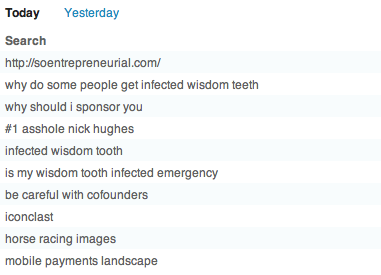
According to my stats today, someone is searching my name with the words “asshole” associated with it.
Actually, according to this person I am the worlds #1 asshole! See for yourself down below.
I not sure what I did, or if they are actually looking for Nick Hughes – the entrepreneur – as being the #1 asshole. Surely I’m not the only one named Nick Hughes in the world. Right….?
Note to the person searching for asshole me: I’m sorry, it’s just been “one of those months.” But hey, at least I am #1 at something!
An interesting side note is the amount of wisdom tooth searches you see on the list. No joke, it been happening every day since January. People must really have issues with their teeth and are looking for a little wisdom from someone who has dealt with them before, and lived to tell the tale.
Go ahead, poke around my blog and decide for yourself if I am the #1 asshole they were searching for.
While doing some research for a different post I came across this golden nugget from Paul Graham. His post was titled What startups are really like – and it’s the truth. In it he describes how he sent all his founders an email asking what surprised them about starting a startup. Their number 1 response was around cofounders. Boy can I relate!
1. Be Careful with Cofounders
This was the surprise mentioned by the most founders. There were two types of responses: that you have to be careful who you pick as a cofounder, and that you have to work hard to maintain your relationship.
What people wished they’d paid more attention to when choosing cofounders was character and commitment, not ability. This was particularly true with startups that failed. The lesson: don’t pick cofounders who will flake.
Here’s a typical response:
You haven’t seen someone’s true colors unless you’ve worked with them on a startup.
The reason character is so important is that it’s tested more severely than in most other situations. One founder said explicitly that the relationship between founders was more important than ability:
I would rather cofound a startup with a friend than a stranger with higher output. Startups are so hard and emotional that the bonds and emotional and social support that come with friendship outweigh the extra output lost.
We learned this lesson a long time ago. If you look at the YC application, there are more questions about the commitment and relationship of the founders than their ability.
Founders of successful startups talked less about choosing cofounders and more about how hard they worked to maintain their relationship.
One thing that surprised me is how the relationship of startup founders goes from a friendship to a marriage. My relationship with my cofounder went from just being friends to seeing each other all the time, fretting over the finances and cleaning up shit. And the startup was our baby. I summed it up once like this: “It’s like we’re married, but we’re not fucking.”
Several people used that word “married.” It’s a far more intense relationship than you usually see between coworkers—partly because the stresses are so much greater, and partly because at first the founders are the whole company. So this relationship has to be built of top quality materials and carefully maintained. It’s the basis of everything.
This hit home given the fact that I am going through this issue currently. I have never been married but it really does feel like a divorce. Respecting the unnamed (and by no means is this a personal attack), I can only tell you how disappointed I am in this individual. And maybe I am just disappointed in the overall outcome but I can’t help but be bothered at how it ended, with one of us making a B-line for the door once it was obvious this was actually going to take some hard work. For the sake of our “kids” it’s a good thing I am still around to help them grow and mature.
Let this be a lesson to all entrepreneurs and silicon valley wannabe founders out there:
Life is tough and unfair.
Startups are a hell of a lot tougher and more unfair.
Most ALL startups and iPhone applications DON’T GO VIRAL overnight. They take a shit ton of work and thus require a shit ton of commitment.
And know this: the founder who stuck it out and eventually grew a company to be large and successful is more wise, more battle tested and way more respected in the community than an overnight success who usually had no idea why he was successful. That person will fail to repeat it when he tries again because as an overnight viral success you don’t understand what worked and what didn’t. It just happens.
The time-tested individual builds lifelong skills along with a treasure trove of wisdom he can then apply to any other endeavor with a high potential of success. So if you are a founder I would suggest you swallow the pill and make longterm commitments your goal.
I sit at a crossroads of sorts. Let me just review what I have in front of me, the pressures lurking over my shoulder and nudging me to get on with it already.
Moving – due to a previous group decision with my current roommates it’s time we all moved on and need to find another roof – by end of JULY.
Company – Seconds, the company I started last fall with some friends is starting to take off but requiring more from me every day. This is both uber exciting and uber challenging.
Community – Recent events have elevated me and my company in the startup community. Along with the attention comes pressure to succeed. I both fully embrace it and yet fear it (for obvious reasons).
Investors – still fuzzy on this one. Unfortunately it leads to…
Bills – Bills, bills and more bills. They are starting to pile up and bother me. Is this what we were put on earth to do? Pay f-ing bills??
Girlfriend – not even a chance right now.
Friends – not enough time…
Family – again, where does the time go…?
You see, being an “up and coming” entrepreneur is pretty damn hard. It can be summed up by the following equation:
Entrepreneur = No Idea Where You Will Be Or What You’ll be Doing In A Month.
I am not joking. I have no idea where I will be living in just 30 short days. And I have no idea what I will be working on… I hope it’s Seconds, we have some pretty sweet things coming down the pipe and I can’t wait to roll em out. But, there are no guarantees and a brotha’s gotta feed himself. Until someone (or a few) step up, look me in the eye and tell me they believe both in my vision and that I am the leader who can make it happen, the odds are REALLY not in our favor.
I suppose once things do take hold – once I cross the chasm and actually make it – life will get a little easier. Although I imagine my petty issues will get replaced with other, more important ones like dating, marriage, kids, house, school, corporate, etc..
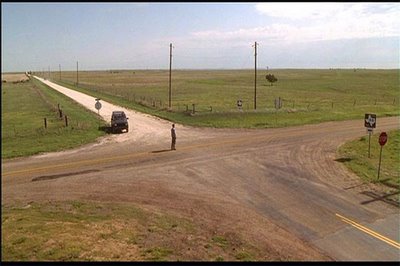
The image in this post is from the last scene of one of my favorite movies, Castaway. In it, Tom Hanks plays a character named Chuck who’s plane crashes in the ocean and he is the lone survivor, left on a deserted island to fend for himself. Amazingly, he continues on living for about 4 years until he musters up enough energy to actually build a raft and set sail for whatever the sea has in store for him. Strange as it is, you sense as the movie progresses he feels he has nothing left to live for. He decides launching the boat and seeing what happens is better than life alone on the island. Ultimately he is found and brought back to reality – a reality where everyone else from hist past has moved on with their life, including his fiancé Kelly.
So back to the image from the end of the movie. There he stands, at a crossroads in his life with no real pull any which way.
Actually, that is not exactly the whole story. The plane he was on at the time of the crash was a FedEx cargo jet carrying many different packages from one continent to another. After the crash and as he initially washed up to shore, he saw some packages on the beach. When he picked this one up he noticed some Angels wings nicely drawn on it. Believing there was more to this package, he kept is a guiding icon for his survival and also committed to return it to the sender once he got back.
That is why he was standing at the intersection of those 4 roads that day. He had dropped off the package and then pulled over to decide what direction he should go next when up pulled a truck with a beautiful woman asking if he was ok. As she drove off he noticed (once again) the wings drawn on the back of her truck. The camera pans his face… and then the movie ends.
One can only speculate where he decided to go next, but pretty good bet he was pulled the direction of the woman and the angel.
And that is where I find myself currently. I stare at quite a daunting crossroads but feel deep down my intuition is pointing me the right direction. My gut tells me I haven’t been wrong these last years as I have been diligently working towards the opportunities just now opening up and taking shape. Sometimes you just have to withstand unbelievable challenges to get to unbelievable outcomes.
As the movie ends and you see Chuck’s face, you get the feeling he knows he wasn’t wrong believing his survival of over 4 years alone on that island wasn’t all for naught.
SURF Incubator recently held their launch party at the offices in the Exchange building on 2nd and Marion. It was a great night with many lasting memories, the biggest being the pitch competition. Ten different founders each took the spotlight and had 90 seconds to pitch their startup, with the audience voting at the end for their favorite, or the one with the clearest value proposition.
All the participants deserve recognition and needless to say there will be some great stuff emerging out of SURF for years to come. But as I look back on the experience that night, a few things become clear and I felt I needed to get them out before they fade away down stream like most other good thoughts tend to do nowadays.
I discovered those 90 seconds taught me more than I ever would have thought a small collection of seconds could. Some of the lessons were clear as day in the moment, and some took a few days to really sink in. Here’s what I found:
Deliver
Back in high school I played soccer on a team (West Valley – Yakima) and for a coach that will both go down in history as one of the best. We were nationally ranked, in the state championship game all 4 years and won 3 of those times. It was an amazing dynasty and a truly talented team. Whenever I think back on that experience, one of the main things I remember is our coach would have us 1) determine and publicly state on the outset what we will accomplish that season and 2) have us memorize and repeat certain statements throughout the season.
One of those statements was “I come through when I need to” and it has stuck with me to this day.
What does that statement actually mean? My take is it’s a commitment to deliver in the moment. There are certain times in your life you find yourself in a binary situation. Either I deliver on this (whatever it is) and X will happen, or I don’t deliver on this and Y will happen. Back then it was scoring goals and winning state championships. But today as a CEO, it could mean company existence, other people’s jobs, millions of dollars and possible notoriety in the community. As I stood up there last week it became crystal clear the difference between successful people and unsuccessful people is simply a matter of delivering when the time calls for it.
Speak with them in mind
Whenever you are talking to a group of people it’s probably a good idea to assume they know very little. This is not a “I’m smarter than they are” comment (trust me, that’s not the case here) but more of a generalization of the crowd. Even at the SURF pitch event, where the average person at least knows something about technology, it’s just a fact that getting technical is not going to come across well.
In this instance, the crowd was the judge so if winning them over is the goal you must talk from their point of view. Clearly describing how your solution benefits their life goes a lot farther than a basic technical description of the product.
To all the engineers out there, sorry to burst your bubble but most people don’t want to know HOW it works. They want to know WHY it works. People are naturally emotional and mostly irrational. They are very selfish inside and want to know how things benefit THEM first and foremost. If there is no connection within, there will be no clear value proposition to them.
I realized this is as true in a pitch competition as it is in the overall business world. Lacking a clear value proposition – one that can be quickly understood and easily shared with others – is the death of many startups.
Have fun
I don’t know about you but I have noticed a drastic increase in pressure, speed and intensity to my life. That might be the startup roller coaster I jumped on last year but as I look around I see it with others too. Are our mobile devices driving us insane? Does the habit of swiping and checking if someone has messaged us or tweeted something useful really make us happier? I have a creeping suspicion the always on, always wired, running around needing to do this or that lifestyle is truly messing with our psyche.
For those reasons and more I have really tried to embrace the have fun mentality. I do believe you can build a great, successful startup and still have fun. If you see me around you will probably notice a smile on my face. This is not by accident. I really try to bring myself to smile, say hi to people, shake hands and see the better part of life in others. Life is just more fun that way.
The night of the launch party and the pitch event I noticed a lot of the other participants nervous, which in reality threw them off their game. I consciously made an effort to acknowledge my ‘fight or flight‘ response, but rather than let it get to me I embraced it. I let it in, leveraged it to help me be more in the moment. I used it to show my passion and deliver on point. I actually said to myself, “Nick, look around man… this is fun!” (OK, a few beers didn’t hurt to calm the nerves either but I digress).
It’s amazing what you can learn in just 90 seconds. I know these life lessons will stick with me forever and hope they might make a difference in your life as well.
What a great launch party SURF Incubator had last week. More than 300 people attended the event. It was awesome. We hung out. We drank. We socialized and networked. We even had a pitch competition, where 10 chosen founders from SURF startups had 90 seconds to explain their concept to the crowd.
The attendees voted after everyone was done.
And we won! Seconds wins 2 tickets to fly down to San Francisco to attend the DEMO conference in Oct.
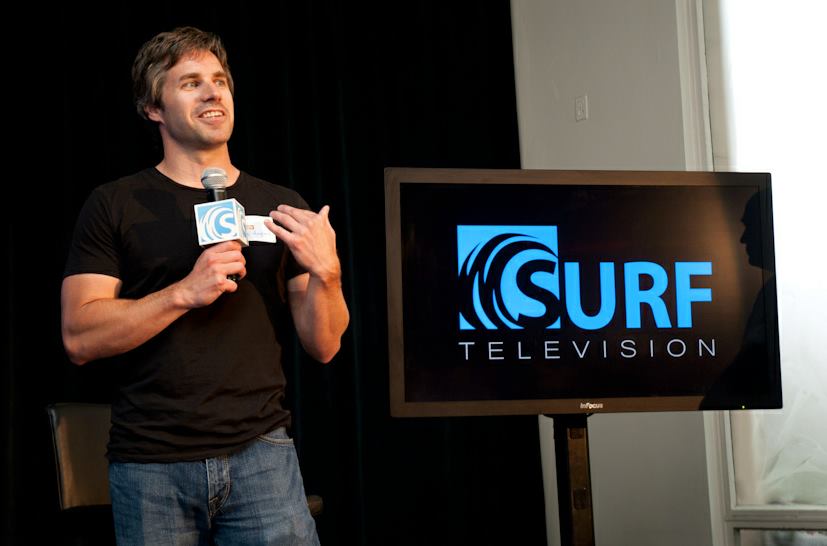
Here’s a video of my acceptance speech, where I am not totally sure at the moment I knew exactly what to say… but deflecting my own praise and edifying SURF seemed to be what instantly came to mind. When in doubt, edify the organizer.
(my portion starts about 4:30 into the video)
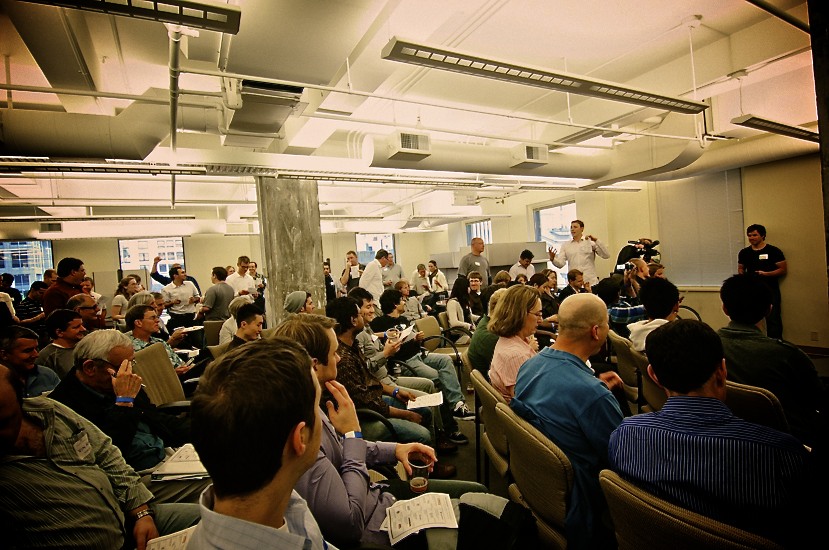
Below are some images from the event and to find more pictures: bit.ly/SURFphotos
I keep having a reoccurring problem. My Orca Card – Seattle’s version of the public transportation pass – seems to run out of money a very inopportune times. On my way to an important meeting downtown. Balance $0.00. Getting on the bus to go home later at night. Balance $0.00.
To keep in better control of my finances I choose to not have it automatically refilled each month, so I am at the mercy of knowing how much is on my card at any one time and if more money is needed, I must take time out of my day to go put more on it. We have learned the majority of cards in circulation are not automatically refilled.
I either have to go online and pay, which takes 24 hours to process. Or I have to walk to a physical location around town and make a payment at a kiosk. It sucks.
Why can’t I just pay on the fly and put money back on the card?
Why can’t I be notified if my balance is getting low?
Others around Seattle have this problem, I know this because that is how we were pointed toward initiating talks with Sound Transit. I have to believe others in additional metro areas around this country are frustrated by the same inconvenience. That is why we are now starting to work with Sound Transit on a solution involving mobile payment in Seconds and a pilot is set to roll out in the coming months.
Below is a video of how it works. Pretty smooth, eh?
I wonder if anyone in San Francisco, New York or any other metro area would want to refill their transit pass in Seconds?
I just (re)discovered this Steve Jobs keynote as I was doing some preparations for an upcoming Seconds demo.
It’s amazing.
Not only is it a perfect example of how to pull off a flawless demo, but it also occurred to me that this unveiling of the iPhone was a once in a generation event. It’s hard to overstate the impact the iPhone has had on our world. The introduction of the iPhone completely changed the mobile landscape, bringing smartphones into the mainstream at the same time setting the bar for Andriod devices and other smartphones.
It also pretty much paved the way for the iPad, which arguably is the fastest adopted new device/technology in history.
I have those quittin’ thoughts every know and then. Even the ones at the top think it’s ok for Startup CEOs, to be ‘Scared Sh*tless’ Sometimes.
CEO coach Jerry Colonna says: “I encourage people to own up to the fact that they’re figuring it out, that you’re inventing new things, and that sometimes you’re going to get it wrong. When you admit it, it makes it OK. No one has gone to school to be a CEO–you don’t learn this except by getting in there and figuring it out.”
That’s damn right: No one has gone to school to learn how to be a CEO. The lessons happen each and every day and it’s scary as sh*t.
I have been at that point many times, and currently going through a pretty challenging stretch as Seconds matures from an infant startup to a growing but clumsy kid.
I have been at the point of not being able to pay my rent on time.
I have had to “eat light” some nights. In fact, I have not even been able to eat at all because there was no money left. I have had to ask myself many times, “is this really worth it?”
But what do you do when you have these thoughts of quitting? How do you forge forward towards building your dream and making things happen?
You ask yourself this:
How would I think about myself in 50 years if I give up now. Take the easy route and go get a normal job or do something else? Will I be proud of that decision and the person I became?
Or would I be more proud of myself because I dug down deep, knowing most people just give up way too easy. How about putting one more foot in front of the other, forge ahead and make that extra phone call or email? Who know’s, you might just be one more at bat away from a home run.
Hey Business Insider, is this really appropriate on a tech media site? I know it’s in reference to a predominant and storied Silicon Valley VC firm, but I would imagine these people have lives as well and probably want to be left alone.
This is something I would expect from the magazines at the checkout counter at the grocery store, not a well respected resource for technology news. Being a contributor to Business Insider, this disappoints me.
The unofficial mantra at SURF is: Get inspired. Explore ideas. Start companies. It’s crazy how you feel it the moment you walk through the doors. Although SURF Incubator opened its doors at the end of April, they were busy accepting startups and inviting them to join the party even before the April 30th opening.
What once was a quite space with more empty desks than people walking around has now turned into a bustling center for early founders and tech startups. Somehow I feel a lot more at home in SURF than I ever have at coffee shops or other temporary offices around Seattle. More than 25 startups have joined the team and remaining spaces are quickly being claimed by others. In fact, there is so much interest they doubled the tenant base over the last 2 months and Neil Bergquist believes “with about 150,000 square feet of vacant space in this building there’s no reason why we can’t take all this space.”
It’s now time to have a launch party and make the launch official.
The night is dedicated to Seattle’s startup community and specifically to (us) entrepreneurs who are taking the risks necessary to advance our vibrant ecosystem. It’s about time we were honored! They expect quite a few in attendance and in an effort to accommodate SURF took an additional 2,000 square feet in the building for the launch party and startup demo.
From the sound of it – it’s gonna ROCK.
The event will feature a Startup Demo Competition, successful entrepreneurs, and the investors and companies who support them. Attendees will also have the opportunity to network with the SURF community, which includes resident startups, entrepreneurs, mentors, and sponsors. A few SURF resident startups will be selected to give a three-minute demo presentation in front of local media and hundreds of attendees. The crowd will choose the best pitch via a text-voting system and the winning team will be featured in GeekWire and flown to Silicon Valley for DEMO Fall 2012.
Below is a short brief from a recent guest post I had the opportunity to write for TechCrunch.
“Is that a Windows phone? Uh, sorry about that…. we only accept payments from Apple devices.”
The absurdity of the above statement is crystal clear. Basic transfer of money from one party to another in exchange for goods and services shouldn’t be this exclusive. Yet, this is where we find ourselves today.
Did we just unveil the new “we don’t accept American Express” of our generation?
Closed and restrictive payment systems don’t expand economic prosperity, they hinder it. Recent articles questioning if we really need NFC payments, and the lack of democratized payment systems highlight how far we are from a mobile payment utopia.
In this utopia, I see a democratized world where the device you have in your hand doesn’t determine if you can pay for your daily sandwich. Mobile payments needs to grow up significantly if it’s going to be worth more than a trillion dollars by 2016…
 I want to talk about the last one for a little bit: keeping the dream alive. At Seconds, we recently discovered a few things.






















 So Entrepreneurial