Who Are You?

“The time to worry about your reputation is before you have one.”

What a great thought.  I ran across this the other day and felt it hits on exactly what I have been thinking lately.

If you want to be thought of as a solid, reliable pillar of your community when you’re fifty, you can’t be an irresponsible, corner-cutting exploiter at twenty-five. . . . The time to worry about your reputation is before you have one. You determine your reputation by deciding who and what you are and by keeping that lofty vision of yourself in mind, even when you’re having a rip-roaring good time.

These thoughts /words might make you uncomfortable but if you don’t pay attention to them they just might hinder progress in your life..  Thinking about your personal reputation is not selfish or self-serving, since in reality it’s all about how you come off to others.  In the end, your reputation is centered around how others perceive you.

Although not frequently talked about, people tend to want to be around – and trust- others they like.  The reason people “like” others is because that person puts them at ease and makes them feel better (safe) when they are around them.  The easiest way to get others to like you is to be honest, authentic and caring.  Simple enough, right?

So who are you?

What function or place do you hold in your greater community?

Can people count on you?

Do people actually like you?

Do your stories line up when talking to others?

How do you treat people?

Are you honest with people?

Do you really care about them?

Do you look them in the eye when you talk with them, and listen intently?

Would they call you on the phone (not just text) when they need some advice?

Would they want to work with you or approach you about a new project?

I have recently become more aware that treating people with honest, authentic respect goes a long way to gain new friends and acquaintances – and success in business.  The secret to people liking you is to simply like them first.  Re-reading those last few sentences at face value,  it seems blasphemous.  But unfortunately I have come to realize lots of people don’t actually go about life interacting with others with these principles in mind.  I hope that changes.

Just a few things to consider over the weekend as you go about your life.

Fear – It’s Just Part Of The Process

If you are a founder – or thinking about starting your own company – a really important lesson is to realize fear will always be present with you.  There’s no way around it.

You will question your ability.

You will wonder what is going to happen to your company tomorrow.

You will be scared to talk to investors, customers and potential new hires.

You will be worried as to what the media will write about you and your idea.

All this will be there, don’t fool yourself otherwise.  The best thing for an entrepreneur to do is come to grips with the fact that your fears will persist.  The next best thing to do is to find ways to deal with those fears, and to grow through them.  Finding advisors, talk with other CEO’s or founders, reading others thoughts about starting companies.  All these things help us get through the challenging times of starting our companies.

Or go to Founders RAW and watch what others are saying!

The 3 Most Important Skills An Entrepreneur Needs To Sharpen

I was asked a question recently send from a reader which centered around what I thought “was most important skills/qualities  beneficial when going out on your own?”  You can read my answer below.

In terms of skills for being an entrepreneur I think the 3 below are the most needed:

1) Courage/strength
You must have courage to make the decision to jump out on your own. Courage means acknowledging there is risk involved and you do have some trepidation, yet you still take action and make the move. It also means you are in it for the long haul. This takes strength and trust in yourself.  But you JUST DO IT.

2) Market Identification
This is the ability to look at certain markets and market segments to identify holes, or needs that are not met yet. This is where you get strategic and determine what you are going to build and why. It’s pretty hard to be a successful entrepreneur if you can’t find a market for your product or service.

This is a skill that develops over time but I would suggest starting by reading as much about business, technology and the changing dynamics of our world today as possible – and then make that a daily habit.  Also, once you figure out the general market you want to serve, you polish your market identification by talking to your (potential) customers to find out all you can about their problems.

3) Flexibility
Great entrepreneurs are very flexible and change direction similar to how a sail boat tacks back and forth. Nothing stays the same for very long and the ability to shift with the wind is a huge advantage over people who aren’t willing to change. Entrepreneurship is a tough road, but the ability to handle the hard knocks and go with the flow will allow you to remain relatively stress free, also it will help you to quickly pounce on unexpected but awesome new opportunities.

Although you can’t take classes for these, I think if you concentrate on the general ideas long enough you can really polish the skills.

Trust Yourself And Your Ability To Adapt

A few recent conversations with founders have brought a thought to my attention – Trust Yourself And Your Ability To Adapt.

I am noticing one of the most common issues with early stage founders, or people who are making the leap from employee to owner, is their lack of confidence in themselves.

Who am I to be CEO?

What if I fail?

I am not sure what I am really doing?

What if others find out I don’t know what I am doing?

News flash, we already know, because we also have no idea what we are doing.  The little secret no one wants to talk about is that we all are winging it, trying our hardest to fool others into thinking we know what we are doing all the while running around asking ourself “what the hell am I doing?”

Ok, so it’s a fools game.

If so, how do you win?

You need to actually fool yourself into thinking you know what you are doing.   You need to trust yourself, trusting your ability to adapt and make adjustments in real-time.  This requires confidence.  Maybe even a little stubbornness as well since you will often be finding yourself up against some hard places.

Confidence is achieved by quieting the inner voice you hear telling you things like “you can’t do that” and “who am I to think I can….” and replacing it with a calmness that accepts whatever result that inevitably comes your way.  Confidence is not caring what actually happens because you are at least doing something.

But if you lack confidence in yourself and doubt you are the right person to start your company, all is for not,  Nothing and no one will make up the difference if you lack faith in yourself and what is possible.

Get out of your own way by trusting you can make things happen, and by knowing deep down you ARE ABLE to do it, and then take those first few steps.

Trust me, no one has the answer to your problems and challenges.  Only you do.

Navigating When There Is No Map

map1“There is no map, and charting a path ahead will not be easy. We will need to invent, which means we will need to experiment.”  – Jeff Bezos on the purchase of The Washington Post

Jeff Bezos wrote the above words the day he bought the Washington Post to the amazement of not only the online world but the traditional newspaper world.  Simply put, he said there is no game plan or road map on innovation.

I think Bezos is one of the most underrated and misunderstood founders of our generation.  He very well could be looked at as THE definitive entrepreneur of the 21st century (in strong competition with Steve Jobs and Elon Musk.)  I say this even though Amazon is already 15 years old with a market cap north of $130billion, making Bezos one of the wealthiest people in the world. Yet I don’t think they/he has made anywhere near the impact they/he will make in our world.  Like it or not it’s only going to get more Amazonian as the decades go on.

My perspective above comes from how Bezos thinks – specifically how he has a long term perspective on new business models and innovation.  Regardless of business unit or product, the quote I opened up with stands above and beyond anything else I have recently read surrounding entrepreneurship.  In fact, I believe all entrepreneurs working on anything new or different need to embrace the mantra of navigating when there is no map.

Let’s breaking down the statement into chunks to see what else we can grab from it.

There is no map and charting a path ahead will not be easy

Almost too obvious to mention, there is no road map or directions to follow when you are innovating.  If you are doing something novel or new in a market, you are by definition innovating.   Yet, it seems as if some entrepreneurs (myself included) yearn for THE answer to all their confusion and frustrations when they are starting out, as if someone has the magical answer.  The fact is THERE IS NO ANSWER.  Or better said, NO ONE KNOWS THE ANSWER YOU ARE LOOKING FOR, so stop asking.

Why?

No one knows because most likely you are the first to encounter this specific problem, thus no map or charted path is available for you to lean on.  The first step of innovation is acknowledging you don’t really know the exact path and you will be blazing your own trail. Yep, it’s not easy to be a leader just as it couldn’t have been very comfortable for Lewis and Clark during their epic journey west.

We will need to invent

So if no one has your answer, what do you do?

You invent it.

Since no one has gone before you and you are encroaching upon uncharted territory, you need to muster up  the courage to invent your answer.  Then you also must have courage to trust your answer and trust it is the right step forward at that specific time.  Some entrepreneurs – especially rookie first-timers – have difficulty knowing when to trust their gut and when to seek and act on the guidance and advice from others.  But I will argue you aren’t really an entrepreneur (OK, an innovator to be more specific) if you aren’t willing to have the courage to create your own map and to trust yourself with your own answer.

and we will need to experiment.

One of the best ways to earn your own trust is to acknowledge the answer won’t be the first thing you act upon – it will be a series of things.  Embracing the fact that charting your own map will involve experimentation, failure and course correction goes along way to ease the uncomfortableness of uncharted territory.  Our first ideas are only there to get us going in the right direction, but will never be the only turn we make.  There will be right turns, left turns, wide turns, U-turns and maybe even parallel parking for a short period.

The point of all of this is to identify how one of our generations greatest entrepreneurs thinks and to illustrate how you can think the same way as well.  I think Jeff Bezos is a genius, but not in the way you might think about genius.  His genius – and one you need to see as well – is in simplicity and honesty with himself and others.

Believe me, a simple mind frame like this on complex subjects such as creating a whole new market segment makes all the difference.

Scared, So What.

Ok, let’s all agree we get scared sometimes.  So what.

I want to dissect the notion of being afraid and why it shouldn’t get in your way.

I was having a conversation recently where I blurted out “basically, WE are the only ones getting in our own way of doing whatever we want to do.”  It came out in response to the person describing the challenges they had been experiencing over the course of the last year or two.  These challenges were rooted in pain they felt from a previous experience, and they were acting similar to the kid who burns his hand on the hot stove and didn’t wouldn’t go back and try it again.

Scared_of_the_dark_motivational_poster_5(To finish the analogy, it’s not that the stove is always hot, children learn to observe other things around the stove to help them determine if it’s hot dangerous or if it’s indeed safe to touch.  So should we in other areas of our life.)

I have a sneaking suspicion most people go through their life not acknowledging this truism of being scared.  If they did, they wouldn’t be frozen in a state of  hesitation and frustration, being stuck in a rut and not achieving things in life the way they know they can.

I think the first step out of this rut is to acknowledge your fear and then looking deeper into why you are scared and how to navigate around it.  How you say? Simply shouting out loud “Yes, this is scary.  I don’t know if I can actually follow through with what they are expecting me to do” will go a long way to subside those fears.  Also, once vocally identified we can now pull off the layers and find out what exactly is holding us back.  Usually it’s  something petty and small.

But it’s not that we are scared.  It’s how we overcome those fears through courage that will move you forward.

Think about when you were young and you overcame the fear of the dark.  At first, it was really scary and you hesitated to go into a dark room or fall asleep without a night light. You thought monsters, murderers, big animals or other scary things were waiting for you.  So you just couldn’t have it pitch black.  But over time you took small steps to overcome your fear of the dark, until the time came where you shut off the light and realized “Ha, this is fine!  I am not afraid of the dark anymore.”

Well, that’s how it works in the real world as well.

How do I know?

I have been through it.  As confident as some people may seem, we all have worries and can become afraid of certain things in life.    Being a founder of my own startup, I had to overcome many different scary situations which ended up holding me back.  For me it tended to be investors or people who were more successful than I was in the industry.   My initial feeling  was they would look into my past and judge me for not having the proper credentials or successful previous outcomes that other founders they talk to may have.  I imagined them saying “who does he think he is and how does he think he can achieve that!”   I was self-conscious of my degree, which is in the human sciences rather than the computer sciences.

I was also scared of what people would think if and when I failed.  Would they just say “ha, I knew it.  I knew he wouldn’t be able to do it.

But you know what?  Who the hell cares!  Who cares what anyone says – when you succeed as well as when you fail.  Just like when you were young you basically came to the realization it’s pretty much impossible a huge monster is in your room.

So the first thing to do is get out of your own way.  Then get over yourself and others.  And then, actually identify what freaks you out.  Lastly, go attack it head on and see it crumble right in front of you.

Now go.

How To Best Handle ‘Battles’ Within Your Team

Is it a good sign if team members are frequently challenging and arguing with each other ?

I say yes.

And so does Patrick Henley.

During a recent Founds RAW conversation we touched on the subject of leadership and team dynamics.

“If they aren’t arguing with one another or passionately responding to others ideas, it tells me they don’t really care.” – Patrick Henley, co-founder of Amp Tab

I like that statement.  I believe it to be true as well.

A healthy dose of argument and discussion is essential for a team to balance themselves out.  There should never be the same winner each and every time, that would eventually discourage others from speaking up.  “what’s the point?” they will start up wonder.  Probably the best way to shut someone down is to never value their opinion, or put to use their ideas.

But if the team agrees upon a method of “battling” where each person’s perspective is heard, understood, evaluated and then placed in juxtaposition to the vision of the product/company and then eventually one direction is decided on, that – to me – is a healthy team.

The key is to actually agree upon your “rules of Battle” early on in the companies lifecycle.  How are new ideas submitted?  How will we decide which is the best option?  How do we  pitch these ideas, and hear each person out so everyone is on equal footing?  Who’s the ultimate decision maker?  Where does the buck stop?  Deciding on these upfront will save a lot of frustration later.

Watch and see what Patrick has to say.  It’s great.   Go to Founders RAW >>>

Hang In There

I tend to get a bit emotional when I find myself looking back over my almost 2 years of full time, full contact entrepreneurship.

Why?

Well, it’s been such a crazy ride.  It’s been up.  It’s been down.  I’ve been in.  I’ve been out.  I quit my last full-time job over 2 years ago with basically nothing to jump to but my own gut instinct, which told me – akin to Field of Dreams – “if you jump, they will find you.”

I jumped.  And they found me.

It was incredible to jump into my company full-time, but in reality it hasn’t been all roses.   Mostly I’ve hung in there and “weathered the storm”  as they say, until brighter days came.

It was then I realized what this entrepreneurial journey is all about – hanging in there.  I was reminded of this recently as I was chatting with GeekWire founder John Cook.  He mentioned it as I asked him about some of the lessons he has learned over the last few years building GeekWire.

He said something to the extent of “if you just hang around long enough you will make it.”

What I think John is saying is you need to be patient enough to give yourself the opportunity to encounter success.  It doesn’t happen overnight.  It sometimes doesn’t happen over a year.  Fortunately (or unfortunately) some people must wait many, many years before the seeds they have planted actually grow into something they can reap benefits from.

But you just have to hang in there.

John is a perfect example of this in action.  He spent about 10 years working for an old traditional newspaper, the Seattle PI.  At the time, he was covering tech and could see what was about to happen (or happening) to the newspaper industry due to the growth of the web.

In fact, he and his friend Todd actually came up with an entire plan, shared it with the PI and suggested they go another direction, embracing the web as opposed to fighting it.  John and Todd told the PI they would run it.  Those executives didn’t listen the John and Todd, which at the time I am sure was frustrating to the both of them.

Yet, today…. GeekWire is an up and coming digital media resource, has a great presence in Seattle and beyond, and is growing strong.   The Seattle PI?  They shut their doors on their physical paper a few years ago and are struggling to stay relevant in this new digital world.

Lesson: It will come soon enough if you just hang in there.

Who Makes Seattle? We Make Seattle.

A cool new project about the Seattle creative community hit Kickstarter recently.  It’s called We Make Seattle.

Given the fact I am an entrepreneur, founder of a Seattle startup and now founder of a site that helps other founders tell their  startup stories, I am very excited to see something like this come out of our community.  Seattle needs more exposure to put to rest the “Seattle vs Silicon Valley” arguments.  We are not SV and never will be; we are Seattle.   We are unique, different, but also a land of huge opportunity.  Films like this allow us to tell our stories to the world and show them we know a thing or two about creating great products and companies.

They are more than half way to their goal of raising $28,500 to get this thing in production, so go on and help them achieve their goal!  Below is more about the short film.

Screen Shot 2013-08-07 at 12.12.17 PM

This short film is a celebration of what makes Seattle the best place in the world for entrepreneurs and creatives to live. It tells the story of the vibrant and supportive community we have for starting companies, betting on dreams, and chasing big ideas.

Despite being named the #1 tech city in America by The Atlantic, and consistent top rankings on the list of the world’s most livable city, we’re frequently overlooked as the place to go for people with big talents and ideas. This film will change that.

The film has three goals:

1. Celebrate the creative community.  We have all personally benefited from the Seattle community, and the film will be a reflection back to the community itself on how many amazing companies, events, and projects are based here. In our daily lives we rarely step back to see the entire city, and We Make Seattle will inspire by telling the story of how many great things happen around us.

2. Help recruiters and entrepreneurs attract talent. NYC, LA and even Portland have produced short videos to help local companies tell the story of their city. Seattle has no such film, until now. The film will be the perfect one link to send to convince ambitious creatives, potential business partners, or top candidates from around the world to bring their passions to the northwest.

3. Have the community tell its own story. Everything about this project is built by the Seattle community itself, and led by well known leaders who have benefited from our creative city and want to give something back. We’ll be inviting people to contribute in various ways throughout the production of the film.

All funds beyond our budget will be used to promote the video, as PR and reaching a wide audience is as important as the video itself.

What I Have Learned In the First Few Founders RAW Conversations

I love entrepreneurship because it comes in all shapes, sizes, flavors and personalities.

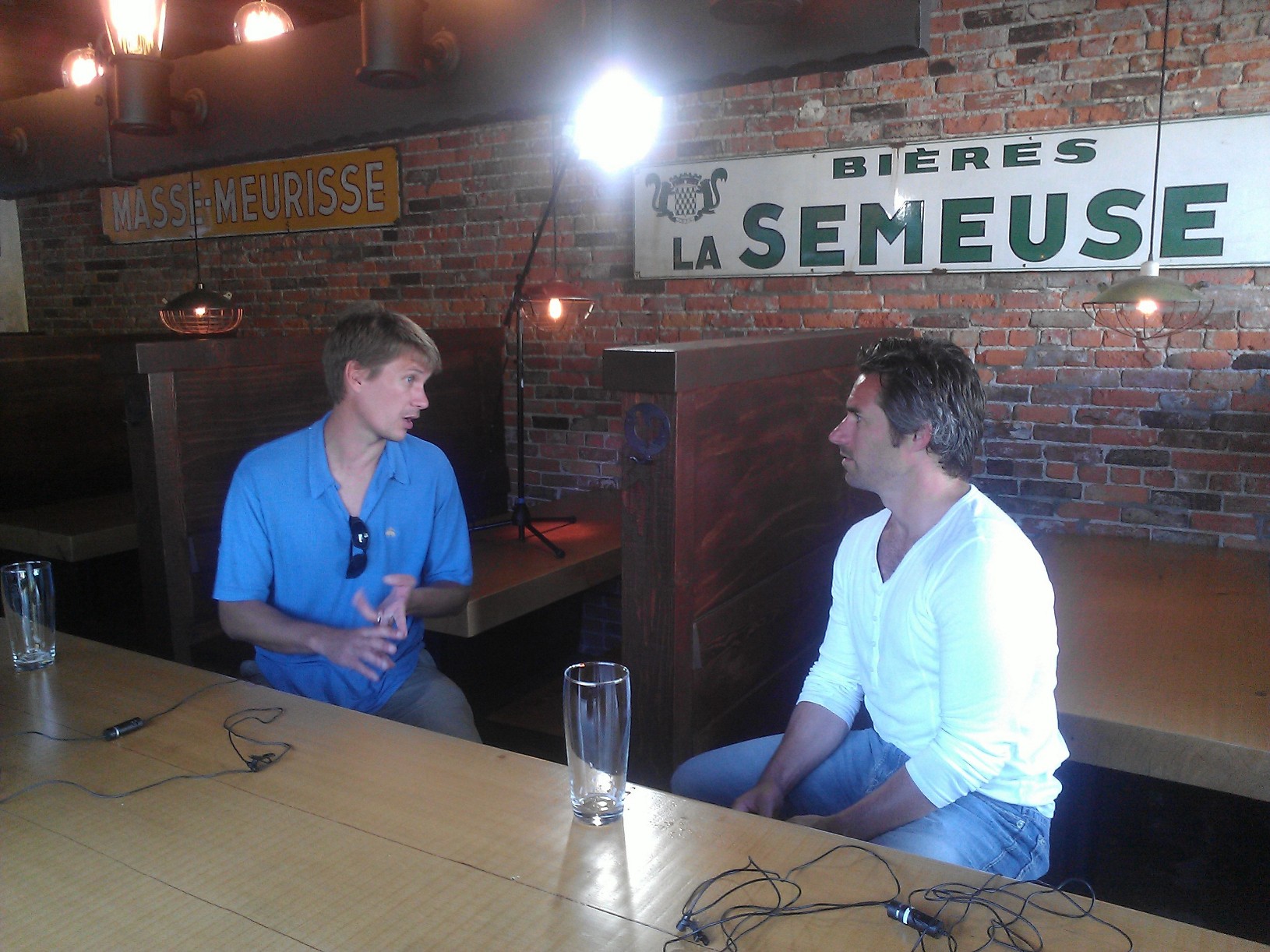
As I am sure you know, we have started a new project recently, called Founders RAW.   It’s a video site where we showcase recorded conversations I have with other founders over a beer to get a better idea of their story as well as (hopefully) pull out lessons that other viewer will be able to apply to their life.

One of the perks of founding Founders RAW is the unique opportunity to be the one sitting down with these individuals and drive the conversation.  It’s an honor, and it’s quite fun.

It’s also very educational.  Here are just a few things I picked up after the first 6 Founders RAW conversations.

Entrepreneurial from an early age

Everyone I have sat down with has expressed how they were exposed to entrepreneurial ventures from a very early age.  This may have been through observing their parents operating their businesses, working paper routes during middle-school, creating their first “business” in their youth or somewhere in between.  The common thread I am already seeing is entrepreneurship is taught (or experiecned) very early.  So early, in fact, these people thought it was normal and was what they wanted to do when they “grew up”.

This is precisely what I was talking about when I wrote about Making Entrepreneurship An Infectious Cultural Disease.  If we’re taught from a young age to take responsibly for our business life and chart our own course, well that’s exactly what we end up doing.

Clueless at first

Like clockwork, when I talk to founders it’s bound to come out at some point.  “I was clueless at first.  We had no idea what we were doing and we just tried things to see what happened.”  It’s amazing how high of a pedestal we place founders of companies, thinking they know it all and are destined to succeed from day one.  Unfortunately it can’t be farther from the truth.  Founders are forced to quickly learn on the job.

If anything, we are VERY good actors.  We fool others into believing we know what we are doing.  And we continue to do that until we stumble into actually knowing what we are doing.  I believe this skill is a pre-requisite for a founder: the ability to convince yourself and others you know the next few steps to take towards success.  And then exercise that ability to go find and do what ends up being the next step before it’s too late.

It’s Hard Work!

Founding a company is hard work.  I hear it again and again each time I sit down with a new founder during Founders RAW conversations.  “It was tough man!”  “We worked really, really hard sometimes for many, many years.”  Anything extraordinary will require extra effort on the part of the founder, no exceptions, they tell me.

What’s really interesting is to ask them the next question “So given it was hard work, what makes you different than the other founders who are working just as hard?”   I don’t have a specific answer I can write about right now but I think that answer would be very interesting, specially coming from the horses mouth.

My guess: “I figured out a smarter way to work hard.”  Although everyone can work hard, the most successful people find ingenious ways to get things done quicker, faster, more efficient and with higher quality.  A railroad worker most definitely worked harder than a business man, but it was the business man who walked away from the day with more money, providing him more security.

Hear many, listen to few

An interesting nugget of wisdom has already been touched on in these early conversations.  It revolves around the idea that everyone wants to tell you what to do next and how to best build your company.  “Everyone has an opinion, just like everyone has an _________.”

The key is to hear and understand as many viewpoints as you can, but then parse out what applies to your situation and follow a few solid pieces of advice.  Be very picky on who you give your ear to, who listen to and what you read.

Hear a lot, listen to few.

This is huge!  If you don’t follow this advice you end up like a dog running around looking up every time it hears something and sniffing everything it sees.  This is a quick way to go nowhere, fast.

Man, it’s been quite an awesome few months and I look forward to many, many more beers with other great founders who are willing to open up to me and tell us their stories.

If you haven’t yet watched these first conversations, go check them out now > Founders RAW

Founders RAW: John Cook of GeekWire Tells His Awesome Startup Story

“If you just hang around long enough… you’ll make it.”

In the latest installment of Founders RAW I recently sat down with John Cook, co-founder of GeekWire, a growing media resource here in Seattle covering technology and startups.  It’s a great conversation, ranging from his memories of his entrepreneurial parents to his lessons from youth sports and onto his crazy startup experience with launching GeekWire.

Founders take note, John is not only a budding entrepreneur himself, but since he covers other successful founders he knows what it takes to make things happen.

The Value of Youth Sports In Startup Founder Success

A few recent conversations have turned towards youth sports participation and the valuable life lessons they provide.  One in particular stood out to me – youth sports participation is one of the best training grounds for a startup founder.

How would I know?  I was a competitive athlete pretty much since the time I could run, competed up until college and still remain athletic and competitive today.

soccer1Although I didn’t necessarily know it at the time, as I was playing youth soccer, basketball and baseball I was adequately preparing myself for a life long battle in the business world.  Learning to cope with immense challenge and competition is paramount to a person’s ability to achieve success.

I am so grateful for the experience and for my parents not forcing me into any specific activity, but rather allowing me to participate in a number of sports so that I could further develop my athletic ability, maximize my leadership skills and mature enough to determine which sport I more fully wanted to pursue.

It turned out it was Soccer, and it’s crazy to think back and imagine me as an 8 year old running around in a grassy field on an early Saturday morning thinking I’m just having fun when in actuality I was taking in and absorbing lessons which would help me in my life 20, 30 and 40 years down the line.

Below are just a few ways youth sports help develop a young energetic child into a strong willed startup founder.  I thank John Cook of GeekWire for the conversation that sparked these thoughts.

Teamwork

One of the first things you learn as a young athlete is how to play as a team and how to become the best teammate possible.  No soccer team can win with one person trying to play alone – teams must be able to depend on their offensive players, their defensive players and ultimately their goalie to perform to their best ability.  Players must be willing to step up and take the shot, yet at the same time be able to support and assist their other teammates if the organization is going to function properly.  This requires youth to understand which is which, and the appropriate timing of each decision.

Companies are the same way, they aren’t built by one person. Startup teams must be well rounded, supportive and willing to do whatever it takes to achieve success – for all members of the team.  That, or the team won’t exist.

Leadership

Even at the earliest of ages sports teams will vote on a player to become captain, basically naming the leader of the team.  I believe this is the single best thing we (should continue to) do for our youth.  Captains are usually the more talented of players, have wide ranging experience and are outgoing and not shy in their ways with others.  But most importantly they are willing to take on responsibility.  They must lead the team, delegate when appropriate and stand up for a teammate if something goes wrong.

I believe giving responsibility as early as possible is one of the best ways to develop great leaders.

Imagine the lessons a 10 year old is learning as they lead their team during youth competition.  He/she is learning the basic tenants of team leadership, things they can apply to almost any endeavor.  In short, they are the on-field CEO and the success or failure of the team will rest (at least somewhat) on their young shoulders.

I cover startup leadership quite a bit so if you are a regular reader you will know my basic thoughts on the subject.  Simply put, startup CEO’s need to take full responsibility for their organization from day one.  They must wear the captain’s band on their sleeve in plain view so everyone knows where the buck stops.  This is not for their ego; it’s for efficient and effective organizational structure.  Why should an employee ask 3 people a question when really they should go directly to the decision maker to get the best and quickest response?  If employees in a startup don’t know who the decision maker actually is, whatever startup they are a part of ain’t gonna be around very long.

Failing

I get it, losing is not why we play the game.   Go visit a sports park on a weekend and watch how kids react to losing nowadays.  Yet losing in sports – just as in life – happens.  It actually happens a lot.  Learning to fail gracefully is a huge lesson any person, especially for someone thinking about starting their own company.

Why am I telling you failing is good for children?  Failing, maybe even getting injured  in the process, and then getting back up and trying again shows young athletes that if you do not quit then each new day is a new opportunity to win.  Losing teaches children not everything in life is guaranteed.  In fact, it teaches us more often than not things will not go as originally planned.  Sometimes shit hits the fan and you need to retreat and regroup to determine your next move.  There’s your basic “strategic thinking” lesson in action, a skill founders must employ A LOT.  Losing teaches youth hard work is required to experience success against your competitors.

This is essentially the experience of any early stage founder.  Startups fail most of the time.  Using lessons from our youth we can realize we just need to get back up and try it again, and hopefully we learn something in the process.

Enduring Hard Work

Finally, part of learning from failing is gaining the endurance to last long enough so we can experience success.  I distinctly remember our training sessions during soccer season.  They sucked.  Even if we weren’t going to be the best in the state of Washington (which we were 3 out of 4 years) we were definitely going to be the most in shape.  Coach made it very clear we would be the team with the best endurance around.

So we ran.  A lot.  We ran until we dropped, and then we ran some more.  We learned to embrace hard work and earn our success.  We learned anything worth winning was worth enduring tough challenges and the hardest of practices.  It was our standard and we embraced it wholeheartedly.  We spoke it.  We lived it.  We practiced it and we played it.  No wonder we won the state championship 3 out of 4 years I was on the team.  It was in our our DNA and our blood.

Startup founders need to take ownership of their future.  They simply need to determine where they are going, commit to a standard and uphold it no matter the cost.  They need to bleed confidence to the point where their success is inevitable.  They need to work harder than their competition.  This doesn’t mean work the most hours as humanly possible, that would be as dumb as our soccer coach running us until we all pulled hamstrings, eliminating us from competition completely.  Startups must figure out how to work harder but also work smarter.   Determining and following quality performance standards will do wonders to founders and their startup teams.

Youth sports are fun but they are also incredibly valuable to our society.  If you are a parent I would encourage you to place your children in a positive environment where they can develop leadership and success skills as early as possible.

Just like you.

Some Of The Best Video Content Is Never Actually Captured

I just finished a great Founders RAW conversation with John Cook, founder of GeekWire.  As we were wrapping up and had already turned the cameras off, we ended up chatting for a while longer.

I wish we hadn’t turned those cameras off!

It was then we dove into some of his more challenging times, including the story of how when he was still working for the newspapers and struggling to expand TechFlash (precurser to GeekWire) when him and his co-founder Todd decided to launch GeekWire.  He said they actually had to rush the launch of GeekWire because they were basically creating a competitor to their previous employer.  He reminisced about the day of turning on their new site, describing how he even jumped out of their car (which was sitting in traffic) and ran to their office where they were going to flip the switch and launch the site.  He was so excited he couldn’t wait another 10 or 15 minutes!  He said it was pretty crazy times.

It was a lesson for this video newbe to always be ready and don’t stop filming until you really are done.

He also spoke about the challenges of being a founder while a parent of very young children, something I don’t envy.  When asked what is the key to being a founder + parent, John simply said “an awesome wife.”  Below is a quick picture capturing our post interview conversation.

We’ll have the entire conversation out and posted in a few days.

John Cook

Founders RAW – Incredible Wisdom From Amp Tab Founder Patrick Henley

Another great Founders RAW conversation, this time with Patrick Henley, founder of Amp Tab.  Patrick lays down some solid wisdom as someone who has been successful in a number of different industries – selling Mount St. Helens ash at 6 yrs old to building houses and now building a software startup to help streamline sales processes.

Listen closely, there’s nuggets of wisdom you don’t want to miss.

Making Entrepreneurship An Infectious Cultural Disease

You have no idea how bad I want you to catch this disease.

We usually have a negative connotation to the word disease, but not in this instance. I believe entrepreneurship is a disease – albeit a good one – that can positively affect entire societies.

I recently ran across this statement on PandoDaily and it sums up how I feel about entrepreneurship:

cells

I believe the key to creating a new Silicon Valley is to make entrepreneurship a cultural and societal norm for the region you’re trying to affect. Once it becomes a norm, it spreads like an infectious disease. If you believe entrepreneurship is what’s expected of you, it’s highly probable you’ll go after it regardless of how many VCs are nearby or whether or not there’s a local tech happy hour.


More and more often I am reading articles touching on a new norm in our society – college grads and people looking for jobs should prepare for a life of ‘temporary jobs” “part-time positions” and “a lifetime of ever changing job markets.”

Sounds promising, huh?

If you are a life long employee this is not good news. The traditional employee mentality will not cut it anymore.

But if you are an entrepreneur, or someone who views the world as a multitude of opportunities just waiting to be jumped on, you are embracing the times like there’s no tomorrow. You know that like it or not, your future is 100% dependent on you and you alone. The world is now your oyster and it requires you to think more like an entrepreneur than ever before.

So how do we spread the entrepreneurship mentality like a disease?

1) Education

There was a time when jobs were secured and a lifetime in one profession or trade was the societal norm. Times have changed, yet we are still educating our children with the assumption they will have one job when we should be preparing them for a life of uncertainty. We need to adequately educate them on how to evaluate markets, find problems, build solutions and market services to the masses. We also need to prepare them for failure, and how to appropriately navigate around it when it inevitably hits.

Formal education such as Entrepreneurship courses and qualified majors are starting to pop up at universities around the country. This is a great first step but not at all good enough. I am encouraged with the movement of accelerators and incubators in the technology space, such as Founders Institute (which I experienced in 2011) as well as YCombinator, TechStars, 500 Startups and many others. Although great organizations, the challenge with these is the fact that they put the cart before the horse at the expense of many would be founders. One must enter pitching their product/service idea, already have a highly talented team, and previous successful experience in-so-much that they can pass the admittance interview. Unfortunately, it’s easier to get into Harvard than it is to get into YCombinator.

What about those who are too early in the process to gain acceptance to these elite programs? I believe entrepreneurship needs to bleed deeper into our society, influencing our youth at an earlier age. Hopefully, junior high and high schools will start to focus on entrepreneurship just as we previously focused on wood shop and auto shop. Also, more media attention and resources can help permeate the spread of the disease. This is where resources like Founders RAW (selfish plug), Under30CEO, Coursera, Udacity, entrepreneur.com and others must continue to focus on educating the early stage founder on a daily basis and in an easy to access virtual environment.

2) Publicity

The stories need to be told. People need to be able to learn about other founders and realize these successful people are no different than the rest of us. Yet, I see a disturbing problem creating an unfortunately negative influence on our society. The stories of Bill Gates or Mark Zuckerberg have become folklore to the point where they are unrelatable to the common man. The story of a Harvard dropout becoming a billionaire doesn’t help most people who are just trying to get to the next level in their newly started company.

The reason is we tend to compare ourselves to the other people, so stories about a billionaire doesn’t necessarily help a college grad taking their first step in creating their own startup. They need to hear realistic and relatable stories from people closer to their viewpoint of society. We need to do a better job of showcasing and publicizing early stage founders stories. We need to celebrate smaller wins, rather than wait till a founders sells their company for hundreds of millions of dollars. Again, this is one of the primary reasons we are starting Founders RAW, to share the truth about entrepreneurship and illustrate how founders can be relatable to others wanting to start their own business.

3) Events

Startup events like meetups, sponsored events and weekend gatherings are paramount to community engagement. We need more! The already established startup community needs to be able to open their arms to newbes who are shy or unwilling to open up in new environments.

Why? These are the places where people can get acquainted with their local startup communities, where they can meet other founders face to face, and possibly even meet their next co-founders. Also, events like Hackathons are a great way to grease the wheels of creativity, sometimes these are seminal events where an individual hatches first project. More events create more connections, which create more opportunities for innovation.

Encouraging entrepreneurship is great, but simple encouragement misses the point. We need to infect our family, friends and neighbors with the “go getta” disease if we are to survive the next century in the U.S.

Who’s Behind Founders RAW?

New Founders RAW logoI recently started a new project called Founders RAW, a destination for video conversations with other startup founders.  Why are we recording these conversations?  Simply put, we think the truth of entrepreneurship needs to be heard far and wide.

From the About section:

Founders RAW is actually an experiment.  As founders of an early stage startup we quickly realized how difficult starting a company can be.  And being part of the larger startup community in Seattle we discovered we weren’t alone in our crazy, mind-blowing experiences – apparently others have them too.  The idea started to form once we noticed the frequency of finding ourselves 30 minutes deep in truth sharing and wisdom dropping conversations with founder friends.  We wondered if others would be interested in what we have learned, so we figured why not to bring a camera.  I guess we’ll see what happens.

Founders RAW a video blog with conversation style interviews focused on bringing out raw stories early stage founders experience in their challenging entrepreneurial journeys.  We invite founders to talk openly over a beer or a coffee about the “truth” of how they survive and grow their companies.  We post the full conversations on the blog but really, who has time to watch 45 minutes of video?  So we slice up the conversations and post nuggets each day as well as send out daily videos no more than 3 or 4 minutes long to blog subscribers.    Now we all can receive daily nuggets of the entrepreneurial truth.

Don’t forget to subscribe and please reach out to us if you are interested in chatting.

I brought in a few friends to help make this happen.  You can watch Nate and I talk over why we started Founders RAW in this video, Why we started Founders RAW.  We believe the best way to educate new founders is through candid and casual conversation with other founders, regardless of their experience level.  Although a veteran certainly knows more about starting companies than someone on their first go-around, we believe everyone has something unique to teach other people.  We hope we can continue to grow and expand the impact Founders RAW has on entrepreneurial communities.

=======================

Nick Hughes

nick_headshotNick is an entrepreneur and writer in Seattle, WA.  He is currently the founder and CEO of Seconds, a mobile payment startup helping to bring payments into the mobile era using the web and text messages.  He also consults with other companies locally and nationally on business development and product strategies. In his spare time you will find him as far away from the desk as possible, hopefully on a trail or close to water. 


Nate Martinez

nate_headshot

Nate worked as a business development manager for a venture capital and private equity data research platform. Prior to that role, he ran his own hedge fund trading search platform for three years, with particular focus on quantitative strategies. His early career was spent with Credit Suisse (NYC) trading on their investment grade credit derivatives and corporate bond desk.


Josh Peterson

josh_headshot

Josh is currently head of Audio and Video production for Founders RAW. He also works as a web developer and media artist, and his interactive electronic artworks have been exhibited at galleries and events in Seattle. Josh hopes to develop technology that artists will use to make new and exciting forms of digital art.

Fail. Learn. Live.

I failed.

Phew, there I said it.

Even though Silicon Valley and the startup culture in general celebrates failure and preaches  how founders shouldn’t hide behind their mistakes, it’s not an easy thing to admit or talk about.  Naturally, we tend to put our best face on in public and act like all is well even when it’s not.  And when it becomes too overwhelmingly difficult to face publicly, most run and hide and miss the opportunity to help others by addressing challenges openly and honestly.

Well, not me.  I believe in telling the truth and having an authentic discussion around the not so celebrated aspects of entrepreneurship.

Taking more than enough time to think about what I just experienced and how I should respond to it, I feel it’s time to talk openly about it hoping maybe I can help someone else be more open with their failures when their time comes.  Failure is hard to cope with no matter how strong you think you are and by opening up and examining the lessons that accompany failure we can all walk away better, not bitter.

“Just dust yourself off and try again.”

That is what you hear from others when you fail at something, like they know exactly what you are going through and how you feel.  “Yea, sure… thanks man, but you have no idea.”  That is my internal response.  If only life was that easy.

There’s no way another person understands the dynamics of a founder’s mental processes during the moment they realize it ain’t working.  I sure as hell hate to hear someone relate to my experience to something as simple as a kid tripping over a crack on the sidewalk during dodgeball at recess.  So much emotion, time, money and energy is wrapped into the entrepreneurial journey, especially when it turns out not as one expected or wanted.

Yet, during my time of reflection I have been able to separate the wheat from the chaff, come to understand some things are under our control and many things simply aren’t.  This is my attempt to dissect and relate back to the world some of the things I could have done differently.

I Failed.

The experiment failed.  Seconds, my mobile payments startup here in Seattle failed to attain a level of usage and customers to become sustainable.  What’s more, we failed to secure outside investment to capitalize our company for the near/mid term in order to grow into a sustainable company.  We simply came to the end of the runway (cash) and have now decided to navigate the next direction of the team and product.

To say I earned all the gray hairs I now have in the last 15 months would be an understatement.  I dealt with a cofounder and CTO of the company leaving 6 months in because he realized it was going to be tougher than he thought it would be, leaving me with a tech startup and no technical leader to write any code.

This sucked.  Since I had to spend most of my energy in finding the right replacement for this critical puzzle piece during the middle of 2012, we failed to gain any momentum in on-boarding more customers and making necessary product improvements.

I should be more proud in retrospect, I was able to find a new CTO and thus pulled the plane out of a downward spiral and at least leveled it off into a smoother glide.  But as a result of the slow glide we found ourselves in a foggy, hazy and scary place.  In nowhere land, we became a not-dead-but-not-really-living company.

A zombie startup, as they are now calling them.

I, as the CEO, take full responsibility for the outcome of Seconds.  Although not the person responsible for code and development, I was the person responsible for leading the team, driving the customer base and growing the operation.  I failed to uphold my end of the bargain and in the end the company’s fate went down with it.

I learned.

Given the fact we failed at growing Seconds into a successful mobile payments company, it’s important to remove the layers and find lessons applicable to my life and  future companies I will inevitably start or join.   Steve Blank says failed founders are actually “experienced founders”.  I agree to an extent.  More important is the ability to evaluate your failure, pick it apart and glean nuggets of wisdom to apply to your life.  That, or all is a waste.

Below are a few things I now realize in hindsight led to the demise of our experiment.

a) jumped to quick – I was recruited by one of my co-founders to join as the CEO in fall 2011.  I jumped too quickly into the company and within 2 weeks of meeting the team I was full time and ready to take on the world with people I had never met before.  I didn’t know their ups and downs.  Nor their gifts or their faults.  In retrospect, I am not sure this was the best decision and probably would have benefited from a longer deliberation and research of the team I was joining as well as the market we were attacking.

b) didn’t obsessively focus on customers – We didn’t focus enough time and energy outside the office talking to non-customers, potential customers and existing customers about their specific needs and how our product can help them.  Even more basic, although it’s easy to preach about lean startup methods and customer development principles, it’s quite another to get your ass out of the office and into uncomfortable conversations with people who will inevitably knock down your idea and hypothesis.   We didn’t validate the problem/solution clear enough.  Yet that is the only way to go from an erroneous hypothesis to a more valuable one; one which can then use to grow into a sustainable business model.

c) Underestimated fundraising – ha, I actually thought it would be easy to raise money.  Boy did I get that one wrong.  Investors are very strange creatures and at the end of the day they really can’t tell you why they invested in one company and passed on another.  It’s a tough nut to crack – especially for a first timer lacking glorified credentials like Stanford or Ivy League degrees or a past (successful) startup experience.

I figured we would lean on a quick seed round of funding for the first year or so and go from there.  I figured it would buy us some time to dial in the revenue model.  That wasn’t good enough.  Founders must figure out how to build a sustainable operation from day one (or until investment does finally hit the account) or they risk losing it all.  (read:  once you perfect your business model on a spreadsheet you actually have to execute on it and bring in a critical mass of ongoing revenue or the game is over before it starts. See b above.)

The “throw stuff against the wall and see what sticks” method does not work for early-stage, cash-strapped startups.  Got it?

d) didn’t recruit talent – I did not place enough value on recruiting and cultivating talent within our team and personal network.  I naively thought discovering dev talent was for the job of  a CTO/Lead Developer and I should not really put in the time and effort to find these people.  My bad.  Whether you are technical or not, it’s the CEO’s responsibility to reach across the isle and get to know as many talented and gifted engineers as he can.  Yes, a conversation for me is a lot smoother /easier with a non-technical person, but in the long run a network full of strong relationships with both technical and non-technical people will always be better than one or the other.

Easier said then done but team is most important.  You should never stop cultivating relationships and building your dream team, even if it’s just in your head at the moment.

e) emptied the tank – I allowed the tank to hit empty.  Empty of money.  Empty of belief.  Empty of customers.  Empty of options.  Empty of vision.  Empty of energy to keep going.  Empty of emotional strength and connection.   The determinist would say it ran its course and as the world turns… but in the end we just didn’t execute where we needed to so that we could keep (all) the tanks away from the fatalistic empty point.

There should always be another lever you can pull and pivot you can make to keep it going but… I let myself go first and once the leader’s tank is empty not much else can be done.

More lessons are in there for sure… a lot more.   But I cannot find the right words or analogies to make sense in my mind, let alone in this post so these five will do for now.  I am sure over the course of the next months/years I will hit upon another revelation and compose a nice piece for all to learn from.

Needless to say I learned a lot in the last year and a half.

Would I do anything differently starting over?  Of course I would.  If it were Sep 2011 all over again I can’t say I would.  It’s impossible.  Looking back, these lessons could only have taught me something by living them firsthand.  I am grateful of my experience and appreciate what it has taught me.

Failed entrepreneur = experienced entrepreneur.

I lived.

Here’s where it gets tough.  Recent coverage has detailed the fate of a few people in the startup community who – by all means looked great from the outside – but on the inside were tearing themselves apart due to massive stress they were facing in their personal/professional lives.  In the end they decided to take their own life rather than deal with their challenges.  I cannot (and will not) attempt to defend or attack their decisions, but I can only say I now understand.

I was both terrified and haunted when reading through and trying to understand what had happened.

I, too, have thought about it.  I have stood and thought about things I never imagined I would need to think about.  Not about ending it all, but about my place in the world and the value I bring to it.  I figure someone who follows through with an act such as ending one’s own life must feel as if there’s really not much to live for anymore – or else they wouldn’t have made the fatal decision.

The emotion of a failed startup is rooted in rejection.  None of us want to be rejected and we just want to be proud of what we have accomplished.  As the plane enters the downward spiral and you as the founder cannot gain control, things (shit) starts to hit the fan.

The scariest problem is how quickly it can turn into a downward spiral.

The fact that these people were driven to and ultimately succumbed to suicide are the true failings of entrepreneurship, the tech community and society in general.  If founders feel they truly have no more value to add simply because they didn’t live up to outside expectations and lost investor’s money, we are in big trouble.

And if it has anything to do with media coverage and the resulting negative shitstorm of outside comments we now face when our failure is publicly written about, we are in very big trouble.

Founding a company is one of the most emotional activities people will experience in their lives.  Most companies are extensions of their founders, everything from the code created to the core founding principles of the organization.  A founder’s greatest dream is to take an original thought and see it spread around the world, influencing millions if not billions.  When that doesn’t happen – your vision or idea doesn’t take off and start spreading around the world – you stubbornly start to question yourself and your value.

You also start to slide down a slippery psychological slope that might not have a (positive) end.  Once the slide starts, seemingly mundane daily occurrences start to pile up.  Problems arise in a founder’s mind when rejection becomes more than just a no.  To a rejected founder, an unreturned email from a potential partner becomes more than forgetfulness.  A no from a potential investor becomes a fatal rejection, such as a shove off a large cliff meant to kill an opponent.  A customer discontinuing their service is akin to a tribe shunning you from their tight knit society.

To an outside individual, these small insignificant acts are commonplace and normal during a business day.  But to a founder who is teetering on obscurity and rejection – they can indeed be the straw that breaks the camels back.

By all accounts I am homeless – I find myself sleeping on family/friends couches and spare rooms so I don’t have to deal with rent during this chunk of time.  I have been living on a few dollars per day and being really creative on staying alive.  I have no car or personal transportation, casualty of my decision to be an entrepreneur.  I have strained my family life to a place it has not been before.  I also have strained my financial position to a place it has never been before.

Truth be told, it’s a tough time right now.

But I’ll be alright.  As hard as it has been the last 6 months, I made the decision I was going to live through it.  I have committed to live through the toughest of times so whenever I do get back to normal I will be stronger and more humbled than before.  I decided that if I choose to end it now – to quit on life – they will have won.  All those people who say it’s impossible, snickering cowardly behind a twitter account or tolling comments on blog posts and news articles will have triumphed over us.  That would be the tragedy.

Life is worth more than the ignorant comments from cowardly people.

I remain committed to becoming a successful entrepreneurial story no matter how long it takes, even if it means I need to join another company in the near term.  Why?  Because the world needs more examples of people overcoming hardships.   Also because we don’t need more people driven to suicide purely because they feared what TechCrunch, PandoDaily, The Verge and Business Insider (and the idiotic cowardly commentors) were going to say once it was known they failed.

We’re better than that.

Fail.  Learn.  Live.

How A Biz Dev CEO Is Learning Design And UX On His Own

Biz dev founders get a bad rap in the startup community.  We are looked down upon by our more technical brethren, brushed off as amateurs and mostly considered non-essential to starting a company.

How do I know?  Because I am one and definitely sense the slightly negative vibes coming from my own community.

I guess they may have a point, besides the fact that someone on the team has to organize the legal formations, talk to investors, man the PR station, create the business and marketing plan (and execute those plans) at some point get customers/users/investors/advisors on board and generally keep the ship pointed in the right direction.  But I digress….

As a non-technical/biz dev founder, I do not possess any of the technical chops engineers see as essential to building a product.  Yet this has not affected me one bit.  Outside of handling all the responsibilities listed above, I noticed myself wanting to be hands on with the products I build from day one.

So if I can’t code, what I am doing?

ui-paradeI am focusing on the user experience and the look and feel of the app, more often referred to as Design and UX.  I tend to have a lot of the ideas about what our products do and how they should function from the end user’s point of view, so that is where I stay when we are building it.  I make sure I keep at least one foot planted in the average-Joe-end-consumer’s-shoes to make sure the final product will make sense and appeal to those people.  (This is due to the fact our target market is consumer oriented and we are building consumer products).  The lesson here is make sure at least someone on the team is entirely focused on how the target market will see and experience the product.

If you are the non-technical founder I feel it is your responsibility to holistically own the product from start to finish.

Most likely you are the CEO, or the leader of the team, and with that responsibility comes knowledge and understanding of all sides of the project.  Knowing you cannot get your hands dirty in code, you need to be on top of other areas of building the app, namely design and user experience.  You will not be laser focused on one thing in the project like front-end or back-end developers, but will be focusing on the entire process and how all areas of the application are coming together from the outside-in.

How does the interface look and feel?  What happens when I tap this button?  Would this action make sense to the average user as opposed to a technical engineer?   Does the interface emote a positive or negative feeling when someone glances at it for the first time?  What about when something goes wrong, what do the error messages say?  What about the emails I receive from the service?  Do they make sense?  Are they human?  Do they come from “your company name” 0r does it say “DO NOT REPLY”?

I have come to realize those questions are not usually asked by highly technical people but the answers greatly affect how users respond to the earliest versions of your product.  The beauty of being a non-technical person is the natural ability to see things in more human and emotional ways, as opposed to highly technical and non-emotional ways.  I am sure you can guess which ones have a greater positive influence on how regular people interact with your apps.

The answers to those questions can also be identified as early as the beginning of the design/development process with wireframes, mock-ups and prototypes.  It turns out, non-technical people with adequate design and UX understanding can greatly enhance the team by owning the wire framing and mock-up stages, opening up the dev team to hack together other areas of the project.

Once you decide to build a product, form a company and get all the initial stuff (listed above) out of the way, the main focus is building and launching the product.  PR, press, customers, investors, and all the other stuff doesn’t matter if you don’t have a world class product.  Suffice it to say you – as the CEO/non-technical cofounder – must orient yourself as the Chief Experience Officer.

Through recent studies, I have started to gain a better understanding regarding design.  It’s not just the colors of your site and the placement of buttons on your app, it’s how the user experiences all aspects of your application.  There’s too many considerations to list here but having a holistic view of what you are building and the quality of experience a user will have is paramount to your app’s success.

So as the non-technical person, you can’t code but you still need to make yourself valuable during the initial stages.  You don’t want the rest of your team  sitting around without you and wondering why are you actually still around and a major shareholder when you aren’t really doing anything productive…

I spend time each day reading articles to gain a better Design perspective, also working through workflows of design features we are focusing on right now.  It’s not perfect stuff but it’s a start.  And it’s actually quite fun.  Below are some of the ways have I been learning Design and UX recently:

52 weeks of UX – This is a year long blog (2010) broken up into 52 sections, each one sent out once a week and covering all aspects of Design and User Experience.    It is a tremendous resource to not only provide a solid understanding of these topics but the more you read the more you start to think like a designer.  (I guess that’s true about anything but I definitely noticed it here).

Hack Design – “An easy to follow design course for hackers who do amazing things.”   Hack Design is also a weekly series of emails sent chock full of design lessons, articles and unique topics.  I would suggest starting from the beginning and making it a habit to do one a day or week.

UI Parade – I stumbled upon UI Parade a while ago and it has really helped me with ideas and perspectives on the appropriate interfaces to use.  They provide a huge list of examples, anything from Nav Bars, to buttons, to drop downs, to sign in forms.  Sometimes it helps to just skim through and get ideas on various looks and feels.  (Tip: pick on, open your favorite design tool and commit to making your own copy of the visual you just picked out.  It’s fun!)

Inspired UI – Here you will find an exhaustive list of all the mobile designs you can imagine.  It’s a great place to go when you are evaluating in the early stages what you want your mobile interface to look like and how it should function.  Trust me, you will definitely be inspired.

What It’s Like Inside SURF Incubator After A “Wild And Unforgettable” Year

Screen Shot 2013-02-24 at 6.52.04 PMIt’s 4:45pm on a cold and wet Thursday afternoon in downtown Seattle. Perplexed and a bit agitated as I walk down 2nd Avenue , I find myself rushing back to the office like I’m late for an important meeting. Being February – still cold and rainy in Seattle – it’s not a good day to be trekking back across a PNW city. In fact, it’s blistering cold. You know those days where it’s a wind-whipping-your-face type of evening, making your walk that much worse. A better idea would be to stop and wait inside a warm building for a cab or grab an Uber.

But I don’t care! It’s happy hour at 5pm at SURF and I ain’t missin’ out!

Over the past few weeks, I have been reflecting on my last 12 months and I cannot talk about the year without mentioning SURF. SURF Incubator opened their first full time location in Seattle almost a year ago and Seconds had the opportunity to be a tenant pretty much from the day they officially opened.

I wanted to take a moment and review the last year with SURF Incubator, what they are about and what they are looking to do next, because I believe it’s one of the best things to happen to Seattle’s tech scene in quite a while and you should probably hear it right from the source.

To begin with I must admit I wouldn’t be here today – not only writing this but as a startup – if it weren’t for SURF Incubator and the support of the two individuals running the show, Seaton Gras and Neil Bergquist. If only to speak for the larger group, I feel the support, encouragement and the SURF community is truly a blessing for an early stage startup still trying to find its way.

Seconds could easily be the prototypical startup Seaton loosely refers to when he describes SURF and its story of survival, evolution and filling a need for early stage startups.

According the Seaton:

“For three years, prior to being in the Exchange Building, I ran SURF Incubator at numerous locations – including Regus, friends’ offices, FiberCloud, restaurants, coffee shops and even my condo’s meeting room. It was a wonderful time to experiment with different ‘products’ from consulting and meetings to networking and roundtable discussions.”

“The sad thing was that I did not have enough square footage to offer any long-term working space for my members. Even so, the membership in my two Meetup groups continued to grow and was more than 1,000 strong when I began looking in earnest for a permanent large space to call home and fulfill the bigger vision that I had for SURF Incubator.”

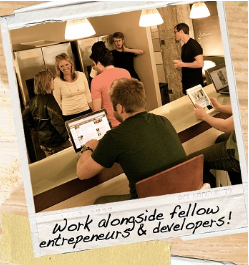
For those who aren’t familiar with SURF, it provides office space for tech-oriented startups so they don’t have to work out of their homes or in random coffee shops around Seattle. They host events, organize meetups, partner with local service providers (legal, recruiting, etc…) and help young fledging startups with the nuances of getting out of the gate on the right foot.

Maui Huge Wave

Realizing SURF needed a permanent home, Seaton secured office space in the Exchange building in Downtown Seattle and officially opened their doors in April 2012. “Now, with the new location at the Exchange Building with more than 15,000 square feet, we have been able to create and/or host some amazing events. Having a permanent location has really helped SURF Incubator do much more. We have also been able to host some wonderful happy hour events as well as some fantastic networking parties and meetups.”

Four years into their journey and almost a year into their permanent residence (and seeing it first hand) I can say Seaton and Neil have pulled it off. I am quite impressed and it’s only the beginning. Walk down to any coffee shop or talk to entrepreneurs at various events and their ears perk up when you mention you are a SURF startup. It is obvious SURF has exceeded expectations of both their tenants as well as the greater Seattle startup community.

But more waves are forming on the horizon.

SURF just announced their biggest deal to date, and in my opinion have just set in motion a chain of events no one inside SURF could have predicted. The newly announced B2B accelerator 9Mile Labs will be taking residence inside SURF and holding their 3-month program in SURF’s office space.

This is great news and you can literally feel the change taking hold inside SURF. It’s like we just dipped down on the rollercoaster and are now speeding up the other side.

According to Gras, 9Mile Labs was attractive for a few major reasons. First, they are unique because they are focusing on Business-to-Business startups and are offering follow-on support. “Their program was of particular interest to me because they offer more than just a 3-month program. Three months, in my opinion, is not enough time to really gain adequate traction and in the B2B space, this is even more of an issue. So, I think it is wonderful that 9Mile Labs is looking at 3-months to Demo Day, followed by 3 months of continued support.”

And although 9Mile Labs is a newly formed accelerator, they have already gathered amazing traction and a strong board of mentors. The long list of high-quality mentors is very impressive and will positively impact 9Mile startups as well as the larger SURF community. “These mentors offer a vast amount of experience and since experience can make all the difference for a startup, it’s a great opportunity for the chosen group of 9 startups,” Gras added.

Very true: with experienced professionals by your side startup founders are much less likely to make fatal mistakes.

The 9Mile Labs deal cannot be understated. For a fairly new incubator space still in its infancy, SURF just further solidified its place in the larger Seattle tech ecosystem. In addition, by partnering with an “accelerator” program SURF now expands the opportunities it can offer early-stage entrepreneurs.

IMG_0008

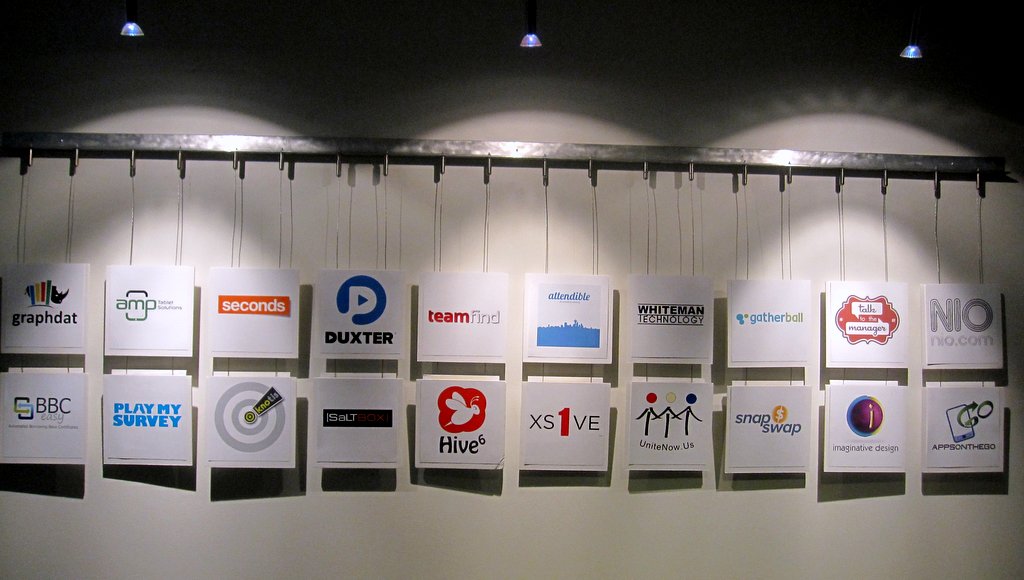
Every day is unique at SURF. With the diverse companies inviting friends, families, customers and advisers to take a tour, we have always a different mix of people. The companies run the full gambit from medical and educational to gaming and cloud services (and payments!) and any given day you will find yourself in a conversation with someone who can teach you about a new industry or business model.

In addition to local visitors, people from more than 30 countries have stopped by for a tour.

This is especially interesting for Seaton, since he spent so many years traveling around the world. “For me, it is such a pleasure to get to meet these wonderful entrepreneurs, get to learn about their plans and see their vision unfold. And sometimes, I get to ‘lend a hand’ by sharing my own perspective, which was learned the hard way … my own struggles with building my businesses,” said Seaton.

According to Neil Bergquist, the year has been “Wild, it’s nothing what I expected but has become everything I wanted it to be!” He also added it has been a huge learning experience for not only him but also the entire SURF management team.

To say the last 12 months have been wild is an understatement. My take is it’s quite possibly the best place to plant yourself as an early-stage founder in Seattle looking to soak up startup knowledge and wisdom. You could meet possible cofounders like I did, engage in numerous happy hours and gatherings, learn from various service professionals and continuously meet interesting people. All those are important, especially when you are just getting out of the gate.

“During the last 12-months, we have held about 200 events. Topics covered included two main areas: Business Development and Programming. For the business development, we had professionals present detailed informative sessions on marketing, corporate formation, intellectual property, employment issues, graphic art, go-to-market strategy and much more. For the Programming side, we held meetings where programming languages were discussed and demonstrated. For example, Ruby on Rails, PHP, MySql, Scala, Android, HTML5, XCode and Windows8.”

So what’s next for SURF?

Neil mentioned expansion is on the horizon but the need to operationalize (which comes with growth) is paramount. They will soon be adding a complex educational program for members – both in programming and business development. Seaton strongly believes programmers need to constantly learn about the new features of their particular programming language and hopes the education can be supported by a grant.  “These languages are very dynamic with new features added almost every day. Without vigilant study, a programmer may actually go backwards and may ultimately ship an obsolete project. I know this … because it has happened to me.”

He’s totally right. No matter how seasoned an entrepreneur may be there is always a need to learn the latest perspectives. For example, Twitter and other social media tools have forever changed the way businesses promote their products, services and even their existence. We all, regardless of age or experience, need continual education on how to leverage the latest technical advancements.

I can tell you 12 months ago I had no idea I would be sitting here thanking these two individuals for not only opening their doors for me and my team but changing the Seattle startup landscape in the process. It’s amazing what they have accomplished in such a short period of time and I can only imagine what this next year will bring.

I know one thing for sure – those typical “two guys in a coffee shop”, even though they are working dutifully, are definitely making a mistake.