Social Search Series VI: A Picture Can Be A Thousand Word Result

Social Search Series: This summer I am embarking on a journey through on the emerging web of Social Search. Traditionally known as the Questions & Answers industry, this category is currently being transformed by social and mobile technologies. No more asking a site questions and finding old answers.  I believe the future of the web is ingrained in the dynamic interdependence of social and informational networks. This is part VI of the series. For background, check out the previous articles Part I here and  part II and Part III, Part IV and Part V here.

Through this series I have touched upon the new way we are discovering and interacting with and information on the web.  I have detailed how old question and answer models are being disrupted and re-engineered to form the new way find information.  LOCQL, LocalUncle, Aardvark, Waajam and many others are making inroads on the social search frontier.

Another startup I previously covered, Localmind, who also just packed up and made the proverbial move to San Fransisco, is making a few big announcements today.

Today they are releasing a few more feature enhancements which will change the way we will discover and share information within our local communities.

Answering With An Image

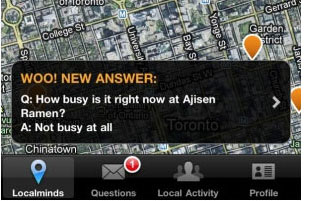
First, with the Localmind application, you can now pack a thousand words into your answer by including a photo.  For instance, when someone asks the question “how busy is it at the bar?” you normally would need to respond with some text, including a bit of context which wastes precious character count space.  Now, you can point, click and send.

Here’s a quick video of how it works.  Pretty cool.

Imagine using this feature to search a stadium full of fans at a football game to get exact information on a particular game, with images of the players, from various view points all around the stadium… all in real time.  That’s called the future of social search ladies and gentleman.

According Localmind CEO Lenny Rachitsky, this was the largest requested feature since they launched the first version.  “People are used to taking photos with their phone.  People always want to see what’s happening…  it’s not just posting photos, it’s an exact answer…

Adding Conversation and Opinion

The next feature being released is a subtle but important one: answering a question that has already been answered by someone else.  When using the app, people wanted to add their own opinion and context to a Localmind question.  The new feature allows people to answer a question that has already been answered, thus creating a conversation around local information.

This is the evolution on the local search space I have been talking about for some time, the inevitable transition from the 10 blue links on a page to a more contextual, relevant and accurate search experience – powered by your contacts and the people around you everyday.  Adding comments and conversation around interactions within Localmind bridges the gap from spam and irrelevance and brings us into the new realm of local social discovery.

Also included in this new release is the ability add your identity when you, as a user, answer a question.   Until now, when a user answered a question, they were completely anonymous.  Now you have an opportunity to leave your identity (and see a profile of another user), removing privacy but making the platform more authentic and accurate.   Rachitsky n0ted they were initially concerned about identity and defaulted the platform to anonymous responses, but realized that is not a big issue and now have changed it so users can choose the way they interact with Localmind.

Now you see why the name Localmind is actually what they could possibly become, a central nervous system of the local community.  I see it… do you?

If You’re Not Getting Job Offers Right Now, You Just Ain’t Tryin

I know we are in an extended period of economic recovery.  I understand markets are shaky right now and the global economy is teetering on another possible collapse.  I am also aware unemployment rates not only in the U.S. but around the world are as high as they have been in many years.  I know all this.  But If You Ain’t Getting Job Offers Right Now, You Just Ain’t Tryin.

How do I know?  Although I haven’t settled on my next business pursuit just yet (decision coming soon!), I have been offered many unique and exciting job offers and partnerships recently.  This article is not about me and how great I may be – that is not for me to decide – but more about how one can start to gain a more attractive position for future opportunities.

Do Something…. Anything!

The first thing to do is SOMETHING.  Anything will do, just do something.  Make sure it’s unique.  And do it well.  And do it every day and document it.  I have talked to numerous people recently and I keep having the same conversation.

Person: Man, I can’t stand my job

Me: What is it about the job you hate so much?

Person: I just feel I am not challenged, it’s not fun anymore and I need something new.

Me: Well, what are you doing about it?

Person: I don’t know… nothing at this point.  I am looking around and submitting some resumes, I’m looking on Craigslist too…

Me: Well, good luck with that!

Then I go on to help them understand submitting your resume is the #1 worst way to get a job.  You have a better chance getting attention by standing in Times Square holding a sign in your underwear, like the cowboy dude playing the guitar.  You do realize when you go the resume route you are just 1 of 100 or even 500 people, who all now will be juxtaposed and compared solely on what they have done on paper.

Standout…. Somehow

Maybe you shouldn’t stand outside somewhere in your underwear, but you need to do something to stand out and showcase who you are and what value you bring to the world.  If you are not working on something of value outside of your “paid” hours, you are falling farther and farther behind all those people who are.  This is what I mean when I say “you ain’t tryin“.  Employers, startups and investors want to see what you do that is unique and separates you from the rest of the pack.

For me, it has become writing and creating these short pieces you are reading now.  I have only been writing for 3 months now, but opportunities are hitting my email, twitter, Facebook and LinkedIn accounts every day. We’ll see how it turns out…

[I enjoy people reaching out to me, so feel free – @jnickhughes]

Employers, investors, business partners first hire based on character, uniqueness and value, and secondly on competency.  That is a fact.  Knowing this, you need to use digital media to highlight your strengths and spread them across the globe so others can start to see why you are so special.  It is also why I for the last 3 months have adhered to Mark Suster’s rule of take 50 coffee meetings.  Face to face is the best way to determine character and value, not on a piece of resume paper.  I have done so many meetings this summer I can’t keep track, but for sure they have been the best coffees I have bought in recent years.

As a CEO, who do you think I would chose to hire:

Person 1:  Randomly received their resume via email, looks 5 years old.

Person 2: Saw their latest blog post passed around via twitter, LinkedIn and Facebook.  Heard my friends and co-workers commenting on their latest work, and last time I spoke with their current CEO, he had nothing but praise for this person and their work.  When I check their LinkedIn profile, it’s complete and displays a strong and wide array of industry experience and many common connections.  They have started a conversation with me via one of the social platforms…

Introverted?  Get Help

There are many who are not naturally outgoing, extroverted, courageous enough to start writing to thousands of people, or just can’t figure out how you can get discovered.  If this is you, get some help.  Jobfully is a web service that helps people like you; people who are submitting resumes, even getting interviews but are having a hard time getting hired into the job they want.  Their motto: Get Hired Faster and Easier.

Mei Lu, Founder of Jobfully, told me they can shorten the average job search from something like 9 months to about 6 weeks, an 80% difference.  How?  By providing the smart way to job search. They provide tools, coaching, support, strategy and a step-by-step plan for success – all in one place.  They help you prepare for interviews and learn the follow-up process to seal the deal.  It’s a great idea.

Look, I know these are challenging times… but please understand if you aren’t currently being offered new positions and business opportunities, you just ain’t trying very hard.

@jnickhughes

Consero Is Like The Cool Group In High School, You Secretly Want To Be Invited

Paul Mandell found he was going to quite a few conferences each year yet he was leaving most of them feeling like he was not getting much value.   He felt they lacked timely content, as well as a useful networking experience.   As he looked around, it occurred to him maybe more people felt the same way.  He started to think about how to do these events better, how could he re-create the events industry so more value could come out of each event.  And just as any great entrepreneur would do, he decided to do something about it.

Founded in 2010, Consero is a leader in creating industry-specific events for senior-level executives.

Consero Forums are best known for offering a sophisticated learning environment with high-level content, as well as invaluable networking opportunities driven by Consero’s interactive, invitation-only format.

Although not a technology company, their innovative approach on transforming an established industry has caught my attention.   By forming advisory boards of executives from major corporations, as well as featuring a team of event veterans, Consero is developing the highest level of quality, timely content for each one of its Forums.

Attendees can expect an invitation only environment, meaning anyone attending was asked to be there for a certain reason.  This benefits them by providing a more efficient way to connect with other influential attendees and vendors.

In addition to content, Consero Forums are built to feature a valuable networking environment designed to stimulate new business for its innovative sponsors.  “The networking is far more superior, productive and the events are very focused on solid content” says CEO Mandell.   For example, Consero focuses on ensuring that sponsors meet with the most qualified executives who have expressed a demand for services and solutions based on their current and future initiatives.

The event industry is a $12.5 billion market that, at this point, has seen little to no change in the last 20 or 30 years.  I would say that screams “HUGE POTENTIAL” louder than as any standing ovation I have ever heard.

In just over a year, the company has experienced positive growth, including a 400 percent increase in revenues. In 2011, Consero will be hosting seven events, and they plan to double that number in 2012.  They recently moved into an expanded headquarters and are also doubling their staff this year.

A Lesson In Finding A Need

Headquartered in Bethesda, Maryland, Consero’s new model for events answers all of the pressing needs. At a Consero Forum, every attendee is in the top tier of management with respect to his/her company, and the unique format of intimate conference sessions, one-on-one meetings, and roundtable discussions looks to raise the bar on senior-level networking, thought leadership exchange, and collaborative learning altogether.

They recruit speakers who are industry insiders—people who have first-hand knowledge of today’s most pressing business issues.  They place a lot of emphasis on finding the right people, “to identify the right individuals, we spend a lot of time researching industries, news, and service offerings. Our team also brings to the table in-depth relationships with a variety of high-level executives and solution providers built over years in business.”

Currently the event topics include the legal industry, state and local Gov IT and customer experience.  But, it’s only a matter of time before your industry gets the Invitation Only bug.

In fact, just today they are announcing the 2011 Legal Technology Forum, which is taking place September 18 – 20, 2011 in San Diego, California at the Loews Coronado Bay Hotel.  Jessica Druckman, Founder and Vice President for Program Development of Consero, says, “The program for the Legal Technology Forum will focus on educating legal professionals on today’s most pressing issues, including the most effective ways to protect confidential company information in the age of social media, as well as how to leverage new technologies and processes to ensure efficient legal department management.”

The long term vision is to bring Consero’s model to other vertical niches where it can help improve the experience for both executives and solution providers.  Examples include Consero’s recent Intellectual Property Management & Monetization Forum as well as our upcoming Customer Experience Forum.   Additional Forums for each niche will be announced shortly as well as plans for overseas events.

Going All In

“”I started Consero with about $1,000,000 of personal savings and a home equity loan” says Paul.  “I also brought in experienced event veterans William Card and Jessica Druckman, who have been invaluable assets in the company’s early success.”  Among the lessons Paul learned in the early going include:

  1. Focus on attracting the best employees at every level of the organization. This is essential in any start-up’s long-term success.
  2. Learn every aspect of the financial side of the business. This knowledge is critical in long-term planning and helps to avoid cash-flow issues – especially for entrepreneurs who do not have a strong business accounting background.
  3. Delegate. As the founder, I knew it was necessary to bring in the right support team so I can free myself from administrative tasks associated with launching a company.

Below is the Consero executive team:

Paul Mandell is a Founder and the Chief Executive Officer of Consero. In this role, Mr. Mandell provides strategic leadership for the company with a rigid focus on excellence mat every level of the business.

William Card is a Founder and the Vice President for Business Development of Consero. In this role, he is responsible for working with solution providers and partners who seek to benefit from Consero’s world-class Forums.

Jessica Druckman is a Founder and the Vice President for Program Development of Consero. Ms. Druckman is responsible for conducting market research, writing program agendas, and organizing the faculties for Consero Forums. Through carefully-planned programming, Ms. Druckman ensures that Consero delegates leave each Forum with
practical business skills that spur corporate growth.

@jnickhughes

Do You Have The Courage To Say No?

Do you have the courage to say no?  Even when an offer is on the table but something inside just doesn’t feel right?

Saying Yes seems too easy these days and is typically the simplest way out of a predicament.  I think  this is why most people are over stressed and maxed out.  They agree to way too many obligations and accept offers which might not be exactly what they are looking for just so can they feel like they are moving forward.

I was offered an opportunity recently, one in which on the surface seemed like a good fit for me.  I will not go into detail as to what it was, which business, industry or investors were involved, but after initially accepting it I ended up walking away from it upon further evaluation.  It was a tough decision for sure, but I believe it was the right one.

Approaching a tough decision is challenging and it is quite easy to reflexively answer with a “yea, sure… I’ll do it.”  Obviously, saying no means you do not go forward and receive the benefits of the opportunity. Saying no means giving up a future that for some meant promise and prosperity.  But saying no usually is the smartest decision.

When evaluating opportunities, strong wisdom needs to be used.  A great question to ask yourself is – “what happens if I say yes?

Here’s how to determine if something is the right fit and if not, how to have the courage to say no.

Does it meet your immediate needs?

Asking these questions will help you determine if the opportunity is something that meets your immediate needs, such standard of living, time commitments and opportunities to learn.

  • Will it cover your lifestyle needs and support your living?
  • Is it something that will challenge you in areas you want/need to be challenged?
  • Will it help you get to the next level?

Does it meet your long term needs?

Asking these questions help you determine if it fits the mold of how you see your life in 5-10 years and maybe even further down the road.

  • Is it something you still want to be doing in 5 or 10 years?
  • Does it align with your life goals (business, professional, personal)
  • Will I regret passing up this opportunity when I am old, wrinkly and gray?

How does your gut (heart) feel about it?

When all else seems foggy, the best decisions are made from deep down in your heart, where you can feel through the clutter and find a distinct Yes, or No.  Your lack of ability to sleep at night or your lack of wanting to jump out of bed each day should make it pretty clear what direction you should go.

  • Shut off all other external influences and listen to your heart
  • Are you leaning forward toward it?  Or are you leaning away from it?

If not, then you need Courage to say No.

Plain and simple, saying no takes courage.  No one likes to say or hear no and I think that is why people have such a hard time making decisions.  Having courage means you might have to pass on the good to have an opportunity for the great.  This is not easy and probably why most people in the world shun entrepreneurial opportunities and choose to be an employee.  Nothing against the employee life, but with high risk come high reward.  Risk requires courage, that of what few people actually put to use.

When one comes to terms with how valuable saying no can be, they will start to see their path become a lot more clear.

@jnickhughes

Food, Drink and Tech: The Seattle Startup Crawl is Friday, August 26th Starting at 5pm

Here’s your chance to mix some of the best things known to man – Beer, Technology, Entrepreneurship, and Seattle – all together in the same event.  The Seattle Startup Crawl 2011 will be a great opportunity to gather together tech entrepreneurs in Seattle and at the same time learn more about the awesome and growing startup community here in Seattle.

It will be in the form of a progressive party, with each host providing their choice of snack/beverages.  We will start at approximately 5pm with Cheezburger Inc./Decide.com as the first co-hosts.  After a drink or two, the group moves on to the offices of Estately/Nine-by-Blue to continue the festivities.  Next, around 7pm the group (probably growing at this time) will arrive at Habit Labs on 9th and finish up with a stop at Big Door in South Lake Union.  The afterparty will begin immediately afterwards, held downstairs (in the same building) hosted by Founders Co-op/TechStars.

RSVP HERE

Startup Crawl Map (thanks Scott Porad)


The cost will be $5 (there will be an additional $1.26 Eventbright fee) and the tickets are limited to the first 150 people.  Details below.

Date: Friday August 26th

Time: 5pm and later

Cost: $5.00

Stop 1: Cheezburger/Decide.com – 5pm

190 Queen Anne Ave N, Suite 310

Seattle, WA 98109

Stop 2: Estately/Nine-by-Blue – 6pm

615 2nd Ave #150

Seattle WA 98104

Stop 3: Habit Labs – 7pm

2101 9th Ave #205

Seattle, WA 98121

Stop 4: Big Door – 8 pm

511 Boren Ave North

Seattle, WA 98109

Afterparty – 9pm

Founders Co-op/TechStars –  Downstairs

Tweet this out and spread the word!

If You Think Your Weird Startup Deserves $500,000 – Read This Now!

Lighter Capital, a recently re-branded funding option, describes themselves as Entrepreneurs Funding Entrepreneurs.  They just announced they have up to $500,000 available and are looking to seed a “weird and Explosive” company.

According to Randall Lucas, Finance + Product, ” We’re a “lighter” approach to capital than the marble and granite of the banks, plus we try to keep a “lighter” attitude.  We help growing small businesses accelerate with access to small but meaningful amounts of capital, typically $100-500k.”  

They have a revenue-based lending structure which allows us to fund companies more quickly than banks and the structure is more flexible for entrepreneurs.  “We don’t buy shares, and we don’t look for traditional loan structures — instead, we buy a small % of the company’s revenues, up until some cap, as our repayment stream.  So we share the risks with the entrepreneur, and we are 100% aligned with the company on juicing revenue growth.”

I love their approach to investing in startups.   The problem they are attacking is the limited access to capital problem most startups face.  First, banks aren’t lending and the traditional debt structure is too restrictive during economic uncertainty (ie: can’t commit to debt payments if you aren’t sure about sales outlook).

Also, the VC model really only works for the “home-runs” so this approach makes sense for great businesses that make money but aren’t swinging for the fences. “We think businesses that make $1-5m/ year in revenue are great businesses and our long term vision is to make it super fast and simple for those businesses to get capital.”  They believe a company that’s doing $1 or $2 or $3 M in revenue, with potential to go to $10 M or $20M, is still an awesome opportunity and deserves access to capital.

“Our ultimate vision is to hook up this market opportunity with our technology back-end — and to help make “Capital-as-a-Service” a reality for these companies”, says Andy Sack, CEO.  In other words — the “lighter” version of going to meet 30 different VCs in Silicon Valley, or or putting on a tie to go to meet a banker, is to be able to apply online, from your couch, in your boxers, and get funded on a Sunday afternoon.

The idea is starting to spread.  Press, social media, brokers, partners, and referral networks of friends and business contacts are starting to talk about Lighter Capital (formerly RevenueLoan) as leaders in the Revenue-based Finance market.

Lighter Capital is aggressively putting their capital to work.  They’ve already put $1.1 M out in a number of investments, so they are already generating revenue and actively investing the rest of our first $6 M in capital.

Currently we get most of our deals through word of mouth and organic traffic on our site, but with the rebrand we’re really pushing to fund companies completely online

The Team – it’s a really entrepreneur-based team, they’ve all worked for startups before so they’ve seen the funding process first-hand.We are a pretty wacky, fun bunch … and not just saying that” says Randall.

If you are a startup and think you deserve $500,000, go here right now!

Do These 4 things To kick Ass As An Influencer

Why are certain people more influential than others.  Were they born that way?  Are they smarter than you or me?  Do they know something others don’t?  I am not sure there’s just one correct answer but after spending the summer doing more of the below activities, I have a better idea what happens as your influence expands around the world.

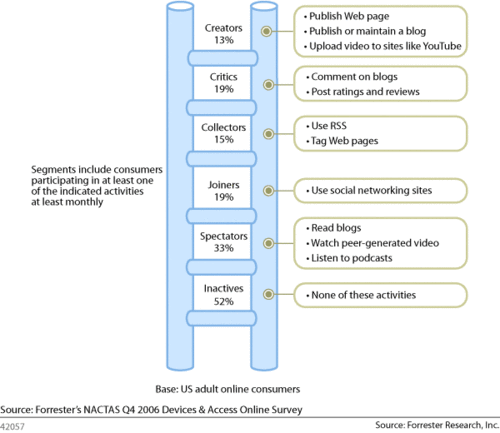
The image below illustrates the ladder of participation in any medium.  We all are one of these at any certain time; Creators, critics, collectors, joiners, spectators,and inactives.  Obviously, the higher one can get (and stay) on the ladder, the larger their influence will be with all the others.

Here’s how to kick ass as an influencer:

Influencers Read

Influencers read incessantly.  They have a yearning to always know the latest news and insider perspective.  They access the best publications to get a keen grasp on the the industry.  Through constant monitoring, like an ear to the railroad tracks, one can get a feel for shifts in technology – seismic or slight as they may be.  With an industry such as the technology space, things change daily and keeping up on the changes can be the difference between a first mover advantage and last to the party.  Reading also sharpens the mind and helps with comprehension while expanding the knowledge base.  Why would’t anyone want to do that?

Influencers Write

What does one do with all that knowledge and information they are collecting each day?  Write about it!  Although reading and mentally organizing vasts amounts of information helps to increase personal bandwidth, putting thoughts together on screen in a cohesive manner only adds to personal comprehension of abstract concepts.  Like an artist who throws various colors together to bring a painting to life, to each of us writing can be a piece of art that takes upon a life of its own.  Each person has within them a unique perspective of the world, and writing provides a pedistal to stand in which we organize thoughts and inform others.

Influencers Publish

Writing your thoughts on a word doc is a start but it will not lead to becoming influential, you need a platform for publication.  Blogging has become mainstream and it is quite easy to establish your own blog/site in which you can publish your words.  This seems to be the biggest hurdle for most to overcome, as it can be overwhelming and intimidating to put yourself out there with little place to hide.  Yet, that is the whole point…  Creating authentic words, infusing a unique personality, adding to it a spice of your own creativity is what people crave most in today’s media.  Most people don’t want another also-ran, bland, vanilla reporter regurgitating the facts of todays news that can be found on a hundred other sites around the web.  They want uniqueness.  They want personality.  They want to feel as if they know you as a blogger, writer or executive.  They want to feel close and connected to someone influential.  Trust me, they want to be inspired, so click ‘publish’.

Influencers Distribute

Once published, influencers understand the only way their words are going to reach the masses of people is if they can get to where they are.  Using the popular social platforms to their advantage, they get to work on spreading the information far and wide.  Creating titiles with Twitter in mind – with each tweet of the post the Title becomes the default twitter message – will only magnify the spread of each article.  Also, major publications are now allowing outside contributors (like myself) to harness their platform and add to the editorial strength of the brand.  Any influencer knows they need to be where the masses of people are in order for them to find you and your words.  Hop on the train before it’s too late!  Finding the appropriate avenues of distribution will lead to a growing number of eager readers.

As you can see, all it takes for someone to massively improve their influence is read quality content, write good content, actually publish the words and distribute it to a wide audience.  Those are 4 quick ways one can kick ass as an influencer.

Ice-cream Is Great, But Utilities Make The World Go Around

Lately I have had a recurring theme running through my head – “didn’t I see that startup idea before, only with a different name?  Aren’t there more than a few startups doing this same  little sharing thing? ”  I believe we are witnessing another “bubblish” period of time, with valuations of young startups skyrocketing and investment money flowing like wine from Napa Valley.  When money starts flying from every which pocket so do the various copy cats and so called “Groupon’s for X industry” and “Airbnb for Y category” startups.  Ironically, creative innovation declines as similar business ideas get most of the available investment funding; I am not sure this is the best thing for the future of our economy.

Twitter co-founder Biz Stone recently commented “Everybody said ‘Twitter’s useless.’ To which my co-founder Evan Williams said, ‘Well so’s Ice Cream, you want us to ban Ice Cream and all joy?’ We said, ‘Screw that. We’ll just keep working on it.’”

This ice cream statement is referring to some people thinking Twitter and other social sharing applications are just petty fun but don’t serve much purpose and are not very important to the development of our economy.  Others believe the future lies in developing new technologies around people and infusing social in everything we do.  So who is right?

Well, let me go on record saying I beleive the application of social technology is indeed impacting our world and will continue to transform our society.  Yet, I will add a caveat to Stone’s point of view – ice cream is great, but ultilties make the world go around.  Ironies aside as Twitter becomes a utility to web users around the world, it ended up solving a problem we didn’t know we had at the time, which happened to be discovering people and distributing information.  But how many social companies are actually created with a strong economic value proposition in mind?  I think the point is very clear – when evaluating business and startup ideas, entrepreneurs and investors would be wise to focus their attention on things that solve a very strong need and plug into society’s daily function if they want to increase their odds of success.

Take a look at the following list below and observe what they all have in common:

Natural gas

Electricity

Telephone

Water

Old Steam Companies

hydraulic power

public transit

postal services

Public Infrastructure

All those industries and the associated companies all have one major thing in common – they are a public utility.  Being a public utility implies they serve a very obvious consumer need and  are frequently used products and services (speaking generally from a consumer point of view).  As a business they should have no problem developing a customer base, since their product is a need all consumers inherently have.

I suggest entrepreneurs think in absolute terms when developing their products or services.  Using an understanding of where technology is going, founders can anticipate aspects of everyday life which can be turned into utilities.  Here are a few things to consider:

  • What types of problems and challenges are consumers facing each day?
  • What problems are still served with older technological paradigms and are in need of more efficient solutions?
  • What types of industries have become ‘utilities’ and why?
  • What consumer activities seem to be more common place and will become utilities tomorrow?
Below are just a few examples of entrepreneurs viewing business as a utility.  Not an exhaustive list by any means, but they can serve as examples of clever business strategy and positioning.

 Schwab  and Wharton –  Steel

Steel was foundational utility as our country expanded from a small “startup” into the economic powerhouse of the 20th century.  Due to the expansion of the steel industry, railways, buildings, cars and other major industries advanced.  From wikipedia:

The Bethlehem Steel Corporation ascended to great prominence in American industry, installing the revolutionary grey rolling mill and producing the first wide-flange structural shapes to be made in America. These shapes were largely responsible for ushering in the age of the skyscraper and establishing Bethlehem Steel as the leading supplier of steel to the construction industry.

Edison – Electricity

Electricity, ala Thomas Edison, brought light to our night as well as power to our life.  Imagine a world without electricity… it is almost impossible to live in the 21st centuty (at least in the developed world) without this incredible utility.  Think about all the other multi-billion dollar industries that have been born and brought forth because electricity became widespread technology everyone could use.

Ford – Automobile

Although Henry Ford did not invent the automobile, he brought it (and mass manufacturing) to the general population.  With the introduction of the affordable car, consumers were able to travel more than a couple miles to spend their hard earned money, a transforming affect on the young US economy.  Commercial malls, retail centers, Supermarkets and many other industries were born from the advent of the automobile.  From the book American Entrepreneur:

Autos fundamentally changed transportation from a collective undertaking, whether in boats or railcars, to a principally individual experience.  Cars represented independence, not only freeing people from the confines of the city but from restrictions imposed by a particular geographic region. 

Gates – Software

Bill Gates had a vision – a computer on every desk!  Unofficially, he has achieved his vision and then some.  Shouldn’t it now be referred to as ‘a computer in every hand/pocket’?  But, who is keeping score…  Gates and Microsoft built the software found in almost all computers available, bringing to life the PC  revolution and birthing the connected world we live in today.  Productivity of Private, Public as well as Personal lives has greatly increased because of the software industry Gates created.

Zuckerberg – Social networks

As web connected devices continue to drive our daily activities, no one company has a better position to lead the charge in our new world as does Facebook.  Mark Zuckerberg, at a ripe young age of 19, saw we would interact with devices, the web and people around the world in a whole new way.  In creating and growing Facebook, he established a platform users now consider a daily communications tool.  What can be built off it still mostly remains a mystery, but his vision of a utility is quite clear.

As a brieft list, these visionary individuals are amongst many others who transformed our world through groundbreaking businesses.  Importantly, all of them viewed their concepts through a utilitarian eye, observing where human life currently had a problem and how their company could offer a solution.  Find a need and fill it.  Serve a strong purpose in consumers’ everyday life.  Have a vision of a wide-spread platform, or a unique position where a multitude of new industries can be spawned from your one idea.  I believe that is the best position to start with when evaluating a new business venture.

@jnickhughes

Image courtesy of Flickr user Daniele Sartori.

Social Search Series Part IV: Will Quora Be More Valuable Than Google?

Social Search Series: This summer I am embarking on a journey through on the emerging web of Social Search. Traditionally known as the Questions & Answers industry, this category is currently being transformed by social and mobile technologies. No more asking a site questions and finding old answers.  I believe the future of the web is ingrained in the dynamic interdependence of social and informational networks. This is part IV of the series.  For background, check out the previous articles Part I here and  part IIand Part III here.

Googling may be the most popular way we currently search for information but mark my words, it will not be the primary way you find information in the future.  The previous articles in this series describe how the web has changed, grown exponentially, become more social and ultimately more difficult for traditional search engines to index.  That means you, as a user, are usually getting the wrong end of the search stick.

This article is about what keeps Google up shivering at night – the future of search lies not in what you know, but in who you know.

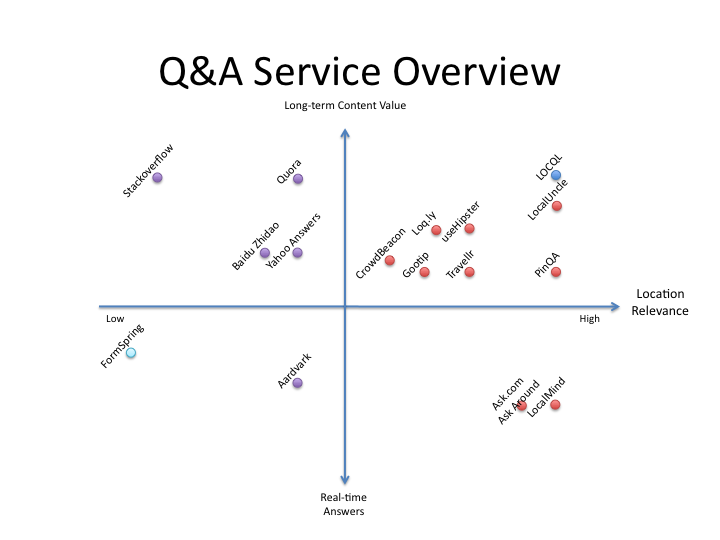
The search environment is splintering and I am postulating the next generation of search will reside within your network of contacts.  I call it Social Search.  In my first article a graph was used to illustrate four quadrants separating the field of emerging social search startups.  In my third article I talked about the first quadrant, Location Relevance, and what happens when you combine social, location and.  It looks as if a few associated startups, LOCQL and Localmind, are positioned well to change the very way we interact and search locally.

Quadrant: Location Agnostic

The next subcategory in social search can be referred to as Location Agnostic.  Some social search applications do not integrate location-based technologies into their functionality, but more or less originate around specific topics and expert knowledge.  Although these applications are location agnostic, they still can be relevant to many users and possibly become large search companies.  Refer back to my original post for the entire list, but here I will cover two of the best positioned startups.

StackExchange

Originally designed for professional and enthusiast programmers, Stackoverflow has emerged as one of the leaders in the social search space.  The StackExchange Network encompasses an additional 57 social sites like cooking, photography, etc.  Each of these sites is uniquely focused on it’s specific topic, and is called a “StackExchange”.  Collectively they are the StackExchange Network and with nice growth numbers now see almost 15 million users each month.

Here’s how it works: After someone asks a question, members of the StackExchange community propose answers. Others vote on those answers. Very quickly, the answers with the most votes rise to the top. You don’t have to read through a lot of discussion to find the best answer.
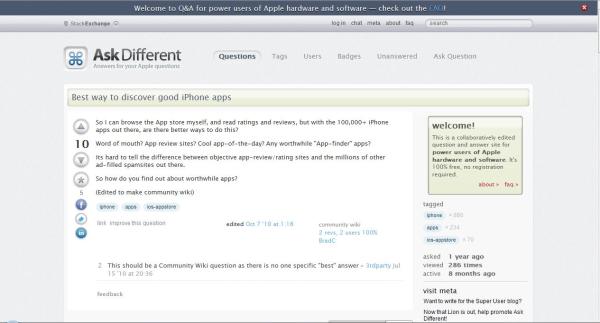
The growth of StackExchange is just another proof point aimed directly to replace swimming through the vast sea of links on the web, most of which are content farms or spam.  Simply put, these new approaches help people find better information quicker.  The unique take on mining expert knowledge for user search and discovery is quite clearly the future of search.  It is what I have been referring to over the past few articles “the future of search lies within your network of contacts“.

According to co-founder/CEO Joel Spolsky, the old question and answer model became flawed.  “I sort of feel like the first generation of Q&A sites, Yahoo Answers, WikiAnswers, and those, ended up accidentally being used for entertainment purposes. If you look at Yahoo Answers, it’s being used as a chat for teenage girls. It’s not really being used to get answers.”

StackOverflow’s answer is to focus on experts“We only select verticals where we have a critical mass of a couple hundred experts in the domain. We’re only interested in the domains where there’s something to learn – a corpus of knowledge, there’s a canon of knowledge, and people sharing knowledge are called experts.”

So why do I believe the future of search lies in a networks like StackExchange?  When experts are willing to divulge their knowledge, a site is able to collect and organize it, and more and more people start to use and share the information – *bing* the picture starts to become clearer.

Interestingly, Spolsky might not fully agree with my vision just yet.  “Our expectation is for the most part, people like to type their questions into Google and they’re not going to go to a specific site that often.”  Maybe he just can’t imagine a world where you could start following these experts, ones who you can look upon to bring you specific knowledge in areas of personal interest? In that world you wouldn’t have to go to Google anymore.  And what if you could infuse your social contacts in a way that…

Quora
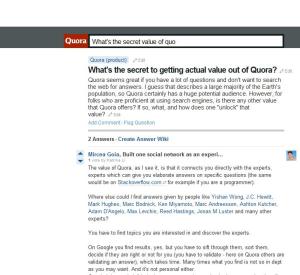
QuoraQuora, founded by former Facebook employees, aims to build THE go-to application for the world’s wisdom and knowledge.  The cool thing about Quora is not only can you search and vote answers up or down, you can follow well known individuals as they continue to add their knowledge to the site.  Quora is combining the best of questions, answers, social contacts and search in an effort to build out a rich knowledge platform rivaled by no one.

They are the new Silicon Valley darling, garnering much attention and valuations around $1 billion yet still remaining a fraction of the size of StackExchange. Thus far they have maintained their focus on the relatively smaller tech community and it’s unknown if they can uphold their quality of answers as they grow in quantity of questions.

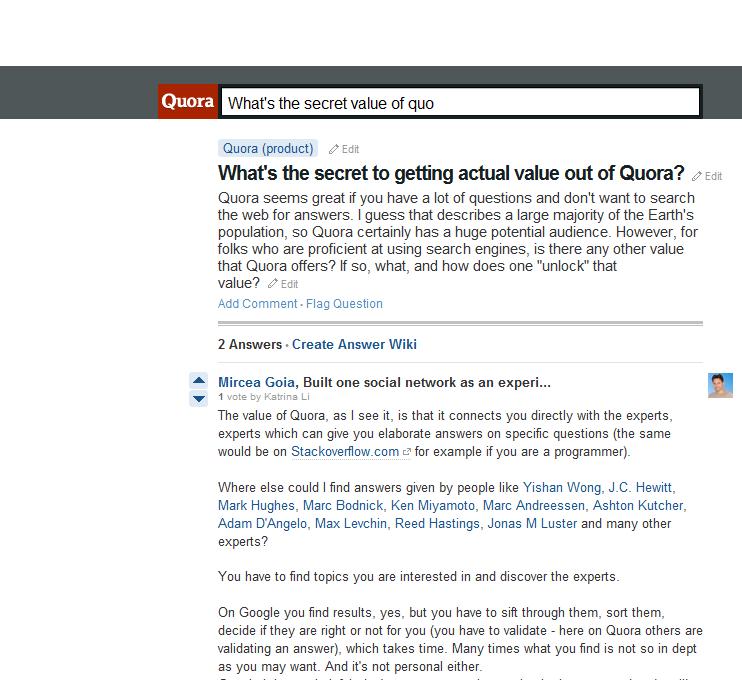
I searched Quora on the secret to getting actual value out of Quora, and as if on cue, here is an answer from Mircea Goia, a Web developer and web consultant (image above:

The value of Quora, as I see it, is that it connects you directly with the experts, experts which can give you elaborate answers on specific questions (the same would be on Stackoverflow.com for example if you are a programmer).

Where else could I find answers given by people like Yishan Wong, J.C. Hewitt, Mark Hughes, Marc Bodnick, Ken Miyamoto, Marc Andreessen, Ashton Kutcher, Adam D’Angelo, Max Levchin, Reed Hastings, Jonas M Luster and many other experts?

You have to find topics you are interested in and discover the experts.

On Google you find results, yes, but you have to sift through them, sort them, decide if they are right or not for you (you have to validate – here on Quora others are validating an answer), which takes time. Many times what you find is not so in dept as you may want. And it’s not personal either.

The greatest thing about these new search services is the best results and answers are voted to the top by other knowledgeable users, providing a much better user experience when observing results.  No more 10 links to a page.  No more SEO crap, where you see the first 10 results yet know they are there because someone knew how to “optimize” the site.  Superior optimization does not lead to superior information.

Although Quora currently attracts a relatively small user base, it might be to their advantage at this stage of the game.   As Yahoo answers became flooded with users, the the quality of information went way down, rendering the service meaningless to any serious web query.  If Quora can correctly harness the cornerstones of expert knowledge, social sharing and social discovery, as well as manage an appropriate growth curve becoming valuable to more and more web users, they have an opportunity to challenge the traditional search incumbents.

The value in Quora seems to be in what most see as in its incredible potential.  Semil Shah, recently on his own Social Search kick as well, has put the future of Quora best:

When all of these Quora threads are tagged in context within topics and subtopics, it builds out the site’s ultimate secret weapon: Topic Ontology. The ontology built so far within Quora is staggering.  For many topics in traditional verticals, the site has already mapped out all the relevant topics and subtopics, tagged them against other relevant pages, and created an entire hidden architecture of related pages that are all built into its own system with little to no contamination. Think of these topics as plates on a planet, rubbing against one another and moving over time to form entire new land masses — this is how fundamentally groundbreaking Quora could be for the web.

As I noted last time, research has shown that subjective queries can be monetized at 5x – 10x higher than objective queries.  It doesn’t take a rocket scientist to see where all this is going, Shah agrees: “advertisements that are targeted against specific Quora threads will know everyone who has subscribed to that thread, their explicit interests, and related questions. That alone on an ad-model basis could be worth billions of dollars.”  The problem incumbents face is these types of platforms are so different they are usually built from the ground up using a whole new infrastructure, not tacked onto an existing search tool.  I wonder if Google and Microsoft have asked “What’s The future of Search?” on Quora lately?

The question remains – What will happen to Google’s dominant search position as these new platforms grow and take shape?  If history repeats itself, Google will be moved aside as another platform takes over (or a multitude of platforms share space in a more equal search market).  Once dominant IBM shed it’s power position to Microsoft.  Aol, valued at one time around $160 billion, lost it’s early web dominance to Google.  Facebook has emerged and has a stranglehold on the social networking space with a very interesting future ahead of them.

What Shah and myself are trying to get people to understand is this: “At the same time, no matter what, behind the scenes, Quora is slowly learning about our interests (both explicit and implicit), they way we use language, and our intent through search, following, and voting, using all of this information to perhaps reorganize the web and lay a new foundation for years to come.”  Same could be said about Facebook.  These are interesting times to say the least.

Look for my next post in this Social Search Series, as I determine if long term information still has a search value on today’s real time web.

@jnickhughes

2 Steps Forward, 1 Step Back Is The Crazy Entrepreneurial Path We All Follow

We as entrepreneurs have a jaded view of the world we live in.  It’s a disease actually.  We look out onto the horizon seeing opportunity, wealth, fame, fortune or whatever gets us up each day and disregard the inevitable barriers which lay in our way.  But it’s not always up and the the right, within our journey failure sits awaiting; steps forward and steps backward.  It’s natural and should be expected.

Already for me, this summer has been a microcosm of the entrepreneurial journey.  Courageously leaving a full time job at the beginning of May, quickly learning what I thought was my next gig actually wasn’t, setting out on my own to make ends meet, continually reaching out and connecting with various CEO’s and local entrepreneurs each week, starting to write daily and beginning to reach people like yourself, interviewing everyone from CEO’s like Bryan Trussell of Glympse to entertainers like Sir Mix-A-Lot, being approached to cover topics and startups I never would have imagined a few months ago, being approached by numerous startups with offers to join, and ultimately accepting an offer that is currently forming into my next venture.

Yea, I know… all that in about 90 days.   Words cannot describe this experience, but somewhere in between exhilarating and terrifying would be accurate.

As you can see by my short summer filled with opportunity, the entrepreneurial path is always 2 steps forward, one step back.  The important thing is at the very least you are always moving forward.  If it were one step forward, two steps back – you would be sinking.  Let’s hope you aren’t going that way.

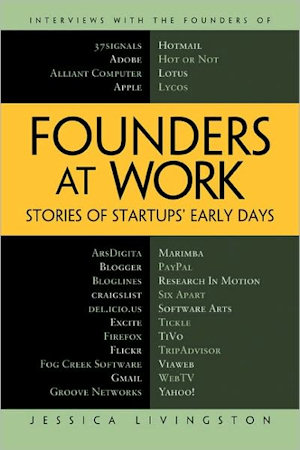
It’s times like these I grab my copy of Founders At Work, a book which has helped me through similar challenging times.  As a collection of startup and early day stories of some of the more well known technology companies from the past 25 years, it is my entrepreneurial medicine.   It gives inside perspectives on the founding of various companies starting with Lotus, Apple all the way to Flickr and Craigslist, almost like you are there with them.  You can feel their pain and experience their triamph all the while secretly wishing/hoping you will one day grace similar pages.  Through reading incredible stories like overcoming insurmountable challenges , founder disagreements, backstabbing, near bankruptcy, exploding revenue, and going public you realize every entrepreneur faces an uphill battle and your situation, although unique, is not impossible.

You will also see that each is a unique story of two steps forward, one step back.  Apple was founded by Steve Jobs and Steve Wozniak in a garage in 1976 and got initial steps forward because of the Homebrew Computer Club.  Paypal, founded by Max Levchin, was a security and cryptography service for transferring money between PDA’s before becoming a web payments company.  Founders like you and me need to understand all these large and successful companies we read about each day all started with a lot of hard work and as just an idea.  Usually that idea wasn’t what you see today and those billoinare founders were a lot like you – scrappy, dissatisfied, hungry and motivated.

Tw0 steps forward, one step back.

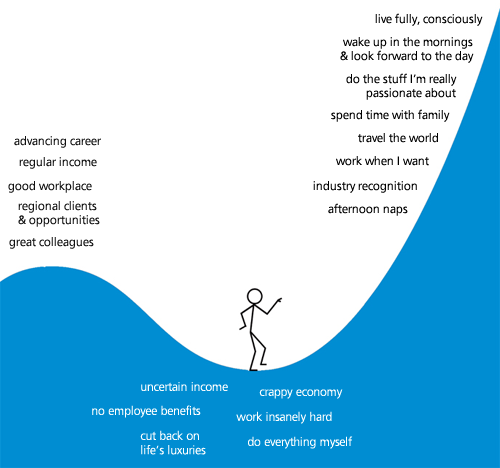
Another way to think about it is what Seth Godin calls The Dip. Put bluntly, he visually describes the path people encounter in life, where to be great one has to go through the challenging trough to emerge on a higher level.  It’s a book about avoiding temptation and gravity and becoming the best in the world.

I’m amazed at how quickly people will stand up and defend not just the status quo but the inevitability of it. We’ve been taught since forever that the world needs joiners and followers, not just leaders. We’ve been taught that fitting in is far better than standing out, and that good enough is good enough.

Which might have been fine in a company town, but doesn’t work so well in a winner-take-all world. Now, the benefits that accrue to someone who is the best in the world are orders of magnitude greater than the crumbs they save for the average. No matter how hard working the average may be.

I’ve never met anyone… anyone… who needed to settle for being average. Best is a slot that’s available to everyone, somewhere.

Two steps forward, one step back.

That’s how we roll as entrepreneurs – somehow, someway moving forward.  I believe how you approach the one step back will make all the difference in your life.  Knowing it is a natural step in your evolutionary process as en entrepreneur will help you use it as a stabilizer, not a fall backwards.

These are exciting times, and although constant talk concerning the economic health of our nation is getting louder, I am not going to let it deafen my voice.  Neither should you.  Take the backward step in stride and then look forward as you readily take your next one.

This Is Great Advice For Any Blogger or Writer Today

As most of you know, only recently have I taken to writing.  In fact, it was in mid-May I started this blog as well as had the opportunity to freely post on a world-wide publication like Business Insider.  So when I read something like this statement below from A.J. Kessler, I really identify with it.

In a medium like writing, creating great work means not only producing a lot of work, but doing even more editing.  Honing ideas, stories, scenes, and phrases until they are as good as they can reasonably be.  Even though most of your output may suck, with enough refinement, you can eventually produce something fantastic.

Although writing seems to come to me naturally, it is quite challenging to do it well.  There are times I look back at past posts and think “what was I thinking?”  But, it’s an iterative process and with more writing comes better writing.

If your goal is to produce outstanding work, in any field, recognize that most of what you produce is going to suck.  To get from “suck” to “awesome” takes a huge amount of effort and skill.

That being said, I encourage anyone out there to start writing.  You will be surprised at what will come your way.  It has been the single greatest and most impactful decision I have ever made in my life – hands down.

How Those Of Us Not Named Mark Zuckerberg Can Still Be Successful

A recent post on Business Insider by Rishi Chowdhury titled “Being a Young Entrepreneur” got me thinking about being young, being entrepreneurial and the affect it has on how others view us.

Chowdhury maintains since it is much easier to start companies today, we are seeing many more founders in their late teens and early twenties emerge with significant web products.  This has happened because they 1) come to coding and technology more naturally, 2) have the free time and 3) have less in their life weighing them down.  He notes:

It is also more common place to see teens who have taught themselves code and are able to create innovative web apps due to the freedom they possess. As this generation has grown up along with social networks, they know how to leverage these. What may start out as hobby/after school project can turn into a real business.

That’ s the upside, easily being able to start a company.  He then goes on to illustrate the difficulties in being taken seriously and actually building a company at such a young age.  I fully agree with Rishi and whatever the challenges he sees ahead, based on his writing I believe he has a great future ahead of him.

But what about those of us who aren’t Mark Zuckerberg, who didn’t trip onto a great idea in their late teens and now have more wealth than we ever imagined?  What about the guy in his mid-late twenties, who isn’t seen as the next “wonderkid” but cannot seem to shake the entrepreneurial bug that chases him everywhere he goes?  How about the people out there who don’t know how to code, have never actually created a web app but still dream of building a great business?

I believe sometimes we can be too hard on ourselves.  I think we look at the lucky few and think “geez, that guy is like 5 years younger than I but he is one of the richest people in the world!  How did he get so lucky?”  This is not the right perspective.  Mark Zuckerberg is an exception, and an outlier who has skewed the tech founder perspective

It is still harder than ever to create a breakout business.  Actually, it’s quite a bit harder than it was 10 or 20 years ago.  Why?  Because when it’s extremely easy and cheap to create a new web/mobile app, thousands and thousands of people do.  And when so many more people get involved, the market gets overcrowded.  When the market gets too crowded it becomes incredibly difficult to stand out and be discovered by enough people to achieve a critical mass of users.  Today, you must be very good at what you do to make it big.  Quality now matters more than ever – quality in product as well as quality in person.

So how does one go from a non-technical industry to becoming a tech executive?  Or put another way by Rishi: “A big consideration when starting your company while still very young, is how are you supposed to be taken seriously as a young entrepreneur?”

Well, my advice to Rishi as well as all other entrepreneurs: Be an exceptional person.

1) Build yourself as you build your company

From this day forward and for the rest of your life, you will be interacting with older, more educated and much wealthier individuals.  Sorry to tell you, but they usually will decide if they want to work with you within 5 minutes.  The trick is to quickly impress on them your strengths and abilities, usually within the time it takes to finish your elevator pitch.

This can be the biggest obstacle of all – your personal presentation – especially if you don’t have the luxury of saying “oh, and I’m a Harvard (or Stanford) grad.”  How much time you devote to development of your wisdom, knowledge, wit, personality and social skills will be obvious to businessmen, CEO’s and investors the moment they meet you.   I am a firm believer you can really move forward in life by polishing yourself each day.  No one should ever leave the student mentality.

A few ideas:

  •  Audio learning whenever possible- I listen to Stanford ecorner podcasts each week and it’s like I am in the class.  I also listen to ITconversations when I am driving.
  • Read books like it’s going out of style – business, tech, personal development, fiction, etc…
  • Get uncomfortable and reach out to people whenever possible; learn from each interaction

2) Build your network as you build your company

I cannot tell you how valuable “the network” is, and I am referring to the professional networks like LinkedIn.  Whatever you choose to go with, reaching out and connecting with well established people validates you as a professional.  Once you get connected (via email, phone call, mutual friend into, etc…) immediately book an in-person meeting.  Overlooking a personal meeting is the biggest mistake most young (or less connected) people make today.  Put bluntly: virtual connection does nothing but link you with someone else.  To leverage the connection, you must sit eye-to-eye, open yourself up and let the other person get to know you so they actually understand how to best help you.  This can only happen through in-person meetings.

A few ideas:

  • Reach out to your local tech network and introduce yourself to others in the community
  • Ask to have coffee and meet them in person.  Interview them and write about it!
  • Build out your LinkedIn connections, more people validate you with it than you might think

3) Build your vision as you build your company

There is something magical about hearing someone describe a vision of how they intend to change the world, especially if they are younger in age.  Doing this separates you from the crowd so when you do connect with others they will remember you and your unique vision.  Who wants to listen to someone says “oh, we’re the guys doing daily deals for X industry”?   They most likely won’t remember you or what you are doing with a vision so undifferentiated.  Get passionate, creative, and innovative around something new and start talking about it.

A few ideas:

  • Look at industries which haven’t been fully transformed by the web and search for pain points
  • Take the long view and have courage to paint a unique vision, tell the people you meet about it
  • Use “the network” to find others who share your vision, they might just turn out to be future partners

I understand it’s difficult to be taken seriously as a younger founder because it’s the same as a (relative) newbie to the tech scene, and I’m just barely out of my twenties myself.  We are not Mark Zuckerbergs, who seemed destined to create the next big thing.  But it also doesn’t mean you are any less qualified to lead a great organization.  It just means you have some extra work ahead of you.  And as an entrepreneur, that shouldn’t come as a surprise.

First Ever: Seattle vs NYC DJ Battle And Dance Party on Turntable.fm This Thursday Night

This is AWESOME!  A first of its kind and history in the making.

Seattle DJ ‘s will do battle against NYC DJ ‘s for turntable.fm supremacy, with an accompanying Dance Party physically and virtually both in Seattle and NYC.  The fun begins at 8pm and will go to 1am the next morning in their own respective timezones.  They will time shift the battle, so NYC will start at 9PM EDT and go ahead and Seattle will begin at 9PM PDT. After the event the winners will be posted on the Turntable Battle leader board.

Anyone not in Seattle or NYC can go to turntablebattle.com on July 28th to join in and listen to the two battle rooms .

Here are some event details:

  • 10 DJs on turntable.fm
  • 5 DJs on-stage at each location
  • 2 Physical Rooms (One in Seattle another in NYC)
  • 2 Virtual Room both in turntable.fm
  • House, Techno, Electo House and Dubstep – with some surprises thrown in there.
  • Battle Starts at 9:00 PM PDT

Tickets for the Seattle event are on sale here.

Tickets for the New York event are on sale here.

DJs who will be involved in NYC are posted here:

DJs who will be involved in Seattle are posted here:

What is Turntable Battle?

Turntable Battle (TTB) is a site that focuses on bridging the physical and virtual worlds of DJ Battles and dance parties using turntable.fm.  They host multi-city events across the world that pull music enthusiasts together both in dance clubs and virtual dance rooms. TTB wants to elevate and extend the user experience by letting people know which DJs are on-top of the leader-boards, providing interactivity between two different venues during an event as well as highlight fresh, innovative music from up incoming music producers and DJs.

Founder Ali Daniali has a vision of using Turntable.fm to transform the current DJ industry.  “I envision TTB just getting better every time we put on an event that moves attendees and engages them in a way they haven’t before. We feel that if we can put on events that people can’t get anywhere else, they will come back for more!

Talk about innovation being the mother of necessity.  “TTB came out a need I had when I wanted to attend a NYC dance party and the flight was around $800. So I said to myself I’ll just have my own dance party!  Then I had the next epiphany, to pit us against NYC in a DJ Battle.

During the event attendees within the virtual world on turntable.fm have the opportunity to AWESOME the DJ, giving them a point. You can only vote once for each DJ playing.  TTB will tally the points for each room and announce the winning city on the turntablebattle.com website.  Winning DJs get exclusive prizes from TTB.

The Seattle event will have one DJ selected from a DJ Battle which happened exclusively on turntable.fm this past week.  The tournament had 5 rounds, with the first four events pre-qualifying DJs for Round 5. The winner of Round 5 will move on to perform either on-stage or virtually at the main event on the 28th.  Information about the on-going DJ Battle can be found here.

Daniali is excited at the prospect of Turntable Battle and looks forward to putting on others around the nation.  “My focus now is to build a meaningful company that produces events at very high quality level that bring people together and makes them happy.”

He is thinking about doing some of these battles next – LA vs. Vegas or Denver vs. Dallas or Atlanta vs. Miami.  You can vote on these soon on turntablebattle.com.

You Know What’s Sexy? This Profitable Startup

Ya know, the web is an interesting place where anything seems possible and innovative new applications recreate the very world we live in.  Each day, entrepreneurs flock to it in hopes to create wealth akin to the 19th century American gold rush.  Understandably, it’s tempting to want to reach for the stars and invent a sexy, new, innovative web application.  Yet for every thousand or so businesses created, usually only one actually turns a profit.

It just so happens one of them is ResourceWebs, and anyone wanting to actually make money on the web might want to sit up in their chair and pay attention.  Class is now in session.

ResourceWebs is a network of targeted niche websites, each offering an education resource for its users – hence the name ResourceWebs.  As unique consumer properties they focus on a specific topic and are filled with a variety of high quality content, tools, and resources.  Some of their fastest growing and most popular properties include: railroad.net, solcomhouse.com, famousbirthdays.com, moonphases.info and mpgfacts.com.

Evan Britton, company President and a 12 year internet marketing veteran whom has worked within several successful entrepreneurial endeavors (and a Business Insider contributor as well), says focus and quality are the keys to a successful web content business. 

“On the web today many web properties spread themselves thin by focusing on everything.  We learned it’s about quality not quantity, as the properties which we invested and nurtured the most have become the most successful, while the smaller and more automated properties have slowly died off.

The world of content sites has flipped recently as Google Panda came out with 23 questions for webmasters to consider.  Google says that it looks for articles written by enthusiasts, that it wants articles related to the interests of the site’s visitors and that it more values websites which are a recognized authority on the topic.  Basically, it’s trying to clean up the web.

“This has been our vision all along, to focus on niches that we felt we could truly make an impact on, and not spread ourselves thin by trying to cover topics not directly related to our niche verticals.” 

Monetizing these sites has put ResourceWebs in an elite class – profitable web companies.  Putting to use highly targeted contextual ads ResourceWebs is able to generate significant monthly income organically from the more than 3 million visits and 10 million page views.  Britton wasn’t specific on revenue but did mention ResourceWebs monthly revenue is in the five figures with a goal to hit the low six figures soon.

Starting Small and Staying Lean

Contrast Britton’s approach with one of the latest web bombs – Color.  Color built a photo sharing app for a mobile device, raised $41m before even launching a product, was valued at over $100m pre-launch and created mass hysteria prior to any market traction.  All that unnecessary crap ultimately led to Color falling flat on its face.  Considering all the hysteria, Color never generated much traction or any revenue nor was it even clear how it would ever be a profitable company.   Maybe I shouldn’t be too harsh, they were valuable for at least one thing – teaching us how not to launch a company.

“Our goal with ResourceWebs has been to keep the business profitable throughout each stage of the company.  Doing this may have taken us longer to grow – but it assured that we were growing an endeavor which would indeed be profitable.” Britton maintains this might not be as sexy as other startups but is by far more dependable and sustainable.

I say dependability, sustainability and profitability are damn sexy!

Britton is keeping his options open but seems quite satisfied where they are as a business.  “Seeking outside funding is always an option, but right now we aren’t looking for any further acquisitions and we are able to invest in our properties each month as the business has low overhead and very solid monthly income.”

Know Where Your Startup Could Fail

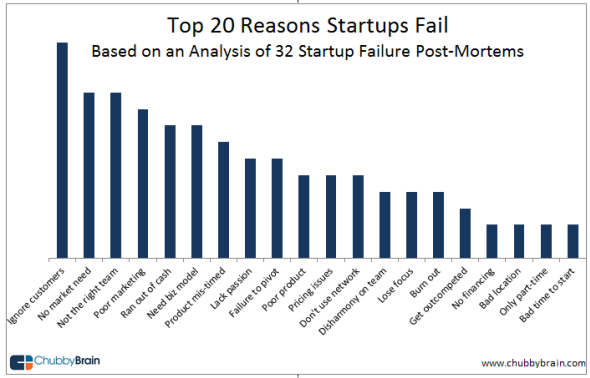
Britton’s approach to ResourceWebs should be an example to all of us web entrepreneurs.  Below is a chart displaying the top 20 reasons startups fail from an article describing in detail the top reasons for startup failure found in post-mortem studies.   Whether Britton knows it or not, he took care of the top six right out of the gate.  Successful companies generally don’t pop up overnight, must focus on a finding and fitting a market need, listen and cater to their customers, find some sort of ability to generate revenue early on and should be grown and marketed organically so they can achieve a sustainable and profitable status.  Besides understanding green is the color of money, the guys at Color don’t seem to have a clue.  Maybe they should study this image.

Located in Santa Monica, CA, ResourceWebs is a small operation tightly ran by Evan.  The gatekeeper for each of the properties, Dr. Robert Amodeo, is the IT Manager who holds a doctorate in engineering from UCLA.  Prior to joining ResourceWebs, Robert worked as a programmer and IT manager in the UCLA math department.  North of that they have a team of writers who cover specific properties in which they have the most passion, something Britton notes to be a winning formula.  “All in all, we learned that you can find success through tackling a niche if you have passion, maintain focus, and create value.”

So my question is if ResourceWebs is attracting millions of visitors each month, minting millions of dollars each year, highly profitable and growing steadily, why are investors still flushing money down the drain on nebulous startups who can’t figure out what they are doing or how to generate any revenue?

ResourceWebs may not be as sexy as some of the new startups out there, but you know what is sexy?  That’s right, a profitable company.

Social + Location + Real time + These 2 Startups = The Future of Search

Social Search Series: This summer I am embarking on a journey through on the emerging web of Social Search.  Traditionally known as the Questions & Answers industry, this category is currently being transformed by social and mobile technologies.  No more asking a site questions and finding old answers.  I believe the future of the web is ingrained in the dynamic interdependence of social and informational networks.  This is part III of the series.  For background, check out Part I and part II.

Social, although hot right now, is not the only technology transforming the web today.  Location-based social search applications are bridging the gap between our online and offline worlds – and in doing so creating a whole new way for people to find and use information.

This post dives into the new territory of Location Relevant Social Search.

We first determined the traditional question and answer model is now insufficient, since the system doesn’t know your exact location, who your friends are or have any contextual understanding of your query.   The resulting answers are typically of low quality and relevance proving a broken model.

Additionally, search technology needs renovating and although Google is currently King of the Search Land they still have a lot to do if they want to hold onto their throne.  Basically, the amount of information on the web is growing so quickly that even the major search engines are bringing back mostly meaningless results.

I am postulating the next generation of search will reside within your network of contacts, and I call it Social Search.  In my first article a graph was used to illustrate four quadrants separating the field of emerging social search startups.  The first quadrant revolves around Location Relevance and it looks as if a few associated startups are positioned well to change the very way we interact and search online.

First, a few tenets we can stand on when talking about Location based social search applications:

  • Most of the worlds information is generated, organized and stored by human beings
  • People generating information are always at a specific location found with exact coordinates
  • So naturally, generated information always has specific geographical data attached to it
  • Combining those data sets: Search + Social + Location + Context = Maximum Relevance

In a related post, Evan Britton noted “the goal of real time search engines is to inform the public of what is going on right now.  By adding location data, internet users can be specifically informed as to the happenings in a city.”  Indeed, real time search results are incomplete without geographical data included in the context.  Location relevance completes the equation to help provide users with the best possible results when searching for specific information.

Location based technologies are changing our lives in every way imaginable.  Take the emerging location tracking application Glympse for example.  Watching someone drive along a map on their way to meet you, being found when lost on a mountain side or viewing thousands of people moving throughout your city in real-time are just a few ways Glympse will change our lives.

Or think about a similar application Geoloqi, a service using persistent location tracking to trigger notifications tied to real-world places.  Maybe it’s a note you or a family member left for you at the grocery store or maybe it’s part of a set of geolocated data that you opt-into subscribing to as a layer because it was of interest to you.  Some use the app to let their co-workers know how quickly they are getting through traffic to arrive at work.  Make no mistake, location aware applications are already changing the way we interact on the web.

Quadrant: Location Relevance

So what happens when you combine social, searching and location?   Annotating results with specific geolocation data when a query is submitted is fundamental to providing users with the BEST answer possible.  According to Bing, over 50% of mobile device originated search queries are about a specific place.  Think how often you quickly grab your mobile device to search for something.  Exactly.  The search world needs to catch up to the intricacies of how we are using the web today.

You can find the entire list of emerging social search startups here, but I am highlighting two emerging startups innovating location-based search and are poised to be big players in the search space.

LOCQL

LOCQL, Seattle startup some would refer to as “Foursquare Meets Quora”, has smartly put together two basic premises; 1) everybody knows a little bit about something and 2) location specific information always make things more valuable.  Marry those together, involve some game mechanics and you have a living, breathing repository of location relevant information based on where you currently find yourself. Using social power, LOCQL finds the missing links between the user’s queries and the places in the local landscape for which they are searching. They are still in beta but anyone can use the application.

LOCQL Co-founder Robert Mao can see the future of search lies within humans; “The idea for LOCQL came from our life experiences, as International travelers we traveled to many different places, relocated our home’s several times in different countries. There are so many ‘best kept secrets’ only local people know about, those who’ve been there just know it. Unfortunately, without a service like LOCQL, you won’t be able to find it from the web, nor can you find it through search engines.”

A major problem with current search engines is the “objective vs subjective” issue, and the qualitative differences found between their results.  Through quantitative analysis, Mao found up to 60 percent of location intended searches are subjective, meaning relevance can vary a lot between two different users searching on the same subject. “Social search is basically harnessing collective intelligence by crowdsourcing the answer from real people, so by nature it better solves the queries which are subjective.”

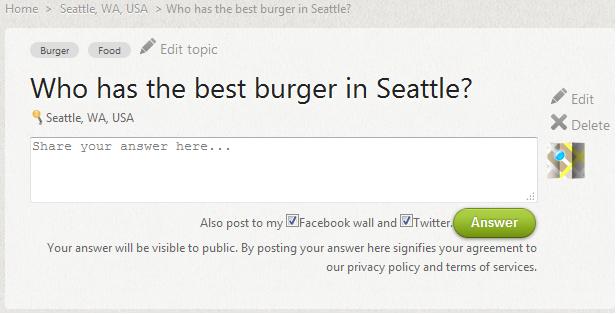
With LOCQL, users search or submit on topics and questions – typically in relation to a specific location – and receive highly relevant, useful answers.  “Who has the best burger joint in Seattle?” searched on LOCQL would give you one or two specific answers left by other LOCQL users who actually know the answer.  The same searching on Google will send back hundreds of useless links, most gamed by SEO keywords.  Plus one for LOCQL.

LocalMind

Where LOCQL is building a repository of location based information, Localmind, co-founded by Lenny Rachitsky and Beau Haugh, is centered around a real-time social search platform.  It can be thought of as the power of omniscience at your fingertips — the ability to know what’s happening anywhere in the world, right now.

According to CEO Lenny Rachitsky, they are working on a somewhat obvious concept. “We’re living in the 21st century for god sakes; we have data on people’s locations, we have always-on devices in our pockets, we have all kinds of sensors in our devices and in our world. We know more about what’s happening across the country than we do at the restaurant we’re thinking about going to. We are putting all those pieces together and solving that problem.”

Localmind allows you to send questions to users checked-in anywhere around the world to help solve your basic needs and inquires –  like how crowded is the bar, how many girls at the club, how good is the food at the restaurant, how long is the line at the airport.  More interesting uses include people sending questions to Japan after the tsunami asking if there’s anything they can do to help, or people getting free concert tickets when asking about a concert venue, or saving a family a few hours of travel by finding out a certain hotel was closed.

It has been found that subjective queries can be monetized at 5x – 10x higher than objective queries.  It doesn’t take a rocket scientist to see where all this is going.  Google and Microsoft, I hope you are listening.  The problem incumbents face is these types of platforms are so different they are usually built from the ground up using a whole new infrastructure, not tacked onto an existing search tool.

Lenny noted there are 4 core things they focus on: 1) Your preferences, 2) your friends preferences, 3) your current location, and 4) your exact date and time.  Combining those gives users much more relevant and useful information.  Interestingly, Google would have no clue how to answer those above searches and probably just shrugs its big shoulders if you try.  Alas, plus one for Localmind.

The much accomplished team of three launched Localmind at SXSW in March and have already shipped four major updates to the iPhone app.  Their Android app is in it’s final beta release and will be entering the marketplace in a few weeks, and they also have an open API (www.localmind.com/api) that allows anyone to built on top of their platform.  Amazingly, Rachitsky says 70% of searches are answered in 5 minutes and they just reached 20,000 users, both numbers are satisfactory to Rachitsky at this point.

With a newly raised angel round of funding and relocation plans to San Fransisco, Localmind looks like they are warming up to play some hardball.  And LOCQL, a relatively quiet startup still in their beta release, is very strong technically and has a promising future a head of them.  Indeed, it seems both are ready to play David to Google’s Goliath.  Now, where is that rock again?

Next time, I will determine if Location Agnostic applications are changing the way we are searching on the web.  Yes, I’m looking at you Quora.

Branding – Most Important But Usually Overlooked

Branding is one of the most important aspects of building a company (or persona) but it is so often overlooked.  Consider what Larry Popelka recently wrote:

Most consumers no longer shop for products. They shop for a company. With a plethora of product choices, it has become far too difficult and time-consuming to attempt to evaluate each offering. It is much easier to determine if the company you’re buying from shares your values and is likely to provide a good experience.

As a consumer, I most definitely agree with Larry.  How can you take the time to evaluate each product choice to determine the best quality, best price and most environmentally friendly?  You can’t, it’s impossible.   This is why Branding has become so important, it’s basically a short cut and a time saver to help us make buying decisions.

I touched on this in an earlier post positioning Apple vs Microsoft.  I focused mostly on how the leadership differences between Steve Jobs and Steve Ballmer is determining the direction of each company.  Yet, included in that equation is the respective brands they have built.

Apple – sleek, stylish, different, consumer friendly, trendy.

Microsoft – Techy, corporate, windows, software, stiff.

Although both are great (and hugely profitable) companies, the brands could not be any more different.  In the previous post I go to great lengths and in detail as to who is the better bet for the future.  It’s all about the Brand.

This can also apply when building a personal brand.  There are millions and millions of people in the work force, and quite frankly, they are all your competition.   When 100 people apply for a position or a board of directors is evaluating 5 executives looking for one to become the new CEO, personal branding and what each person is known for will be a huge influence and make the difference between receiving an offer or not.  This is one of the main reasons I have started to write and reach out to so many different people in the technology and startup communities.  I understand I must work just as hard to build my personal brand – what other people believe I am to be – as I am working to build a company brand.  I know it will be a difference maker sometime in the near future.

Lessons for founders and entrepreneurs:

  • Define your Brand; determine what you are and what you stand for as an executive and as a company
  • Describe it in detail but simplify the meaning for people so they will remember you
  • Align your Brand and your market positioning to connect with your target market
  • Connect your Brand with a deeper consumer purpose

Image courtesy of Flickr user NiallKennedy.

The 3 Entrepreneurial Lessons My Father (and his wedding) Have Taught Me

This is a special day in my life as my father is getting (re)married.  In fact I am extremely honored to stand by his side as his best man to celebrate and witness this great commitment.   Recently I have had the opportunity to think a little deeper about what my father, Jim Hughes, has taught me.  Many things graced my thoughts, but 3 things stick out and continue to be huge influences in my life each day.

If you are an entrepreneur maybe they will help you as well.

Devotion- Live What You Love

As long as I can remember my father has lived his passion and his work has been his life.  Amazingly, his faith is part of his work as well – he is the the Director of Stewardship & Development for the Roman Catholic Diocese of Boise, ID.   He lives, breathes and speaks faith.  He does not try to convert one who may not be aligned with his way of seeing the world, but anyone who meets him can sense the calmness his faith brings to his life.  He is the most dedicated and devoted person I have ever met.  His faith is his life and his work is his faith.  You will not meet anyone doubting my father’s devotion and commitment to his cause.

Basically my father raises money to support the expansion of the Diocese just as a CEO would raise money to extend the life of his company.  Say what you want about religion, faith or “believers”, this post is not a sermon; it is a lesson on how to fully devote yourself to a cause or purpose.  If my father was not fully devoted, it would be unlikely people would feel empowered to give money towards an important cause.  When spotted, an entrepreneur needs to take note of someone who is fully devoted because they are rare in this world but the best of examples.  How are investors supposed to put their faith and money in you when you aren’t fully devoted you your cause?  Show me a devoted person and I will show you someone who is making things happen.  Life just does not work any other way.

Appreciation – Life is a Gift

If you have met my father you would know exactly what I am talking about here, his appreciation for life and people is like a potent fragrance that can fill an entire room.  You know it when you shake his hand and look him in the eyes.  It’s piercing.  You sense a respect that falls like a warm blanket on the connection between the two of you.  He appreciates you for just being… you.  When you talk with him he looks right at you, transfixed on experiencing all of you and the conversation at the moment.  It is this endearing respect for all people I intuitively picked up on as a young boy watching his father, and I cannot thank him enough for the unspoken lesson which has helped me navigate through life possibly lighter than others.

As an entrepreneur I think the principles of appreciation is often overlooked, which can be a big mistake.  It’s easy to get wrapped up in our own situation and look out for number 1 first and foremost.  But here a few thoughts to ponder:  When you meet people, what do you think you look like – from their point of view?  Do you look them straight in the eyes?  Do you give them all your attention?  Do you let them know – without saying anything – they are the most important person in the room at that given moment?  I guarantee you will attract better talent with this approach.  Even if you are talking to your newest hire or old janitor, not understanding this principle will be an Achilles heel in your life as people will come to learn deep down you might not think so highly of them.  Success can only be found in respect and appreciation for others.

Patience – Good Things Come in Time

After my parents were divorced my father remained single for roughly 25 years and we all were wondering if it would ever happen again!  He took his (sweet) time to find the woman he felt he could commit to for the rest of his life.  But I never doubted he would end up happily ever after with another person.  As everyone started asking him what he was thinking, who would he end up with and when it would happen.. he quietly understood the principles of patience.  Patience (knowing the right thing will eventually present itself) is what brought him to today – the right time, the right person and the right perspective.

All too often we rush into something too quickly, forcing our will onto the situation thinking that if we just force the square peg in the round hole, it will fit.  Ironically this is the exact trait for which makes for an entrepreneur – sheer will.  The will of an entrepreneur can at times be a positive force, working to help us overcome challenges and move forward.  Yet many times sheer will clashes horns with a silent, but stronger patience.  Sometimes it just isn’t the right time for your vision to come together and you must pull back a bit and take a different route.  Indeed this is tough.  But smart entrepreneurs understand heeding patience and know good things always come with time.

These principles my father taught me have been life changing, I hope they may have the same impact on you.

FYI – LinkedIn Is Using Your Photo and Your Actions In Social Advertising

I discovered this little secret today and want to make sure you are aware of it.

LinkedIn is automatically opting you into their social advertising, using your image and actions with social advertising on their site.  Yes, this is shocking.  It is a warning because as LinkedIn gets larger they might start to extend their ad network out onto other properties and I want to make sure I am not involved (unless I have consented to it).  Probably good to check into this now.

Here is where to go and what you will read (Image below)

Settings > Account > Manage Social Advertising >

Message:

LinkedIn may sometimes pair an advertiser’s message with social content from LinkedIn’s network in order to make the ad more relevant. When LinkedIn members recommend people and services, follow companies, or take other actions, their name/photo may show up in related ads shown to you. Conversely, when you take these actions on LinkedIn, your name/photo may show up in related ads shown to LinkedIn members. By providing social context, we make it easy for our members to learn about products and services that the LinkedIn network is interacting with.

(Checked Box) – LinkedIn may use my name, photo in social advertising.

The box was auto-checked for me.  Obviously, I wouldn’t have gone into my account and chosen for my image and actions to be used in their advertising.  I have unchecked it.

Have I been under a rock or did I miss this announcement?  Shouldn’t we have a say in this type of activity before they default it checked? Anyone else know of this?

Pass this onto others so they can take precautions to preserve their privacy.

Pinger Bets Europeans Are As Cheap As Americans, Goes International Today

Announcement:

As of today Pinger, the #1 free texting provider in the U.S. is going international.

The company who has quietly become the 7th largest mobile carrier in the U.S. will begin their European rollout in Germany with its new Pinger SMS Free app for iOS and Android.  Pinger SMS Free operates within the current mobile eco-system—users receive a local German Pinger number and can text for free with any German mobile phone.

The ambitious six year old startup has set its sites on one of the worlds largest markets and will attempt to lead the way toward enabling free worldwide mobile communications. “The worldwide mobile business is a $1 trillion dollar industry with 5.5 billion subscribers, and all those billions of subscribers have one thing in common: they think they pay too much for their phone service.”

Pinger exploded onto the mobile scene by providing users in the U.S. with a real phone numbers and free mobile communications.  Their revolutionary Textfree products have been downloaded by tens of millions of iPhone, iPod Touch, iPad, Android, and Web users.

In an interview, Pinger CEO and Co-founder Greg Woock explained to me how Pinger sits on top of and disintermediates the carrier to enable a whole different class of devices to freely communicate, essentially becoming phones.  By doing so they open up an entirely new approach to mobile communications.

The obvious question is how can they provide free text and voice in the EU?  Their solution: Gamification.

We Have Cracked The code of European Mobile Economics

Pinger developed a patent-pending technology to allow anyone to exchange text messages for free in Europe.  This new technology ensures that no end user sends more texts than he or she receives.  “We created a governor, a meter which matches the inbound and the outbound flow of data between carriers.  And then we and gamified the experience.”

By keeping texting volume symmetric, overhead costs are eliminated for Pinger, allowing the company to provide this free service to anyone. “The meter is dead center on the UI and it keeps track of points – when someone sends something, it goes down and when someone receives something it goes up.  It’s a dead simple solution.” 

This symmetry model also works for voice calls, which Pinger plans to bring to Europe later this year.

Pinger’s growth, profitability and economics are staggering. They have over 15 million Textfree users and 11 million phone numbers have been given out in the U.S alone.  The traffic between those devices is incremental, meaning they add additional revenue to mobile operators.   Woock estimates more than $25 million dollars are being generated for the carriers by Pinger because extra devices like iPods and iPads are now becoming ‘phones’.

The number of texts Pinger serves per month will reach 1.7 billion soon and they have become the largest mobile advertiser in the world showing well over 2 billion ad impressions per month.  Most amazingly, they are now considered the number 7 carrier in the US and this international play only shows their goal is to be a major player in global communications.

“The expansion will start in Germany with every possible operator, and we’ll focus on text first in order to make sure the symmetrical trading actually works” says Greg.  “We will be neutralizing costs through symmetry and then roll out across Europe later this year”

The Future of Mobile Communications is Blown Wide Open

GigaOm recently noted mobile is now 2% of GDP.  They also touched on how overall revenue is on the rise for mobile data, but in general the price for voice minutes and everything else is on the decline. Meanwhile demand for data is rising by four to six times per year as more people get smart phones and add more mobile devices such as tablets.  More and more data is being created every day, but at lower and lower prices per unit.

So what happens when a new company slides in and offers text and voice communications for free?  Most likely, data margins approach zero as illustrated in the image below.

“Carriers will still be important but they are going to have to evolve” says Woock.   AT&T, Verizon and others are going to need to shift and set their sites on making the most of what they have.  Incidentally, it looks as if they won’t have much data revenue in the future.  They should think about being a smart pipe (versus a dumb pipe) and understand they always have something of value flowing through their pipes.  Monetizing those channels involves having vision and foresight into becoming more network centric to take advantage of peripheral markets, such as payments.

Pinger Perfectly Positioned

Pinger is positioning themselves perfectly to ride the coming mobile wave.  Mobile devices recently exceed traditional computers in unit sales and revenue.  Mobile data traffic is increasing at an exponential rate and will be 95% of global mobile traffic by 2015.   Pinger understands all these devices will be wifi and web connected and is positioned to enable mobile communications at unprecedented levels.  Indeed, we will see more changes in the next 10 years than in the previous 100.

When asked about the future of mobile communications, Woock simply said, “Big changes are coming…  it will be a massive musical chairs and I don’t expect the same people to be sitting when the music stops.” 

AT&T and Verizon, can you hear me now?

———

Press Release:

PINGER TRANSFORMS MOBILE COMMUNICATION WITH NEW GAMIFICATION MODEL
Brings Free Talking and Texting to Europe; Cracks the Code on European Economics

San Jose, CA – July 13, 2011 – Pinger, the company disrupting the mobile space by making texting and talking to real phone numbers free, today introduced its patent-pending symmetry technology to bring the free mobile economy to Europe, where high mobile costs have prevented others from offering free talking and texting.

Pinger is uniquely poised to restructure the end-user cost for mobile communication due to the company’s massive scale, unique local phone number model and new gamification technology that works within the context of the highly-regulated European mobile market.

The company’s European expansion will begin next month in Germany with its new Pinger SMS Free app for iOS and Android. Pinger SMS Free operates within the current mobile eco-system—users receive a local German Pinger number and can text for free with any German mobile phone.

“The consumer price of mobile communications in Europe is too high, and for years various companies have been trying to figure out how to make phone number-based mobile communication free,” said Greg Woock, CEO and Co-Founder of Pinger. “Pinger has changed the game by bringing completely free mobile calling and texting to Europe in a totally unique way. We simply neutralize the high costs for consumers while the carriers still make money.”

The Symmetry Model – Pinger’s New European Gamification Technology

Pinger has developed a patent-pending technology to allow anyone to exchange text messages for free in Europe. This new technology ensures that no end user sends more texts than he or she receives. By keeping texting volume symmetric, overhead costs are eliminated for Pinger, allowing the company to provide this free service to anyone.  This symmetry model also works for voice calls, which Pinger plans to bring to Europe later this year.

“The worldwide mobile business is a $1 trillion dollar industry with 5.5 billion subscribers, and all those billions of subscribers have one thing in common:  they think they pay too much for their phone service,” said Joe Sipher, Chief Product and Marketing Officer and Co-Founder for Pinger. “We can now spread free mobile communication to a wide audience with this simple, yet brilliant twist that combines a symmetry-driven gamification system with an existing mobile infrastructure using real local phone numbers.”

How Pinger’s symmetry model works:

  • The user downloads the Pinger SMS Free app from the iOS App Store or Android Market and chooses a local Pinger phone number
  • Pinger credits the user with 100 Pinger points, worth 10 texts
  • Each text received increases the point total by 10, and each text sent reduces the point total by 10
  • The user thus continues texting absolutely free as long as texts sent are about equal to texts received
  • If the user approaches 0 points, she can opt to use Facebook or email to ask friends to send her a text
  • Pinger refuses to charge for texting; the app is completely free, as Pinger’s revenue comes from advertising

About Pinger’s U.S. Growth

By providing its users in the U.S. with a real phone number and free texting and talk time, Pinger has quickly become 7th largest U.S. mobile carrier and recently surpassed 50 million downloads across its platforms:

  • Pinger has over 15 million users on Textfree alone in the U.S.
  • Pinger users send 1.6 billion text messages per month
  • Pinger users have exchanged over 15 billion text messages in the U.S. since Textfree’s launch in 2009
  • Pinger is the #1 free texting provider in the U.S.
  • In just a year, Pinger has given out 11 million unique, local phone numbers to its users
  • Since adding voice calling in December 2010, Pinger users are already talking for 45 million minutes per month
  • Pinger shows over 2 billion ads per month

“We’ve received tremendous industry support, because our Pinger communications apps generate approximately $25 million in revenue per month for other carriers,” said Woock.  “We give people who weren’t formerly using text messaging real phone numbers and the ability to text with anyone, including friends and family on other carriers, who are paying for messages.”

Pinger Textfree also enables free unlimited text and picture messaging from the U.S. to over 18 countries, and Pinger Textfree with Voice supports free calling within the U.S. on iPhone and iPod touch.

Pinger SMS Free will be available in Germany via the iTunes App Store and the Android Market later this summer.

Learn more about Pinger’s Textfree products at: www.pinger.com


About Pinger

Pinger makes texting and talking free. Our market-leading communications products have been downloaded by millions of iPhone, iPod touch, iPad and Android users around the world. Pinger is loaded with inventive people who enjoy creating consumer products and services that make a difference in people’s lives. www.pinger.com