Hey – Get. To. The. Point.

It’s harsh, I know.

We have short attentions spans.

And it seems like they are getting shorter by the year with each new brief messaging app that infiltrates our society.

gettothepoint

I am not sure this is a good thing or a bad thing, but one thing I have noticed more and more is people want you to get to the point, like now.  I have noticed this in my own life recently, and although tough to have someone “adjust” you in real-time it’s greatly beneficial to hear it.

Basically, I tend to “pre-empt” a conversation with background information, stats, or things I think the person I am talking to needs to understand as we are discussing a topic.  I sometimes do this because I think ahead – determine what they will probably ask – and then simply provide it to them beforehand so they won’t need to ask it.  And hey, it feels like I am more completely communicating to them what I need to say.

This doesn’t need to happen.  I should just say what I need to say and if the other person has a question or comment, they’ll say it.  And then I can respond the specific question.

There’s no need to ramble on and on when the other person really doesn’t want to know, or doesn’t care to know – even if you feel it’s a better way to communicate.  The lesson here is respecting people’s time is really important.

If you find yourself feeling the need to carry on and give someone every detail, maybe think about how to be more direct with people.  It’ll feel uncomfortable at first, but as you get more used to it you will start to naturally get to the point quicker.

And people will appreciate it.

Image by flickr user yamagatacamille


How To Properly Email Intro Two People

I have recently noticed I am introducing more people to each other.  It’s enjoyable and something that falls into my “pay it forward” bucket.

But, through this process I have also learned how to properly execute an introduction so both people get the most out of the experience.  The last thing you want to do is burn a contact by flooding their inbox with unwanted introductions, placing yet another time commitment on their already full plate.

Screen Shot 2014-04-10 at 12.25.35 PM

It takes a bit of social intelligence to best set up the introduction.  Here are a few thoughts as you go about connecting people in your life.

  • If someone you know asks you to introduce them to another contact, first determine what they are looking for so you can determine if it’s actually a good idea, and something you are willing to associate yourself with.
  • If not, graciously decline or let them know it doesn’t seem like a good fit for what they are requesting.  Maybe offer someone else you think might work better.
  • Then, touch base with the requested person first and brief them with the idea of introducing a contact to them.  Answer their inevitable question of “what do I get out of it?”  If they are favorable, ask them if they mind if you email intro them to this other person.
  • Do not just throw an unwanted email into their email box without first checking with them to see if they are willing to respond and follow through with meeting the person.
  • If you get the green light, send an email with both in the TO: field.
  • Give the email a subject such as “Jane <> Joe” so it’s obvious it’s an introduction.
  • Give a short description of each person and why they are looking to meet the other, make it brief but pointed and include why the two people will add value to each other.  The person’s ask should be front and center.
  • Suggest a coffee meeting, phone call or chat over a beer or something that sets the expectations of the interaction.
  • End it by saying “I’ll let you two take it from here” so you can step aside and allow the two people to communicate without them feeling like they need to keep you CC’d or included in future emails.

Although basic stuff, if not executed correctly email intro’s can do more harm than good.  Take note!

Note: I am writing this because I have seen a few intro’s botched in my day, and if not careful, a person can burn social capital by annoying people they are connected with.  Also, when you are on the receiving end of an intro, acknowledge and thank the person doing the introduction and place them in BC, so they are them removed from future communications.

Image by flickr user n_corboy

How To Approach Investors

I was asked a straightforward question by another founder recently.  “How should I approach a potential investor?”

Although it’s a straightforward question, the answer is quite nuanced and depends on the specific situation at hand.  All investors are different and appreciate being approached in varied ways.  So given that, here’s what I responded with through email. (I have removed any details that would suggest a certain person or industry)

A) Connection
You need to find someone who you connect with and have a similar view on things. This is why I suggested talking with people that are already into ____________.  They should at least “get” your idea and thinking behind it. An investor that usually puts money into software companies probably won’t get it.

So I think you need to continue to look deeper in that community. But you can’t just send an email and ask for their money right up front. Everyone’s knee jerk reaction is no. This is the biggest mistake people make, just like the guys that hit on the women at the bar. Instant turn off. You need to do what you are doing with me and get to know them, allow them to get to know you and your idea. Don’t worry about “giving away your idea” as I have learned it’s better to connect with many people and hopefully there’s a possible business relationship than keeping your mouth shut and then nothing happens. Ideas are a dime a dozen… work on extending your relations with people in the industry.

B) Early success
Most all investors need to see early success indicators. That is why if you can show some early traction as well as some profit, they investors are way more willing to put in some money to help it grow. Although ideas are a dime a dozen, that’s all they are. But a product that has shown some early promise is music to an investors ears. They need to be able to see it, feel it and touch the prototype, or in your case see your early small tests as successes. Once you can show them real numbers you then build out your model of future projections – based on your real numbers – and show them how their money will be multiplied.

C) Trust
The last one is you need to find people who you trust, and who trust you. This goes back to a) in the way I say find someone you connect with. Turning the tables and looking at it from their point of view…. some random guy is emailing them and asking them to put money in something they don’t know anything about. Basically, they don’t trust you. So you need to work on finding someone you can work towards trusting, and he can work towards trusting you. This takes time.

That’s why your lead into the relationship is more like “hey, I have some ideas I want to run by you, I would appreciate your perspective on these ideas…” Don’t even mention money for the first few interactions, and when it comes up you can say something more like “to scale to the level we want to we would need some capital investment. I’m starting to look around, do you know anyone who would be interested?”

Finding investors to put money into your company is hard enough, make it easier on yourself by doing some legwork first.

What’s Work Life Balance?

Holy cow, I just looked at the date of my last post and it reads March 2nd, 2014.  A whole month went by and I haven’t been able to write a single post!  What the hell happened?

Have I been too busy?

Maybe.

Have I been a little lazy and chosen other things to do rather than writing?

Probably.

Have I been in a psyche funk, where up is down and left is right?

Kinda.

As I evaluate it, it’s all these things.  My life has been extra crazy recently:

  • with my original startup Seconds hanging in limbo with an interested party sitting on the sidelines wanting who knows what
  • with a contract job coming to an end leaving me to figure out how to pay the bills
  • with a new contract job coming together just at the right time so I didn’t lose my shirt off my back
  • with a new company almost ready to roll out publicly and make a HUGE announcement
  • With side projects like Founders RAW nipping at me to put more time and resources into
  • with random happenings in my personal life, all hoping I can isolate a little time to keep myself sane

Your life might sound the same, so this list begs the question – what is work life balance anyway?

The answer I am figuring out is there is no such thing as work life balance if you are a hustling entrepreneur.  Or better said, “it ain’t equal parts work and life.”  It’s just life.  If you are on the cusp of doing something extraordinary, new, innovative – or extreme – there’s no real way to work normal hours and feel like you have much free time for anything else.  You end up working all hours of the day, or at least thinking about “things” all hours of the day.

It just can’t be both ways.

Either you are coasting in a job and have time and energy to do many different things outside of your profession/business responsibilities; or you are hustling, pushing the limits – placing the chess pieces as I often say – and positioning yourself for future success.

I’m am coming to grips with the reality that it can’t be an even balance of work and personal life at one specific point in time.  You have to choose to excel at one or the other, or you’ll fail at both.

The Road Ahead

I have often said being an entrepreneur feels like you are a circus clown on a unicycle, riding on a tightrope and juggling 5 different things at the same time.

Yep, that’s pretty much what I am doing right about now and it feels a bit crazy.  My hope is that it settles down a bit as we get these things in motion.

Below is a glimpse into the road(s) I am looking down right now and if all goes as planned it will be most of my career focus.  They might be general – on purpose – but they are the trends of the next 20 years and industries I am both interested in and feel are at inflection points historically.

Payments – mobile and otherwise

road

Most of you know I have been in the mobile payment space for a few years now.  Our first try with Seconds payments didn’t go as smoothly as we had hoped.  BUT, we learned something really valuable – remote mobile payment/billing is going to be huge.

We learned this from realizing the act of forcing someone to make a payment with their mobile device while standing in line at a coffee shop/target/local market/etc actually takes more time and is more complicated than giving cash or card.  The end solution just has to save all parties valuable time.  It will be years before this becomes commonplace and who knows how much it will take (billions invested) to make it happen.

But, you know all those letters you received (or still receive) from utility companies, munipalities and other entities basically telling you 1) here’s the total you owe and 2) here’s where you send the check or 3) log in at this url to pay?  Well, we can save people a lot of time and hassle with a new direct mobile billing experience.  That can all be achieved by a simple notification on your mobile device informing you of a balance due, should you opt into receiving it.  And with your payment credentials already in the system all you need to do is simply respond with “pay” and it’s all taken care of.   Business gets paid, consumers account is cleared, no re-entering payment credentials… Simple.

Yep, we got that in the pipeline.

Cryptocurrencies – Bitcoin

Since I am in the payment/financial space I have been watching the rise of Bitcoin for some time now.  It’s very interesting to say the least and everyone has an opinion.

Here’s mine: the world needs a new mechanism for payments to flow around the world and Bitcoin feels like it’s the one.  As both a currency and a technology, it will not only transform money as we know it is but also its place within this new digital/mobile/worldwide economy.  As a speculative commodity, no one knows if the value will hold ($500), massively increase ($100k) or completely tank ($1).  We’ll have to see, but my guess is that its value will not be the greatest impact Bitcoin will have on our world.  As for regulation, the government will have to figure out how to play nice and guide it towards positive impact on our country and world.  I don’t see it completely taking the role of the U.S. dollar so I think that argument is flawed and used politically to take a side, similar to the silly spat between Republicans and Democrats in this country.

So please remember today’s incarnation of Bitcoin will not be tomorrow’s…  merely turning your head and shushing the noise is the wrong answer.  Just as there were many naysayers in 1994 and 1995 about the web, we are seeing something truly transformative take shape and I don’t want to look back in 10-20 years and kick myself for not getting involved in the movement.

That being said, yep…. the road also includes some things around Bitcoin.  It should be an interesting year.

Internet of Things – API’s of life

Another interesting phenomenon starting to take shape is the so-called Internet of Things.  I am not sure I like that term but we’ll agree it means a world where everything is “smart” and “connected” to everything else via the web and sensors.  Just imagine what can be automated or programmed when devices and objects – previously “dumb” and non-economic actors in our world (tables, chairs, driveways, houses, bikes, cars, etc…) are brought online and provided an identity.  Then include an economic identity (hhmm like using something like bitcoin…. now are you are starting to get it?) and allow humans to communicate with and pay and be paid by machines.  The possibilities are endless.

Even more basic is the ability to start automating things in your life.  If you have heard of IFTTT (If This, Than That) you know what I am talking about.  Basically, it means you can set triggers in the world, that when activated, will result in an action you previously determined.   These triggers are offered by various web based components in the form of API’s (Application Programming Interface) which allows you to tap into and easily integrate with other technologies.  For example, if I leave the house (known because my GPS on my mobile) then lower the temperature in my house by 5 degrees.   If Bitcoin falls below a certain price ($300), purchase X more for me.  You get the picture.

Yep, something like that’s in the works as well.

Health Technology – Wearable devices

An amazing area for innovation using connected and wearable technologies is health care.  We are wondering what is possible once people wear something(s) that are able to monitor and collect up to the second data regarding our vital heath?

Given my background in health I am immensely interested in the future of preventative health tracking, and we are in the process of laying out our first attempt at it.  Imagine wearing a small device that, when it senses a certain vital sign has fallen out of the standard deviation for this specific individual, sends a notification to family and medial team with actionable instructions?  Imagine how many heart attacks could be prevented if we knew the second someone was “about to go there”?  Now, I know this vision could collide with the scary notion of Big Brother NSA, but I have a feeling the pendulum will swing back toward a better equilibrium of personal safety and information security.

Yes, although it might be a bit on the horizon this is down the road for me as well.

Content Creation – Founders RAW

The last one is video.  We are starting to see more online video created and watched each day, month and year.   And it’s easier than ever to create and distribute video, especially through social media.  I intent on continuing my work on Founders RAW and experimenting with online media.   Founders RAW is a great playground, since it falls inline with entrepreneurship and founding of technology companies.  My goal is to continue to talk to founders and put out high quality content for all of us to enjoy and benefit from.  It will be interesting to see how content and video grows from here, how we all can take part in it.

So there you have it.

If you are tired from simply reading it, how do you think I feel?  My mind is spinning with all these possibilities and opportunities.  While it may seem like I have some random form of ADD (might be true) it’s more like all these opportunities came to me in the last few months.  Some are being built as we speak.  Some are on their way.  Some are in brainstorming and prototyping stages.  Some might not make it into production, but all are well thought out and well positioned to become something great in the future.  I hope to be a part of them all.

It’s never been a better time to be an entrepreneur.

Image by Flickr user oatsy40.
Casting Away Into The Blue Ocean

AtseaIn a few short days I along with a few others in Seattle will be announcing the launch of a new venture.

What is it you say?

Oh, it’s a surprise.

What I wanted to touch upon right now is the direction we are going and what unknowns it will bring.  Not only are we launching a new product, it’s in an (almost) completely new category.  We are confident in our approach since there are significant signs around the world this new category and technology will be game changing.   We are also confident we are seeing a significant technological innovation and want to be a part of it as early as possible.

But there’s also some downsides.  There’s regulation and government fears.  And when those two things are present there’s always possibilities of shutdowns, arrests and jail time.   We have, are, and will continue to take the correct actions and seek the appropriate counsel in these regards.   There’s also a quite large chasm of consumer education associated with this technology.  We aim to move the sector in the right direction and help average Joe’s understand the nuances of such technology.

So yes, it’s still unproven.  It’s completely blue waters, meaning there’s little to no bloody red water from fierce competition .  This is a blessing and a curse, since we have the opportunity to influence the market and quickly become a market leader.  Yet on the other end, where’s theres massive competition at least you know there’s customers and business to be had.

Can’t have it all!

But I like venturing into blue water, it’s where I feel most comfortable and the most promising.  I like to be on the forefront, testing, innovating and seeing what works and what doesn’t.  Leading, not following.  I don’t like to release metoo businesses.

So, here’s to casting out into the blue waters once again.  I am excited to announce our next project(s) and hope you are too.  I hope you might be willing to jump toward the blue water and join me.

Building Confidence

My last post talked about the confidence the Seahawks portrayed throughout their Championship season.  In it, I pointed out founders need to embody a confidence about themselves if they want others to follow.

But how do you do embody confidence?

And how do you build it stronger, especially when you are just starting out?

Find, understand and polish your vision

The first step in developing your confidence is to figure out who you really are and why you are doing what you do.  This comes in the form of identifying your vision – the reason for your businesses existence – and putting it in terms others can relate to.  One must ask themselves questions like “why does the world need my idea?” “what is the problem I am solving?”  “what is it that if I gave it to people, and then took it away, they would break down my door and demand back?”  These questions will help define your vision for a better world.

This is especially hard to for technical people since they think more in technical/functional terms, which most laymen don’t understand.  Most people can’t grasp “we are creating a device smaller than a desktop PC, specific to telephony, but can also access hypertext protocol and other applications for utility.”

But, people easily understand “connect with people across the world  from the palm of your hand.”

Get comfortable at rejection

The only way to get a yes is to get through a no first.  Think of the most confident people in your own life, and know they have been rejected more times than most.  A prerequisite to a strong confidence is the ability to take a no, to be rejected and be shot down by others around them.

How do you do that?

Put yourself out there, take investor meetings and allow them to critique your concept and vision.  Ask the smartest people you know to join your startup.  When these people say no, ask why?  Using these inputs, you will learn how to adjust on the fly and what you should change in your approach.

Rejection challenges one’s constitution.  It makes them look in the mirror, take account and look deeper as to why they are doing what they do.

It’s important because like exercise, these negative experiences put the individual into a position to either learn from it and get even stronger in their confidence, or face the reality they need to leave their vision  altogether and go a different direction.  Which road will be taken?  Either way, they are progressing toward a position of more confidence.

Bring more people along with you

Armed with a vision and the strength built up from taking no’s along the way, it’s now time to find others to join you in your pursuit.  Nothing builds more confidence as much as the feeling of people jumping onboard and joining you in your vision.  It’s the social proof principle, meaning the more people that join you, the more other people will want to join you.

The first few hires are always the most challenging, since people will ask themselves “why isn’t anyone else on the team?”  But once you have a team behind you (even a small team) you will feel invincible.  The confidence that comes with teammates standing behind you and convincing others to join their cause is indescribable.  Soon enough you will find yourself actually having to turn away people because they don’t quite fit the profile of who you are looking for.

It all starts with confidence.

Confidence begins when a person knows who they are and where they are going.  They determine that by identifying something in the world they want to change.  Once they can explain it clearly, others will understand and will want to join.  At that point, they will feel unstoppable.

Confidence. Wins.

Wow, after witnessing one of the greatest sports adventures Seattle has ever experienced I have a few thoughts I think can help us all.

Have Confidence.

Seahawks SB winIt wins Super Bowls.  It also wins in entrepreneurship.

Watching the Seahawks this season was a quick schooling in Confidence 101 and I want to peel away a few layers to get to the bottom of how it can help you.  First let’s take a look at some examples from the team.

Russell Wilson

The dude get’s drafted in the 3rd round and is not even slated to be the starting quarterback his rookie season on a 7-9 team the previous season.  So what’s the first thing out of his mouth?

“I intend on winning 4 Super Bowls in my career, and hopefully all of them here in Seattle.”

He pretty much was laughed at around the league, called short and not a typical NFL quarterback…. Until he went on to become the starter and win his first Super Bowl in only his second year.

Who’s laughing now?

Richard Sherman

Say what you want about Richard Sherman, he’s been dead right all along about who he is.  The dude grew up in Compton, graduated from Stanford and is drafted even lower than Wilson, ending up in the 5th round.  Some would say at that point he was a nobody (a thug) and would be washed up in a few years.  But he’s smarter than that and knows who he is.

During his first few seasons he starts telling everyone in the media and around the league he’s the best cornerback in the league.  He says he can stop anyone, even stop the best offense in the league.  They say he’s just a smack-talker and tell him to be quiet.

And what does he do?

Sherman goes on to back up each and every statement with game defining play-after-play, leading the “Legion of Boom” and helping a Seahawks defense become simply one of the best in NFL history.  Today, there’s no doubt who is the best cornerback in the league.

Marshawn Lynch

Lynch has a different approach to his confidence.  The dude was raised in the rough parts of Oakland, where one says the least amount possible in order to wake up the next morning to live another day.  But through this he learned not to allow the outside world to distract him in his craft and he believes in letting his play and the results speak for themselves.

He goes on to become “Beast Mode”,  lead the league in 100 yard rushing games over the last few seasons and ultimately help his team win a Super Bowl this year.  He does this by not talking to the media the entire season, simply saying “I let my play speak for itself.”

Pete Carroll

Pete was hired as the Seahawks head coach straight from his head coaching job at USC, not the most appreciated school around these parts of the country.  Instantly, he changes the tone of the organization and allows his fun-loving and confident demeanor to permeate the team, winning over the city of Seattle.

He also starts picking palyers out of the draft WAY lower than any other teams would do.  Again, look at our Pro Bowl players and take a look at where in the draft they were taken… so low most other teams passed on these players, thinking they weren’t worth the effort.

Yet, Carrol had the cool confidence that he and his coaches could turn seemly low-level players into World Champions.  And you guessed it, he was laughed at too.  Until he won the Super Bowl with a great collection of well rounded players and coaches.

The thing about all these guys – and the entire Seahawks franchise – is their confidence.  They know deep down inside they are champions.  They absolutely knew the entire season – unbeknownst to the rest of us –  they were going to win Super Bowl XLVIII.

And they acted like it, every day.

I don’t reckon any time hearing “I don’t think we are good enough… we might not win.

No, they spoke confidence.  The lived it.  They breathed it.  They embodied it. This calm, cool, and collected confidence is what wins in sports.

It’s also what wins in entrepreneurship.

I don’t know any successful founders who are not confident in their own unique way.  I don’t mean arrogance.  I also don’t mean cockiness or being egotistical and flippant in nature.  I am talking about emitting a cool, calm and collected confidence around knowing who you are and where you are going.

Why?

Because people want to follow those who know who they are and where they are going.  People want to believe in their leader(s) and will not tolerate someone lacking confidence, vision and strength.  If we sense our leader lacks any of those characteristics, we simply switch teams, become a free agent and allow another (more confident) founder to recruit us into their vision.

There’s too much to cover here around success and confidence but it’s that last point – knowing who you are and where you are going – that makes the difference between a successful entrepreneur and the ones who can’t quite ever make it.  With all this talk about Seattle founders having more Lynch than Sherman, we might be able to use a little help in building the confidence in ourselves, our community and our companies.

So as a founder, how do you gain confidence in the right areas?  How do you channel your inner Russell, Richard or Marshawn?  That’s for the next post in this series of confidence.  Stay tuned.

Image courtesy of Flickr user Pixelfish.

A Vacation From Writing

After almost 3 years of consistently posting 3-4 times per week, I am taking a break.

You may have noticed I have been less frequent in my writing lately, and that is indeed true.  I have quite a bit of things going on in my life and business(es) and it seems like I cannot find the time and mental clarity to get a post together.    

photo (4)I recently noticed myself getting anxious as I realized I had not been writing as frequently, and I don’t like to get anxious.  I would think of great topics for posts and then wouldn’t get around to putting pen to paper (er.. fingers to keyboard?)

I finally sat back and thought to myself “why not just make it official and take a break so you don’t feel like you are struggling to write?”

So I am taking a vacation from writing.

I have no idea how long this break will last. It could be weeks.  It could be months…

But have no fear, I will continue to post/update videos on Founders RAW each day since those don’t require much time each day, so you can head on over there and get your Nick fix.

Mahalo.

New Year, Same Ol’ Commitments

If you have been reading my writing long enough you’ll know I don’t set New Year’s resolutions.  I feel they are akin to the “yo-yo dieter” who for the umpteenth time says “ok, I am really going to lose 50 pounds this time!”

Sure!

The fact that it takes a specific day of the year to encourage someone to make decision to better their life should be the first sign something is not right about it.  Come February 1st, talk to most people (90%) who set a resolution and they will tell you they failed to keep it.

So, I don’t make them.

But I do review/make/remake commitments around the focal points in my life.  The three things I will continue to be committed to are as follows.  (Also, I woke up to this today so the new year seems to be starting off quite nicely I must add).

photo (4)

1.  My Entrepreneurial Journey

I will see through my investment and commitment to Seconds and moving mobile payments forward in our society.  Some unexpected activity arose on this topic late last year and I should have more to report on in the coming months.  Also, I have a number of other projects in various stages of planning I cannot wait to start talking about.

2.  My Influence

I have committed to expand my (and others close to me) influence on the technology industry through writing, videos (Founders RAW) and real world networking/industry events.  Creating great content and sharing it with others has become a theme throughout my life.

3.  My Health

I will continue my balanced approach to maintaining my health, wellness and fitness.  I do this by isolating specific times and days where I spend 30-60 minutes running and working out.  This is a non-negotiable for me.  I am not obsessed with my fitness – going to the gym everyday or highly restrictive eating habits – but I guess I am obsessed with keeping it a normal part of my weekly routine.

So rather than setting some crazy resolution I know I won’t be able to stick to, I reconfirm on the pillars I have already set in my life.  I encourage you to look within and commit/recommit to important aspects of your life.

Real World Interactions Become More Important As Technology Progresses

Tis the season to see evermore predictions as to what technological breakthroughs the new year will bring.  These predictions inspire, frighten, and perplex me all at the same time.

I am very excited about what we’ll see hit mainstream this year – be it better mobile devices, wearable technology, implanted medical devices or intelligent robots, just to name a few.  But as technologically advanced as these things may be, I keep coming back to a thought:

Every new technological advancement makes real world person-to-person interaction that much more important.

I have written about this before and will continue to do so as I feel it is of utmost importance.  The more you depend on digital communication tools, the less you end up “connecting” with the individual you are communicating with.  Digital communications such as text message, gchat, SnapChat, Instagram, Skype and the like lack any non-verbal cues and the innate human feeling of connection you get when you make eye contact with another human.

This results in a net negative within your social interactions.  “What did he mean by that text?”  “Is she mad or just being sarcastic?”  “Why does he check his phone every 30 seconds?  Is he bored talking with me?” “Am I the only one he flirts with through text messages?”  “Who else is he connected with on Facebook?”

The lesson here is even as we continually progress as a society and adopt more digital communication tools, you must never forget the best experience is analog.  Actually, it would be best if you committed this year to spend more time with more people – offline.

Grab coffee.

Buy them a beer.

Share a bottle of wine.

Take a hike.

Go rafting.

Take a walk.

And then take some time to look them in the eye and really connect with them.  Trust me, it will be unique and special since almost nobody does this anymore.

It’s amazing that in a world where we have thousands of followers, scores of readers and hundreds of “friends” one can feel alone and disconnected.   I believe the reason is because we really can’t “connect” to another being in the digital world.

So don’t fall into the trap.

Live in the real world and let people know how you really feel about them through authentic human interactions.

Life, Death And Living With Faith

My heart is heavy this week as I learned a close family member lost his battle with cancer at the age of 61.  Rather than mourn I am choosing to celebrate a life in the only way I know how, by pulling out lessons for the benefit of all of us.

Regardless of your personal views around organized religion, I am inviting you on a journey around faith and the joy of life.   I urge us to put down our swords of religion and embrace the notion of faith as it pertains to living a full life.

pastor_ken_hutchersonKen Hutcherson was a unique individual.  He was first an athlete, then a pastor, a boisterous presence and always a family man.  Our paths crossed at age 13 when my mother remarried and our family unit was “adopted” into my step father’s larger family, which includes more than 100 people during holiday gatherings.  “Hutch” had previously married one of my stepfather’s nieces, and our entry into the family now made us relatives.   Of course being a large, vocal african american, Hutch stood out in a family mostly of German heritage.  As a young and impressionable man I learned he was an ex-NFL player turned pastor and was immediately intrigued and instantly wanted to get to know this person.

Being around Hutch even for a short period of time one could feel he was full of joy.  He had a spark of life you don’t find in most people.  Some would say that was the Lord working through him, and although I believe that I say he chose to live with joy and energy.   He made the decision be positive, put a smile on his face and energetically face the day regardless of his religious beliefs.   Amazing to me, some people don’t choose this way of life and it’s to their detriment.  He did,  even during his long battle with cancer when probably the last thing he felt like doing was stand there and empathetically talk to someone.

Joy is a choice we must choose each day.  Sometimes it’s not the easy choice when things are going wrong in your life.  Sometimes we want to curl up under the covers and shout profanities at anyone who approaches us.   But part of good character is being able to channel joy from within and outwardly project it towards others, especially when it’s not a Sunday stroll in the park.

Hutch actively embraced people.  The moment you came in contact with him you felt his warmth and compassion.  Although outspoken and holding controversial stances on certain social views, he still loved all people.   His big smile and encouraging laugh made you instantly take to him.

As a young man this greatly impacted me, and even more so in my mid-twenties during the time I spent within the church he started many years ago.  I often noticed how he approached people in his congregation, hugged them, asked about their family, joked with them and left them better than he found them.  I silently committed to do the same thing as I grew up.  People are people, and deserve to be treated with respect.  They deserve to be approached by you, rather than you bashfully waiting for them to approach.   They deserve to be looked in the eye and communicated to with honesty and encouragement, since you never know it might have been the only encouragement they received that day.  I am no better than anyone else, no matter if I am leading a large organization or just a one-man shop, but also no one is better than me.  Hutch knew the secret of Leadership – love your people and they will love you back.  He also knew you say more to people nob-verbally then you ever do verbally.  I will never lose sight of those lessons.

If you knew Hutch you knew he was on a mission.  His mission was faith based and religious in nature, with his pastoral duties engulfing his life.  Believe whatever you believe, you couldn’t help but be jealous of Hutch in his deep commitment to his mission.  It guided his every decision and aided everyday discussions he had with people.   Germaine in his commitment was his steadfastness in the views he felt towards his mission, even if those views rattled cages and frustrated others.   Being steadfast in our views is something we don’t encounter much today.  Given the political mess our country finds itself in it’s not uncommon to observe someone holding two different (and opposing) views in two different social conversations.  Hutch’s strength in commitment is also something I will never forget.

To make the largest impact possible entrepreneurs need to find a mission worth pursuing.  This mission can be anything you want it to be, and quite frankly it needs to come from within rather than externally forced upon you so as to preserve its authenticity.  Once you find it – and trust me it takes time – you must protect it through everlasting commitment.  Commitment means you work when you don’t feel like it.  You keep going when doors are shut in your face and countless emails go un-responded.  Commitment also means you stand strong in your views even if it’s not popular or common.  Ironically, anything worthwhile will initially be opposed.  Just look at Elon Musk, Steve Jobs, Nelson Mandela… and even our own Hutch.

The common thread I see in all this is Faith.  Hutch lived with Faith.  No, he embodied it.  Not only was it Christian faith but I am now referring to general faith in a better tomorrow and a just world.  Faith transcends all else to help us see through the fog and trust something better is on the other side.  It is what allows us to build technologies, organizations, families, congregations (in Hutch’s case) and all other things because without faith in a better tomorrow there is no reason to continue living today.

This is what I take from Hutch’s life and his fatal battle with cancer.  He, in a way he probably had no idea his influence, taught me and others to have faith in ourselves, our creator, our society and our mission.

Watch this clip to gain a better understanding of the significance of Ken Hutcherson’s life.

Chop Wood; Carry Water

I recently sat down for a great lunch conversation with Nick Soman, a founder friend of mine here in Seattle.  Nick is the founder and CEO of LikeBright and a TechStars graduate.

As we were reminiscing about the founder life he said something quite profound.

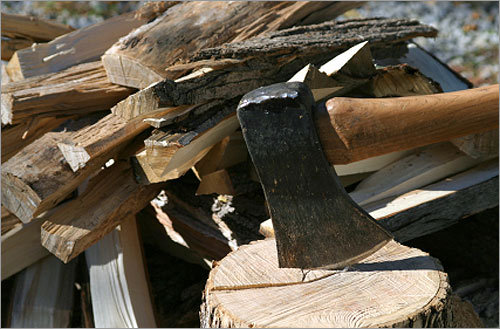
Chop Wood; Carry Water.

It’s obviously a nod to early times in society where life depended on staying warm and keeping hydrated.  People couldn’t just hide in their cave if something went wrong, they would eventually die.  Or if successful, they couldn’t just rest on their laurels when something went right.  Simply put, life goes on. They needed to keep chopping wood and carrying water no matter what.

1196709978_8827

I believe that thinking applies today.  Actually, the principle applies even more today than ever since we have so many distractions in the palm of our hands and right in front of our faces.

If you have experienced something exhilarating, exciting and greatly advantageous for you or your business, the question is what do you do next?

You need to chop wood; carry water.

If you are down and out, struggling with life and fighting the feelings of disappointment the question is what are you going to do tomorrow?

You need to chop wood; carry water.

The point is you need to stay alive.  You need to keep working.  You need to keep doing what got you that advantageous opportunity in the first place.  And if you have hit a negative streak you need to just keep going, things will come back if you get back into the game and work on the basics.

Successful people make it a habit to be steadfast in their ways – they don’t get too high when things go well and they don’t get too low when things get challenging.  They stay even keel.

They keep chopping their wood and carrying their water no matter what happens to them.

I like that.  And it’s what I have been telling myself lately as I have been enduring some exciting times.

I hope you do as well.

I told You So

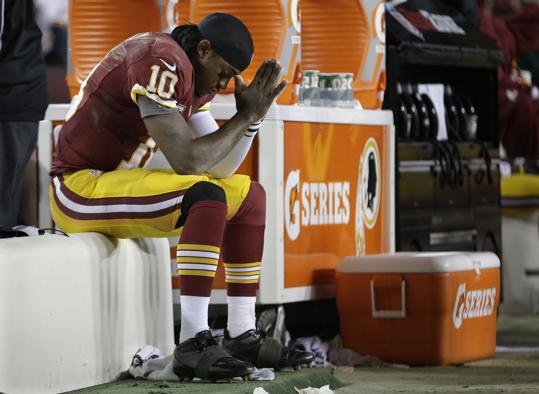
RG3I hate to say it but I will.

I told you so.

You may remember almost a year ago I wrote about The Washington Redskins and the failure of their team leadership when dealing with Robert Griffin III and his knee injuries.  During that post, I detailed their game against the Seattle Seahawks in which the Redskins – wanting to win and advance in the NFL playoffs – kept playing their highly talented rookie quarterback even though his was visibly hurt, risking his future at the same time.  One specific part of the article I will share again:

RG3 went down, and the future of the franchise lay on the ground to the disappointment of the silent stadium full of Redskins fans. Although the injury is not career threatening at this point, it’s arguable if RG3 will actually be able to play at the level he was before the injury.

So whose fault is it?

Not RG3′s. The problem is the person involved is not thinking clearly or wisely at the moment. They are focused on themselves, considering only the moment and the short term, not the long term. They do not understand the long-term ramifications of their actions. Even though RG3 said he could still play the responsibility to make the right decision ultimately falls on the coach, the leader of the team. He should be realistic enough to make the right decision.

Well, I told you so.

This year, The Washington Redskins – once favorites to win their division and challenge for the Super Bowl – are 3-10.  They will not even be making the playoffs and their coach is under intense scrutiny. Their quarterback RG3 has looked awful this year and it seems he still isn’t fully health, hasn’t regained his speed and quickness from before the ACL injury.

CBS reports Coach Shanahan is contemplating shutting RG3 down for the rest of the year so he can get healthy and concentrate on next year.

Though Griffin hasn’t been nearly as good in his second season as he was when he was a rookie, Shanahan said this isn’t an instance where he’s benching his quarterback because of performance issues. Instead, he’d do it to keep Griffin healthy going into the offseason.

Hmm, maybe something he should thought of last year before he chose to risk his future investment.

The point here is to not make fun of a struggling team (ha, the Seahawks are league leading 11-2) nor pick on an injured player.  It’s to review a huge leadership lesson from a year ago and look at it from the framework of what has transpired.

As I predicted last year, keeping Griffin in the game risked not only that season but they ended up losing the next one (that being this season).  It was a risk and they took it.

The thing is, as a leader our decisions have major consequences.  Sometimes the most drastic affect the immediate, such as the choice of throwing the ball to the wrong team as to cause an interception.  But sometimes – and often most times – our decisions have consequences we cannot see or aren’t even aware of yet.  They are long term consequences.

That last statement is the hardest part of Leadership.  Being a Leader is all about taking risks – albeit calculated and well thought out risks.  During a time of decision, you must be able to inuit enough about the future to understand the long term consequences of the choices right in front of you.  And unfortunately, maximizing for the immediate usually comes with a huge price tag in the future.

In this case, it might even be a shortened career of one of the most gifted quarterbacks to come out of college.

It’s tough to watch a highly talented athlete struggle like how RG3 is currently.  But it’s even harder to be in the leadership role and faced with difficult decisions.  Next time you find yourself in a challenging conundrum ask yourself what would you think about each choice a year from now.  Almost always, the one you will think higher of a year down the road is the choice you need to make today.

Better take time to think about the future now rather than mentally replaying the past and wishing you made a different decision.

What’s Your Story?

Have you ever thought about this question?

“What’s my story?”

I attended an event last night where the speaker talked about startups and creating a story around them as you build.  He then had a slide that simply said “what’s your story?” meaning what’s the company’s story you will be telling others, such as future employees, investors, and customers.   His whole point was a major differentiator between your company and all the others is the story behind it.  I liked where he was going with it but I think it can be taken to a much deeper level.

tell-me-a-story2

What’s your story?

Do you know the meaning of the life you are living right now?

Why are you doing what you are doing?

Does company you are starting or the job your are current in have a strong story and purpose behind it?

Why does the company exist?

Does it connect with people on an emotional level and add value to their life?

Are you doing something just to make money or are you also creating value in the world?

Yes, these are deeper and more serious thoughts than revenue models and exit strategies but they need to considered or one day you’ll wake up wondering what the hell you have been doing for the last decade or two.

I don’t know about you but I don’t ever want to have that feeling.  I’m not perfect and nowhere near where I want to be in this department but I am glad I am reflecting on thoughts like these.  They are definitely influencing my next moves.  I hope they help you as well.

If you need some help in this area, listen to Scott Harrison tell his story about Charity: Water.

When Losing is Winning

I recently sat down with serial entrepreneur Jordan Weisman for a Founders RAW conversation and walked away a changed founder.  As we cracked our beers and adjusted our mics – we hadn’t even yet turned on the cameras – I asked him to give me a brief overview of his entrepreneurial journey.  Here’s a rough summary of what followed:

So I started out trying solve problem X…. that didn’t work.  So we tried something else…

Next, we founded a game company.  That was bought by company Y.   Boy was that crazy..

After that, I started a few more, one was sold to Disney.  Another I sold to….and  so on and  so on.

In total, Jordan has founded 14 companies over the course of his entrepreneurial life.  Many failed.  Some very much succeeded and you could sense he was very content with his journey.

I really wish we had captured those few precious minutes on camera!  I wish you could have heard it – and seen my face – during the conversation because my jaw was dropping lower and lower each time he said the words “…and then I started” and followed them up with “and that was sold to...”

It was during that specific moment I was struck by something very powerful, I realized I was grasping a strong lesson right then and there.  Of course you are going to feel like a failure if you start one company and it doesn’t work out.  But the truth of entrepreneurship is it’s a numbers game.  Or said differently, if you take just one crack at it most likely you are going to fall flat on your face.  But by simply getting back up and trying again you greatly increase your odds of succeeding.

At risk of sounding naive, pollyanna and cheerleaderish, I want to bring up a really important point.  The irony is the most successful people in our world have failed more than many of us, sometimes more than many of us – combined.  We all have seen the old Nike commercial where Jordan describes how many times he failed, yet he still is arguably the most successful athlete we’ve ever seen.  He says: “I have failed over and over and over in my life, and that is why I succeed.”  

Look at any billionaire founder (outside of Mark Zuckerberg) and you will see someone who did not make it on their first try at business.  Or second try.  It might have even taken them 3, 4, or 5 starts before the big one hit.

This is not a “let’s all grab hands, sing kumbaya and make each other feel better for failing” type of post.  This is about absolute truths of the world, and ones which are hard to truly understand when you find yourself in challenging moments.

The lesson here is all of us founders must understand the first few times are the most challenging.  If you didn’t achieve what you set out to achieve in your current startup, statistics tell you to try again.

Does a gambler in Vegas take just one shot at the craps table?

Was your your first job the best and highest paying you have ever had?

I am guessing no.  So don’t think your first startup is going to be your best.

During another recent FR conversation, Matt Schobe told me it took starting 2 other companies before starting Feedburner, which in the end sold to Google for $100 million.   Would you grind away at two tough startups before a third one gets acquired for nine figures?

I sure hope so.

And a subtle but important footnote in that story is Dick Costolo.  He was part of all of those attempts – there during the tough times and challenging days – which in the end led him to Google, and then on to Twitter where he is now CEO.

Oh and he recently took Twitter public, minting him many more millions in the process.  I am wondering if he would be there today if he quit after the 2nd failed startup?

Here’s Jordan’s advice to first time founders.

A Great Conversation With Matt Shobe of FeedBurner And Google

I recently sat down with Matt Shobe for a Founders RAW conversation over some tasty beer at Easy Joe’s in Seattle.

Matt is a local entrepreneur and seasoned technology vet, he co-founded Feedburner in 2004 and sold it to Google in 2007 for $100 million.  Not bad.  You should hear what he’s considering starting next.

His story is amazing, entertaining and educational.  You will enjoy!

See more Founders RAW conversations here.

Founders RAW: Here’s What A Good Founder Looks Like To An Investor

In one of my latest Founders RAW conversations I sat down with Seattle VC and managing partner of Seapoint Ventures Tom Huseby to talk about entrepreneurship, investing, patents, and what he looks for in founders he might potentially invest in.

This clip encompasses what he considers a “good” founder – most important is the fact that it’s all about the relationship and the connection/alignment between entrepreneur and investor.

Watch more Founders RAW clips here >


Manipulating The Big Mo’

A recent conversation with my good friend Kyle Kersterson of Freak’n Genius brought forth – amongst many other things – one interesting observation.

Startups are all about momentum” Kyle said during our meeting.

And he’s right, momentum is key to getting over the hump and experiencing startup success. But it ain’t just startups where momentum applies, I think it applies to life in general.

We went back and forth on the subject for a good 10-15 minutes. One of my key takeaways was that momentum is a 2-way street and you have to spend energy to “manipulate” the big mo’ in your life, knowing how to create it and how to direct it appropriately to maximize the upsides.

This requires need a keen observation of what’s happening in your life, the strange but interesting conversations you find yourself in, people you seem to spending more time with and the inevitable opportunities that can result from those conversations.

And then sharpening the ability to identify when momentum is on your side so you can then use it to parlay into circumstances and opportunities otherwise not available to you.

The thing to know is momentum is 100% manufactured, and it starts in your head, your words and your actions. You have the Big Mo’ when you find yourself saying things like:

“Oh, you didn’t know (well known investor X) is participating in our round? We might have room for one more…”

“I’m booked up for the next month or so…. but let me see if I can squeeze you in”

Momentum is an entrepreneurs best friend.

But also know there’s a dark side of momentum, which is the another way of describing the downward spiral. Entrepreneurship, for all it’s glory and celebration, can negatively impact people if they don’t fully understand the dark side of momentum and how to curb it.

This is where emotional and phycological issues take their toll on someone to the point of full on depression.  No one is immune to these thoughts and feelings, but the best medicine I have found is to fully understand how to manipulate momentum in your life – taking the wheel and directing it so to minimizing negative emotions and maximizing positive outcomes.

What also sprung from the conversation is the concept of luck, or “lucky people.” I added that I think “the lucky ones” are simply people who are actually paying close attention, and keen of what is happening around them at any moment in time.  In another word, lucky people are the one’s who know momentum is on their side and are in control of where it’s going.

Think about how many people go through life unaware of what and who is around them. They hang their head and mope around all the while complaining “nothing ever happens to me” and “why can’t I just catch a break?”

What they don’t realize is luck is simply being prepared when opportunity strikes, such as when you find yourself in line next to a predominant investor, entrepreneur, or attractive person with nothing else to do but say hi and “waste a couple minutes” talking with you. Only then, if you have prepared for this chance meeting, will you actually be able to maximize the opportunity.

Ha, and some call that luck!

Founders RAW: The Definition Of A Fundable Founder

I recently sat down for a Founders RAW conversation with Marc Weiser, a VC who started the investment firm RPM Ventures after a successful run as an entrepreneur.  If anyone knows a thing or two about the desired qualities of a founder, it would be Marc.

During the conversation I asked him what he looks for in founders the consider investing in.  His answer is great, and if you are thinking about raising money from outside investors you need to listen to what Marc is saying.  He’s right on the money (no pun intended).

Go here to watch the entire Founders RAW conversation with Marc.