3 Things Founders Need To Remember When They Don’t Want To Get Out of Bed

Founding a company has it’s benefits.  Among them are such things as setting your own schedule, unlimited financial upside and choosing who will be working along side you.

But starting your own company can also be tough, at times it can be excruciating and quite exhausting to even the strongest of souls. Sometimes we need to step back and look at the big picture to fully understand the position in which we are currently sitting.

Darwin was right

The name of the entrepreneurial game is survival.  If this is your first startup, hold on because you are in for a wild ride.  Most don’t work out the first time around and with startup success rates at only about 5% or 10% your chance of hitting it big the first time is quite small.

That’s ok. Consider it like spring training.  Go through the motions and learn the proper techniques.  Take the grounders and throw them to first.   Trust me, some will go right under your mit and through your legs.  You will curse and throw your mit to the ground in frustration.

No worries.  After a while you will get the hang of it and it will start to feel normal.

Your first startup experience is solid training ground for your next startup experience.  Armed with the lessons of the first go around (trust me, you will have a ton) you will then be able to start your next company, wiser and with a better grip of how it all works.

Survival is all about doing whatever it takes to simply live to see another day.  You never know what can happen tomorrow or who will approach you with awesome opportunities.  If you keep with it long enough someone – probably someone you least expect – will discover your skills and talents and want you to join them in some way.

As you might know, we have slowed down the operation of Seconds and placed it on cruise control so now our minds and our talents are freed up to work on other projects.  I cannot tell you how many people have recently approached me with startup ideas, opportunities to join them as another founder, or to work with their team on a part time basis.

Gratefully, I was able to take (a few) up on their offers and I’m now in a less stressful position, helping them with their businesses, giving me some much needed income and providing me a clearer view of my future than 6 months ago.  It’s all due to the fact that I got up each day – even when I really didn’t want to – pushed through the “crap” and proved I am worth every penny someone would choose to pay me.

The Law of Compounding Goodness

If this is your first venture into the world of business then you probably lack a solid reputation.  Unfortunately this is one of the reasons things are so tough right out of the gate.  There’s just not enough data to back up YOU and your story to others.

But don’t worry, the more you do the easier things get.

After you accomplish one or two things notable and positive in the industry the law of compounding kicks in.  What is the Law of Compounding Goodness?  It’s simply your quick referenced resume people will remember you by.  You will be known as “the creator of X” or “the person who did Y”, which then gives you credibility in the greater startup community.  They now have positive data to help them make a decision about you and your potential.

The great thing is you don’t have to have a billion exit to Facebook for the Law of Compounding Goodness to work for you.  Anything notable or worth remembering will set the foundation for you to build your reputation and your career, helping you stair-step your way higher on the food chain in the startup community.

Why not be a leader and organize a meetup and market it to the greater community?  You will be noticed.

Start writing a blog and submitting guest posts to a regional or national media source that have clout in the industry.  You will be noticed.

Heck, write a book on a relevant subject.  Trust me, you will be noticed.  You will then have a lot easier time attracting talent and capital for whatever endeavor is next on your agenda.

Consider the alternative

Andrew Chen recently posted to the graduating college seniors about the nature of a job vs building your own future. He quickly cuts to the chase by simply saying – Jobs suck.

And I agree.  A job is really just slaving away, trading hours for dollars and a small attempt to stay afloat.  Yeah, you might land a solid 6 figure salary as an engineer in your twenties.  But what happens when you are 35 or 40?   Better have an idea of what your life will look like when you aren’t a rock star programmer in their fly-by-the-seat 20’s.

And even if you try to work on a side project during nights and weekends, it still sucks. Why?  Well, if you have a family or a significant other in your life you are definitely cutting into the precious time you have to spend with them.  There’s only 24 hours in a day you know.

If you are going to have a job and work in a side project make sure you invest that time wisely and know that it is temporary, meaning at some point in the near future you have created enough money or secured enough capital to go full time in your own company so you can quit the day job.

Full time entrepreneurship is so much more fulfilling – regardless of salary and benefits.  You are pursuing your dream of creating your own company and in the process creating your own future.  Yes, entrepreneurship is tough and it’s not for everyone.  I should know, I’ve been through more than I would wish on most people.  But fighting tooth and nail for every inch is the trade off for your personal and professional freedom.

I’ll take that any day of the week.

So, remember these thoughts when you are lying there in bed on a day where you don’t feel like even getting up.  Just survive and live to see another day, you never know who or what will walk (or email) into your life.

The One Thing The Robots Will Never Take From Us Is Leadership

Are robots set to take over our society?

Probably.

robotIt is a scary thought to say the least, especially when you consider the Singularity, or what Ray Kurzweil believes is the date when computing power eclipses the intelligence of the human brain.  Basically, at that time the capacity of a machine will be greater than a human mind and they will be able to think for themselves.

So I guess we will need to learn how to live with them or we’re pretty much screwed.

Jon Evans wrote a very intriguing post on TechCrunch titled After Your Job is Gone.  In it he explains how technical advancements are continuing at such a rapid pace that very soon you just might find yourself out of a job since a robot can do what you do more efficiently and at a a very reduced cost.  Actually, he dives deeper into what we are seeing today to illustrate this is already happening in many different industries.

Think you’re safe because you don’t work in a factory? Guess again. “In a move that could put millions of teenagers around the world out of their first job, Momentum Machines is creating a hamburger-making machine that churns out made-to-order burgers,” reports Gizmag. A Cornell robot can learn how and when to pour you a beer. Well, never mind food service, how about social services? …Oh. Other robots have been shown “wiping the mouth of a disabled man and adjusting a blanket.”

You should read the piece, he also taps into the inevitable widening division between the elite wealthy, high tech class and the poor majority.  The picture he paints is not pretty.

I want to stress again that this is only the beginning — that as software eats the world, as Marc Andreessen put it, this two-track economy will grow ever more divergent around the planet. The relatively few people fortunate enough to work in technology (or have the capital to invest in it) will grow steadily wealthier, even as more and more jobs around the world are replaced by software and drones and robots.

I generally agree with his stance – basically you are fighting for your job job every day and eventually you will lose the battle.  Not to a human, but to a machine.

What I don’t agree with is his torch-the-earth view of how WE ALL are pretty much screwed.

I don’t think ALL jobs are not lost, but I do believe you are screwed if you have a job where a task or skillset is the premise of your position.  Do you do something that can be automated in a certain way?  Do you complete a task in a day that could possibly be completed in a few minutes by a programmed machine?

If you do a job which is judged by time, speed, accuracy or many other attributes that an algorithm can optimize, yes you are screwed.

So what are you do to?

Well, don’t just sit there and cry, or just try to deal with it. I suggest you pull back your perspective and look for your answer within the fundamental differences between machines and humans.

Human – human interaction will never be replicated.

What robots will never do is employ Leadership over humans.  It’s simply impossible.  Leadership requires such a complex ingredient of human intelligence (IQ), Social Intelligence (SI), Emotional Intelligence (EQ), situational awareness, cognitive functionality, amongst other nuances of human life.

Even if Ray Kurzweil is right and we’ll see a time where the two are simply equal in computational power, humans will simply refuse to follow machines.  We yearn for people; beings who have feelings and care about our well being and who will lead us towards prosperity.

The human race will always be in short supply for quality leaders.  We needed them in tribal times as hunter gatherers and we’ll need them as the digital future takes hold right in front of our very eyes.

So if you want to save yourself and your employable future, you need to think long and hard about what you do.  What makes you unique?  Are you indispensable?   Can you think critically and influence others in your way of thinking?

What do you do that no robot could ever replace?  What intagible qualitites do you posses which a company large or small – today or next millennia – will pay you top dollar to do for them?

Answer that and you’re set for life.

Image cortesy of Flickr user epSos.de.

Here’s My New ‘Current Projects’ Page, So Y’all Can Keep Tabs On Me

I am noticing a trend forming in my life.

I’ve been more open to starting a few new projects lately and so I decided to update this blog and create a spot where you can go to at any point in time and check out what I am working on.  You can find the link at the top right of the header menu bar on this blog.

Current Project page.

Below you can see a snippet of things I am up to right now.  More will probably come soon but this is what is happening at this point in time in my life.  Given the fact I am currently also doing some outside contract work for other companies, I am only listing the projects/companies I have founder or equity stake in.

Enjoy.

And reach out to me if you are interested in partnering or getting involved with any of them.

Current Projects

Seconds logo

Seconds is a payment system allowing you to swiftly complete transactions via the desktop web, mobile web or text message. It shouldn’t matter what method you use, the payment experience should be as quick, simple and intuitive as sending a text message.  Realizing how important ongoing relationships are between customers and merchants, and also realizing the main point of entry into our world is now through our mobile device, we see an incredible opportunity.


Callin'it logo 2

Callin’it is a mobile web based real-time sports prediction and data analysis platform.  Using Callin’it, people are able to test and share their sports knowledge by publically predicting – or calling – stats, plays or outcomes of an upcoming sporting event.  For instance, right now I am calling the Miami heat will have more rebounds than the Chicago Bulls in tonight’s game.  Using real time sports data, we then compare the specific call with the actual result to build out a score for each user based on the accuracy and difficulty of their calls.  If Twitter and the ‘SAT’s for sports’ had a baby, Callin’it would be their lovechild…


Founders Raw logo2

Founders Raw is my newest project, a video blog with conversation style interviews focused on bringing out  raw stories early stage founders experience in their rough and tumble entrepreneurial journeys.  I invite founders to talk openly over a beer or a coffee about the “truth” of how they survive and grow their companies.  We intend on slicing up the conversations and sending out daily videos no more than 3 or 4 minutes long so we all can receive daily nuggets of the entrepreneurial truth.


Published Books

The Agony and Ecstasy of Entrepreneurship

The Agony and Ecstasy of Entrepreneurship has been adapted from this blog, So Entrepreneurial, and placed into book format.  They are my thoughts and musings on all things entrepreneurial, meant to help you understand what it takes and how to think like an entrepreneur in today’s world.  Far from perfect and by no means the only way to go about the journey, they represent my lessons taken straight from the trenches.  Since my thoughts originated as blog posts it’s best to take them piecemeal, maybe even digesting just a few topics each day. You will find my main perspectives are around mobile, digital and internet technologies but the principles can be applied to any other entrepreneurial focus.

You Are Never “Too Good To Step Aside” As CEO

Sometimes your ego will write checks your body can’t cash.

This is so true for the startup founder who chooses the role of CEO in his own company.

I thought of it recently as I read a great post by Jonathan Strauss, former CEO and founder of awe.sm, about stepping down from the founder/CEO role after 4 years.  In it, he very honestly describes his feelings on the decision and what ultimately brought him to remove himself from the leadership role.

Jonathan aptly describes entrepreneurship:

To be an entrepreneur I believe one must have a somewhat irrational belief in your own capabilities, otherwise you’d never be dumb enough to start a company. Regardless of any perceived glamor, most entrepreneurs I know will tell you that starting and running a company is fucking hard and there’s often more misery than joy.

He. Nails. It. On. The. Head.

If you are a frequent reader you will know this description of entrepreneurship can be found here on this blog as well.  No doubt, founding a company is one of the most difficult and emotionally taxing things in the world.  It’s a wonder company creation is actually on the rise when you read statements like these.

Jonathan goes further on why it was so hard to remove himself:

I put hiring a CEO in the same category as taking an acqui-hire or just closing up shop and moving on — things I would think about at 4am in the office on those darkest nights when I’d have a bout of sobriety about the insanity I’d turned my life into. And ultimately, things that represented the one unacceptable option motivating me to push even further beyond my limits I’d long surpassed: failure. In the early days, the only way for me to keep awe.sm from failing was to tie my fate with the company’s. If awe.sm failed, I failed. But as we switched from lean startup to growth company, I didn’t fully realize how making my ego a shareholder went from being necessary for survival to being a limitation on what we could achieve.

One of the toughest “checks” to cash as a founder is to think you are the sole reason for company success or failure.  Notice how Jonathan admits he attached himself and his fate with the fate of the company.  It is indeed one of the inherent flaws of us founders.

I commend Jonathan for his decision but I am also not letting the lesson pass me by, and you shouldn’t either.  The ego issue is very dangerous for both of you and your company.

Founders need to have a healthy balance of ego.  On one side you need to have an almost superhuman confidence about yourself and your vision because that is the only way you can get thorough the really tough times of starting the journey.  But – and THIS IS A BIG BUT – you also need to understand you are not Superman and the company can actually succeed with someone else at the helm.  You aren’t the only person on earth who can identify a market, describe a vision, build a team, sell customers and increase monthly revenue.  Other people can do that too.  And even with you still on the team.

More importantly, others might be able to do it all better than you.

So, take Jonathan’s example and learn from it.  Sometimes removing yourself from the most scrutinized and stressful position in the company is the best decision for everyone involved.

Even you.

When Your Startup Feels Less Like A Hockey Stick And More Like A Hip Check

We all love to talk about the hockey stick moment for a company, referring to the moment when users and usage really starts to take off.  It’s fun.  It’s exciting.  And  it’s so elusive we all want to dissect what the specific company actually did to achieve the stratospheric growth.

But what about the hip check?

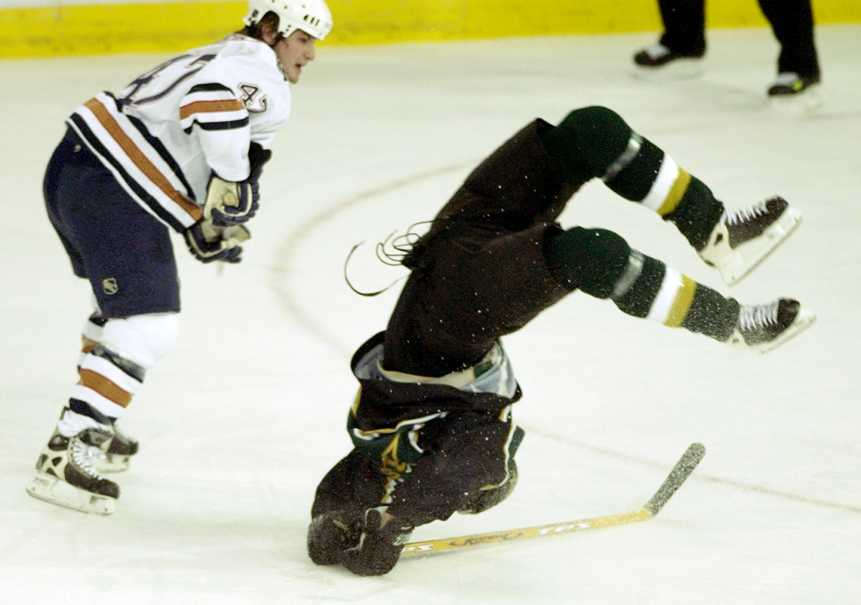
What’s that you say?  Never heard of the startup hip check?  Well, take a look at the image below and I think you can get an idea of what I am talking about.

3HipCheckPretty scary huh.

This head-over-feet-over head-over-feet feeling can happen at any moment of a company founding experience.  Sometimes it happens within the first few months of a new idea as the honeymoon wears off and founders realize the pieces don’t fit and they don’t have a starters chance of even putting something together.  Other times (like mine) you get up and running – even get some initial customer wins under your belt – and then it hits you when you least expect it.

BAM – “what the hell was that!?”

In any regard, getting hip checked throws you and your company completely off your feet and off course.  There is a good chance an injury has occurred and you may never recover.  It feels like what I imagine the hockey player above must have felt as he was brutally checked right onto his a**.

And you know what?  It happens to EVERYBODY.  All athletes.  All entrepreneurs.  everybody.

So what do you do once you shake the cobwebs out of your head and realize you just got taken to town?

Pause

Simply pausing and taking account of your status is the first thing you should to do.  At this moment do not let tempers or emotions get the best of you.  Athletes ask themselves questions like: Do I have all my limbs?  Are my legs situated in the right direction?  (Anyone watching this years NCAA basketball March Madness tournemant will know know you should now check all your limbs after a bad fall.)

Rather than get emotional and retaliate, athletes need to assess why it happened.   Was I too slow?  Did I make the wrong move?  Was he just flat out better than me?

Entrepreneurs need to ask similar questions:  Why did that just happen?  What did we miss?  And what is our financial status, how much money do we have in the bank?  What do the others on the team think and feel about our situation?  Are they hurt and need to go recover, or can they keep at it?  Also, who else knows we just got hip checked?  Was it reported in the media and did we take a PR hit?

Through these questions you will determine if the company can and should continue, or if indeed it’s best to step off the ice.

RICE

Rest.  Ice.  Compression.  Elevate.

My education taught me RICE was the simplest injury treatment protocol, basically placing it in a state of limited movement and maximum preservation.  Same for a startup.  If continuation of the company is desired, I am suggesting taking a similar approach with your startup.   You have to stop the bleeding (financially) and start the healing process (working) as quick as possible.  If needed, go get a paid gig as quick as you can so cash starts flowing into the bank once again.  I waited way too long on this one and can tell you it wasn’t pretty.  Cash really does solve many problems and helps to open back up the creative process since a huge pressure valve is released.

Open the communication lines with your team, have long discussions about why the hip check happened so you can start the healing process.  Through these discussions the weaknesses will be revealed and the ways forward will emerge.

Elevate yourself.  A strange (albeit predictable) thing happens when founders get hip checked – depression.  Since it takes a certain chutzpah to start a company, namely audaciousness and ego, I have noticed those also work against the entrepreneur once they find themselves face first on the ice.  Of course this isn’t what you expected as you started out and most definitely how you didn’t want others to see you.

But there you are.

You must get up.  You must inflate that ego (figuratively speaking) back to where it was before, when you believed in yourself and your team.  A positive and forward looking perspective is the only way to recover from the hip check.

Skate Again

If you watch a hockey game it doesn’t take very long to notice how often hits and checks happen to all players.  And you know what?  They get back up and shake it off.  They try again.  It’s quite the same in the startup world.  Everyday, founders are getting hip checked to founder hell and back.  Yet, the ones we end up reading about are the ones who got back up and tried again.

Elon Musk has probably been checked more than most other successful entrepreneurs out there.  Did you know there was a time he was literally broke as he was building Tesla and SpaceX?   At one point he put the last of his millions he had made previously into his companies so they wouldn’t go under – personally financing them and risking everything he had worked for  – and then lived off loans from his other millionaire friends.

Yes, and now people say he has it too good as a billionaire and CEO of two incredibly innovative technology companies.

Hmm, well there’s a reason Musk refers to founding a company as “it’s like eating shards of glass and staring into the abyss of death.”

Because it’s true.

I simply say: Just get up and keep skating.

I Am Writing A Book

Finally some good news I have been dying to share.  Yes, it’s true and you should be excited, I will be putting out a book very soon and I hope you help me help you by purchasing it.

Amazon-Kindle1I was approached recently by a company wanting to help me publish a book.   I felt very honored as I glanced through their previously published authors consisting of greatly respected people, such as prominent investors Fred Wilson, Brad Feld, tech blogger Semil Shah, entrepreneur Jeff Atwood and others.   Pretty cool I will be now sitting along side these guys.

A collection of my writings found on this blog is being put into book format by a cool new company and will not be your traditional novel meant to be read from start to finish.  It is bits and pieces of truth about technology, entrepreneurship, founder stories, leadership and life in general meant to educate and encourage others.   It will be in ebook form, and you will be able to download it in the common e-reader formats.

If you are a longtime visitor to this blog you surely will remember reading the original posts as you browse the book.  I hope you choose to purchase it and re-read them again, as sometimes we only really connect with lessons on the second go around.

If you are a newer visitor, we’ll this is perfect for you to get caught up on almost 2 years of thoughts and musings (that hopefully) have been useful to others around the world.

Keep your eye out for the release.  This should be the start of an exciting future of publishing great content in book format.

Earth To USA Today and JP Morgan – There Are More Startups Today Than Ever Before

A recent column in the U.S.A Today makes the bold claim that there are less startups today than compared to the 1980’s, during the Carter administration.

The rationale:

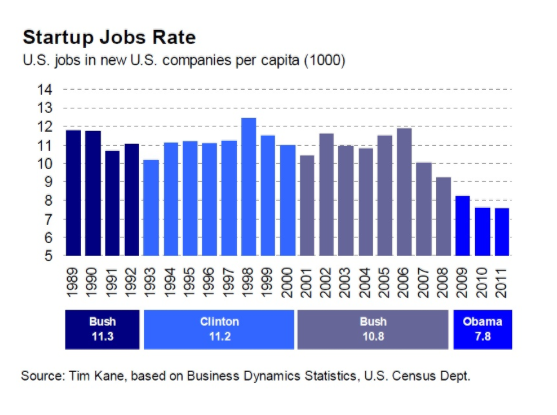
At any rate, the latest data indicate that start-ups are becoming rarer, not more common. A new report from JPMorgan economist Mike Feroli indicates that employment in start-ups is plunging. New jobs in the economy tend to come from new businesses, but we’re getting fewer new businesses. 

I am going to guess Glenn Harlan Reynolds, a professor and the author of the post, is not an entrepreneur and has never been one.  If he was one he would know basing innovation metrics and the quantity of “startups” solely on the amount of people they employ is an incredibly flawed argument.

Screen Shot 2013-05-06 at 8.00.44 PM

Diving deeper into the JP Morgan study, they lay claim to a few reasons on why we are seeing an apparent slow down in startups:

Hudson’s possible suspects for the slowdown: a) higher business taxes, b) Obamacare, c) an IRS crackdown on US employers that hire U.S. workers as independent contractors rather than employees, and d) a steady barrier erected to entrepreneurs at the local policy level.

But whatever the cause of the entrepreneurial decline, two possible impacts: 1) A less productive and innovative economy, and 2) higher profits for big business thanks to fewer upstart competitors on the horizon.

Here are a few observations on why I feel this assessment is off the mark:

1) Assuming Obamacare is a factor completely misses the point, since Obama wasn’t even in office when the decline in jobs started (see chart above).

2) Although a local policy issue may influence certain industries – since we’re talking the entire nation here it’s irrelevant to include local policies because they vary state to state.  I, for one, can tell you it’s quite easy to get going in your own new venture.

3) The IPO market really cooled off over the last decade, suggesting a rise in mergers and acquisitions.  Simply stated, startups are being bought by bigger companies before they beef up their workforce, which also will affect overall startup employment numbers.

4)  If anything, they miss the most obvious reason why people would choose employment at a larger corporation rather than a startup: job security and dependable paycheck in a shaky economy.   Although this also doesn’t apply since the economy didn’t tank until late 2008 and beyond, so again, not a very high correlation.

5) The largest omission in this report can be seen by evaluating technological progress and the resulting drop in computing costs.  Comparing the chart from the JP Morgan article and a graph of Moore’s Law (which is exponential) you now realize using a simple number like the number of employees of startups is probably the wrong approach when determining the current status of innovation.  Moore’s Law states the computing power is increasing at the same time the cost is dropping.  So, it is easier to start a business than ever before. The cost of computing, virtual work environments, AWS, instant and free communication tools, and the proliferation of the web have coalesced to create a startup nirvana.  Looking at two charts from the same timeframe you will notice the stark drop in jobs at the same time a drastic increase in computing power?  Coincidence?  I don’t think so.

So am I missing something here?

Maybe if they simply stated “startups are employing less people” I wouldn’t have a problem with the report.  But they didn’t.  They claim (in fact lead with) the idea that there are less startups and innovation than in the 80’s and 90’s, which I feel is wrong – or at least how they came to that conclusion is currently flawed.  They go on to make a few solid points regarding higher taxes and government regulation and how those influence an early venture hiring but lack any real depth for their argument.  Maybe they should have consulted an entrepreneur or two who could help them sift through the chaff a bit further.

Moore's Law of Computing Power

Moore’s Law of Computing Power

My take: it takes less people to achieve more today.  What once took a team of 10 to accomplish now only takes 2 or 3 people and a wifi connection.  So I am claiming the exact opposite of the USA Today and JP Morgan.  We are seeing more products, apps, and startups created today than ever before.  Ask any VC or startup founder and I guarantee they will say the same thing.

Hell, Instagram and their entire team of 12 employees was sold for almost $1 billion to Facebook in 2012.  So whatever you do, do not believe there is a lack of innovation and startups out there.  If anything, there’s more innovation and startups created each day than ever before because we can do more with less.

One just needs to look closer and use the right measuring stick.

An Intriguingly Utopian Vision For The Future Of Technology

You may have seen this two-year old video but I saw it today and thought it’s worthy of highlighting.   It puts together a quite intriguing vision of how we’ll interact with the web and technology in the future.

Entrepreneurs, you might want to look for ideas of how you can get involved building some of these things starting today.

Climbing The Rock of Intimidation

I recently went to a rock wall gym with a friend for the first time in a very long time.  To be completely honest, I was a bit nervous about going because it had been so long since I climbed up a wall with no harness or assistance.  Rock climbing is new, different and something I am not used to doing.

I am not totally sure why I was intimidated.  I’m in pretty good shape, quite athletic and usually take challenges head on.  The only thing I can think of is I didn’t want to look like an idiot in front of the other climbers at the facility.   I also didn’t want to find myself stuck 15 or 20 feet up a wall with no where to go.  What would I do then?

But you know what?

It was really fun.  I did very well, especially for my first time in like 10 years.  I didn’t really even feel fatigued or tired, which tells me my endurance and strength are still there.   I didn’t look like an idiot, in fact I felt quite at home and fit in with the more advanced climbers there.  I was able to scale the novice routes no problem, and even attempted more advanced ones with little hesitation.

Right then and there I decided climbing is something I want to put more time into and develop skills so I can get outside and into the “real” climbing environment.  It’s also a damn good workout.

I learned a few lessons the other night.

1) Putting yourself in new and uncomfortable situations is the only way to grow and get better as a person.

2) It feels good to overcome fear, intimidation or whatever the little voice in your head is trying to hold you back from.

3) You never really know how you will react to something until you jump right in and get at it.

4) In reality, no one cares about you or if you look like an idiot.  That is a very self-centered way to look at the world.

So…. forget about whatever is holding you back from that cool new experience.  Just do it.

To Change The World Solve A problem – Just Not “Your” Problem

As founders we’re generally told the best way to build a business is to solve a problem in the world.  Find a problem, create a solution and someone will pay you money for it.

Great, I think we can all agree with that.

Issues arise when you are advised to solve “your” problem, which I have noticed happens quite often.  And on the surface it makes sense – the easiest problems to find in the world are the one’s right in front of your face.  So we are told to look at our life and determine what needs to be fixed.  Next step, we go out and build our solution so our lives can be made better.  Then we think, “if I have this problem, then others must have it too!”  We dream about getting lucky, the moment others figure out they have this problem as well, and think we just might hit the home run and cash in on our new idea.

I started thinking about this the other day when I read or heard on video someone mentioning the fact that this is precisely why we have so many copycat startups around Silicon Valley.

Think about it (yes I am generalizing): pretty much everyone in the valley is of the same demographic and has mostly the same problems in their life.  It’s hard to argue we are in a relatively small bubble and can only see our own groups unique problems.  Simply put, we all have the same problems in our small little startup world.  That ‘s why we have so many founders trying to make an incrementally better photo sharing app, food ordering app (or input-any-cliche-mobile-app-example here).  We are too narrowly focused on what’s in our palms each day we don’t lift our heads towards the rest of the world and see what they are dealing with.  We all walk around with smartphones in our pockets and cannot stop thinking about how to make our lives 10% better with this new app, or that new website.  This is how we get 10 Pinterest’s and 50 Instagram-wannabes.

That’s all fine and dandy for the 1% in our bubble but what about the 99%?  What about the person that doesn’t have a smartphone or doesn’t want to think about being plugged in it 24/7/365?  The problem is we don’t know what all the problems are out there in the world because we aren’t really thinking about the rest of the world.

So how do we get away from all the copy cats and towards real world changing ideas?

We need to start solving problems, just not “our” problems.  We need to start talking to other people outside our network and our little bubble, maybe they aren’t as fortunate as us and still have challenges we aren’t aware of but could help solve.  We need to shut up and listen to what they are struggling with and then start thinking about how to bring a solution to them.

Real customer development happens when you have many conversations – hundreds or even thousands – and you find random people are all having the same problems but lack a viable solution.  That’s when you know you are onto something – not when you have a thought in the shower about this thing in your life that really needs to be fixed.

Uniqueness will come when you look outside of yourself and your little bubble and discover issues people not like you are dealing with.  If you have the problem as well, even better!

So If you really want to change the world, solve a problem.  Just don’t solve your problem because it’s probably not something the 99% aren’t even thinking about.

16 years to one million… 18 months to two million

Crowds of people gather on the mall to watch the swearing-in of U.S. President Barack Obama in Washington“It took us more than 16 years to get to one million paid households but just 18 months to double it.”

I read an article today that talked about how well Angie’s List did last quarter, posting impressive growth around users and revenues.  If you are not familiar, Angie’s List is a new age Yellow pages, a marketplace for service oriented local businesses.

One sentence caught my attention: “It took us more than 16 years to get to one million paid households but just 18 months to double it.”

How’s that for patience?  I had no idea Angie’s List  was even 16 years old.  More impressive, I haven’t heard of many companies where it took so long to reach a milestone like that.  Both are impressive feats of patience, persistence and obviously hard work.

But what’s fascinating is how quickly they reached 2 million paid accounts – just 18 months.

18 months vs 16 years.  Wow.

I’d be curious to know what they did to increase the paid user base so quickly.  Of course, a certain amount users will come from viral, word of mouth actions of existing users.  But, in the local space it can be more difficult to achieve viral growth.  It would be great to hear what has worked for them.

Never forget, the amount of work it might take to get to your first big milestone isn’t necessarily the amount required to reach the next milestone.  Just test a lot and keep doing what’s working and stop doing what isn’t.  Things do get easier and the system can start working for you once you reach a certain critical mass.

I have never really been a huge fan of Angie’s List, but I certainly have more respect for them now.

My Dear Founders: Please Don’t Lie – The Truth Will be Found Out

New flash: Honesty is the best policy.  This is true in relationships as well as life.  But you bet your ass it’s especially true in public business dealings.

Long story short, a Seattle founder just attempted to pose as a 19 year old girl who apparently actioned off 10% of her income for the next 10 years for $125,000 investment in her startup.  But she turned out to be a he and it was all a lie.  And he was busted by GeekWire.

(Nice job GW, you totally redeemed yourself.)

Reading about the latest hoax this morning for some reason boiled my blood more than normal. Is it because I – like a lot of other Seattle founders – actually work my ass off to build great products and earn the right to be covered by media outlets? Is it because I am on high alert from the recent attacks in Boston last week, resulting in false flames and untruths thrown all over Twitter and leaving us wondering which way is up or down?

Is it because another 19 year old founder actually did make news a few weeks ago by selling his startup to Yahoo for $30 million, making me just a bit jealous he is now a millionaire before the age of 20?  Or is it because the tech media is so desperate to break the latest story they will gloss over details and hit publish too quickly – leaving openings for people to take advantage?

Who knows any more…

What I do know is honesty is the best policy.  Given the fact (and I am assuming here..) we are all adults, it’s somewhat disappointing we need to have the honesty conversation right here and in public.

Yet here we are.

False truths and lies might slip through the cracks and get you a little media coverage but they will absolutely ruin your credibility.  What Skipsnes may or may not realize is how bad he shot himself in the foot and how much more difficult it just got for him to become a successful entrepreneur.  Do you think anyone will ever believe anything that comes from his camp again?

Fool me once, shame on you.  Fool me twice….  In business, there is no twice.

Founders take note, you cannot lie or mislead and get away with it anymore.  Your every move and every dealing is now recorded.  You now have hundreds, maybe thousands of PI’s to deal with whenever you make news.  You are probably more intelligent than perpetuator #1, but even if it’s a small fudge of a story it better be true.

As we saw with the Boston bombings, today there is no way the truth will not be found out.  Once your story hits the web and news blogs you better believe people will search you.  They will google you.  They will search your Twitter, LinkedIn and Facebook.  They will search the domain registry.  They will make calls and verify your story.  If you are lying they will find the inevitable cracks in your story however small they may be.

Today, you cannot hide.  We will find you.

Skipsnes’ attempt to lie his way to fame and fortune has actually placed all our integrity in question.  He is trying to concoct a story about someone he is not in an attempt to generate attention for his website/business in hopes that in the end he will benefit financially from it.

Steinar confides in his admittance post:  “I want to grow and build a business more than anyone can understand.  When you want something bad enough, you’re forced to create a path or quit.”

Yea, don’t we all want it that bad.  And aren’t we all trying to create a story and gain attention?  The difference between him and (hopefully) the rest of us is where the motivation is coming from.

So all that his actions have really accomplished is placing all of us even more under the microscope.  Skipsnes probably doesn’t realize  how this reflects on all of us other founders, the honest ones.   Are the stories we are pitching to media outlets going to be believed and covered?  Or will they brush us off and take the “more trusted” story from Amazon or Microsoft so this doesn’t happen again?

His actions now make it that much harder for honest early stage founders to gain media coverage.

So founders, get ready for much more scrutiny.  Maybe that is a good thing, since in the end a high quality product coming from a high quality team deserves media coverage.  But get ready for higher standards.

We should all be ashamed it has come to the point middle aged men are posing as teen girls to get attention from the tech media.  Should we not?

In a surreal moment, my heart sank at the same time my blood boiled as I realized this man stooped this low simply to get attention from the media.

Maybe we should step back and take a look at what our goals are as early stage founders and what media coverage actually means.  Is it the end?  Or is it a means to an end?  Do we just want to see our names or our apps on a screen among other successful companies? If we think a blog post and media coverage is our ticket to success and abundance, I think we need to take a strong look in the mirror.

If lying and posing as a young teenage girl is our only option to get noticed in today’s world, god help us all.

5 Crazy But Life Changing Reflections

Life moves pretty fast….. sometimes it’s best to sit back and reflect on your priorities.

The unintended consequence of a startup can be acceleration of everything around you.  It happens so fast, in fact, you end up losing perspective on more important aspects of life.  It’s easy to get out of bed each day, focus on what’s in front of you, go to bed only to get back up the next day to do it all again.  If you are not careful you will find yourself sprinting and spinning in place, making no forward progress at all.

Problems arise when you lose perspective, focusing only on what’s in front of you, becoming all too consumed on accomplishing your immediate goals and not what lies on your life’s horizon.  Soon enough you will reach your “destination” without taking certain aspects of life into consideration – like family, health and the afterlife – leaving you empty and unfulfilled at the end of your journey.

Here are 5 areas I am currently reflecting on to help gain a perspective on life with hopes to figure out a way to better align with what I am doing right now.  (Pardon the existential tone, just one of those days I guess…)

photo

Do I actually enjoy how I spend my days?

Though it’s quite elementary it might help to evaluate if you are actually enjoying where you go and how you spend each day once you get out of bed and leave your house.  Honestly take into account the fun factor, or lack thereof.  Do you feel like a kid?  Or a boring adult?  Do the hours pass with ease and are you fulfilled once the day is over?  Yes, we have to make a wage, earn a paycheck and support our family but we don’t have to dislike it.  We should be enjoying each passing day and the process within.

I quit my full time job a while ago because I didn’t enjoy working for someone else and simply earning dollars for the hours I worked.  I decided to start a company – knowing it was going to be tough – because I value exploration and journey more than maintaining a status quo.  I more value creation than maintenance.

But even now as a free entrepreneur I am not exactly living the charmed life and if I am really honest with myself I remain unfulfilled.  The eyes burn and the legs strain as I make the climb.  I am still searching for the right environment, right cause and right team to help me execute on a worthy mission.  Most important to me is reaching a time in my life where I am able to say “if this is the last day of my life I am extremely excited and happy to do exactly what I plan to do today.”

We’ll get there.

What do I want my grandchildren to say about me?

Gazing towards the horizon, I am pondering how my family and friends will think of me when I am gone.   I hope I am following through and planting the right seeds.  How about you?  How will your friends and family describe you to their friends and others?  What will they talk about and what type of person will they describe?  Will they be proud to be your grandchild?  How did you treat them and what types of memories do you want to leave with them?

I am not even married so I am not even sure why I am thinking about my grandchildren.  Maybe it’s better to understand this concept in terms of legacy.  I want to leave a positive legacy for my family to be proud of.  It’s safe to say I haven’t gotten very far on this one but it is never too early to ponder what it should involve.  I want to be known as someone who never gave up, regardless of how difficult things became.  I want to be known as someone who treated everyone fair and well, regardless of who they were or their circumstances.  I also want to influence change in the world and encourage others to do the same.

I want to be proud of the person my grandchildren hopefully talk about.

If I die today, what will I say to my creator about how I lived my life?

Heavy stuff to think about but just imagine this for a minute:  you die, you go onto to the afterlife and you approach someone (something) who is there to take account of your life.

Yep. Each. And. Every. Minute. Of. Your. Life.

They look at you and proceed to ask you questions about it.  Why did you say that word to that person?  Why didn’t you offer a hand to that  helpless woman?  I gave you millions of dollars to help others, why did you spend it all on your self?

Now imagine them showing you how they hoped you had lived your life.  All the possibilities and potentials of your life start flooding right in front of you, but you cannot speak.  Your face goes white with regret as you realize you squandered all your strengths and talents, not using them as they could have been used to help your fellow man.

I know… crazy stuff.

Who, if anyone in my life, can I share my deepest and darkest fears with?

Do you have a confidant?  Is there someone you can talk to who will understand and hold no judgement, no matter what you tell them?  I have noticed thoughts, feelings, and emotions building up within me at the same time I can’t find an outlet in sight.  It can be frustrating and claustrophobic to identify struggles and challenges within us but lack any outlet or confidant.

Our biggest fears are the only thing holding us back from reaching our greatest potential.  What if you were able to talk them out and allow someone to help you work through them sans any judgment or embarrassment?

I know I am starting to look for people and ways to come to grips with the fears I have in my life.  In fact, writing has become one of them.

If Superman were to look at the world today, what wrongs would he want to make right?

There’s way too much uncertainty and unrest in the world today.  I have to assume even Superman would be overwhelmed with all there is to fix in the world.  But it seems to me an interesting exercise to ponder what Superman would want to fix if he/she were actually real.

Billions of people around the world still don’t have clean drinking water and live on $1 a day.  There are millions of people in the U.S. who are searching for employment opportunities, maybe Superman could think of ways to solve both third world and first world employment problems.  In fact, right down the street in Silicon Valley there are people starving and homeless, yet young startup founders are asking investors to give them millions of dollars so they can build yet another way to share photos and send a short message to someone else – all requiring people own the latest expensive smartphones.

How about terrorism?  How could he create something to curb the urge and the need for people to inflict pain and suffering on others?  And what about the financial challenges every country seems to be under now?  Don’t you think he could get creative enough to help out?  I bet there’s a lot more for Superman to fix, right?

Your unique reflections on the above will indeed bring out the entrepreneur in you.  I guarantee it.

Our Morals And Ethics Are Changing (For The Worse) In The Social Age

I don’t know about you but a recent trend has me frustrated.  At a time the world is getting more “social” it is seems to be getting less nice.   In fact, it is getting down right rude and it’s starting to get to me big time.

Take the 140 character tweet.  When read literally and out loud you will realize comes out like someone is shouting at the top of their lungs directly at you, in short bursts of random words lacking any context or relevance.  Now multiply that by millions of people and we have become a society simply trying to shout the loudest at each other’s faces.

More recently, observing activity on social media platforms Facebook and Twitter during tragedies such as the Boston Marathon Bombing can be a crash course in sociology.   Although the actions of the accused were absolutely terrible, what was tweeted and typed into those message boxes by millions of people and sent out to the worldwide public was arguably just as bad.  Realizing how crude the human race has become to each other has me perplexed.  Racism, hatred, blaming innocent people, spreading images of innocent people and publicly accusing them of an international war crime.  It’s all ridiculous.

I am not talking about what people were saying about the eventual caught suspects.  I am talking about tweets aimed at others on the periphery or even random twitter users sending tweets about what happened.  What frightens me the most is how quickly we are becoming desensitized to how absurd and rude we are becoming.

I do see the value in social technologies and believe there are many ways and means for people to use them in socially positive manners.  The difference is when mob mentality takes over and people feel as if their single tweet – no matter the content – doesn’t really matter in the large social universe.

Yet it does.

There’s a certain snowball effect most people seem oblivious to when they hastily type 140 characters and absentmindedly push send.  When other users retweet their factually inaccurate or hate filled tweets to thousands of others, and then they retweet to thousands of others, things get out of hand very quickly.  This is how hatred, fear and mistreatment of others runs ramped on the social web.

I couldn’t imagine this stuff happening 20 years ago when we would have had to vocally say it out loud in pubic.  We have laws and social norms for that kind of stuff.

All this because we are able to comfortably tweet or share something from the confines of our phone or PC keyboard.  And then not having to be held accountable for it.

I have also noticed the growing trend of people simply not returning (sent to a real person) emails, be it a business contact or a even a potential new employer.  I actually read a few days ago “the non-returned email is the new no”.

To me, this is inexcusable and rude.  It’s as if you asked someone a question to their face and they simply did nothing, or even walked away.

How would you feel then?

I literally had a recruiter recently reschedule a phone call with me 3 different times, and on the 4th time she simply didn’t call at the time we had eventually decided on.   She then emailed her “apology” a week later probably thinking nothing out of the ordinary.  I now have a “new level of respect” for the Seattle based, publicly traded technology company – and it’s not positive.

Yes, I understand we all are drowning in a sea of emails.  I get it.  But I have – and will continue – to make it a high priority to get back to people when they email me.  It’s simply common courtesy and I have learned it actually speaks volumes about a person’s morals and ethics.

Think not?  I’ll give you a story.

Early on in my experience as CEO I had the opportunity to be introduced to Brad Feld, one of the world’s highest regarded VC’s.  I read somewhere about his respectfulness and how he is quick to respond to emails, even if to just say no.  Well, after the email intro from the mutual contact I responded with a short, quick pitch about Seconds.

Remember Brad is in high demand, on the board of many different companies and very well known.  He could have simply let it slip through the cracks and “oops, forgot” about that random person.

Literally 5 minutes later I receive an response from Brad stating unfortunately Seconds was not within their portfolio focus and was passing on the opportunity.  This had to take a total of 30 secs – 1 minute for him to respond.  I thanked him and said I appreciated the timely response.

I now hold Brad in very high regard (as do thousands of others apparently for obvious reasons) and will tell anyone who will listen how solid of person he is.  And to think I don’t even know him personally?

You know what I think about all the others who don’t get back to me or responded WAY late?  Nope, I don’t forget.  They lost a notch of respect in my book and I will always think about how they treated me in that specific instance.

A courteous and timely response goes a long way with people, even when its to simply say “no”.  A simple refrain or just thinking twice about retweeting or liking something that might be hurtful to another person is huge when you think about how many of your followers might quickly retweet your comment as well.

The snowball (virality) effect of social media is a double edge sword, make sure you are using the proper edge to carefully treat people the morally and ethically right* way.

*what’s morally and ethically “right” you say?  The way in which you would want others to do unto you probably is the way you should do unto others.

Fail. Learn. Live.

I failed.

Phew, there I said it.

Even though Silicon Valley and the startup culture in general celebrates failure and preaches  how founders shouldn’t hide behind their mistakes, it’s not an easy thing to admit or talk about.  Naturally, we tend to put our best face on in public and act like all is well even when it’s not.  And when it becomes too overwhelmingly difficult to face publicly, most run and hide and miss the opportunity to help others by addressing challenges openly and honestly.

Well, not me.  I believe in telling the truth and having an authentic discussion around the not so celebrated aspects of entrepreneurship.

Taking more than enough time to think about what I just experienced and how I should respond to it, I feel it’s time to talk openly about it hoping maybe I can help someone else be more open with their failures when their time comes.  Failure is hard to cope with no matter how strong you think you are and by opening up and examining the lessons that accompany failure we can all walk away better, not bitter.

“Just dust yourself off and try again.”

That is what you hear from others when you fail at something, like they know exactly what you are going through and how you feel.  “Yea, sure… thanks man, but you have no idea.”  That is my internal response.  If only life was that easy.

There’s no way another person understands the dynamics of a founder’s mental processes during the moment they realize it ain’t working.  I sure as hell hate to hear someone relate to my experience to something as simple as a kid tripping over a crack on the sidewalk during dodgeball at recess.  So much emotion, time, money and energy is wrapped into the entrepreneurial journey, especially when it turns out not as one expected or wanted.

Yet, during my time of reflection I have been able to separate the wheat from the chaff, come to understand some things are under our control and many things simply aren’t.  This is my attempt to dissect and relate back to the world some of the things I could have done differently.

I Failed.

The experiment failed.  Seconds, my mobile payments startup here in Seattle failed to attain a level of usage and customers to become sustainable.  What’s more, we failed to secure outside investment to capitalize our company for the near/mid term in order to grow into a sustainable company.  We simply came to the end of the runway (cash) and have now decided to navigate the next direction of the team and product.

To say I earned all the gray hairs I now have in the last 15 months would be an understatement.  I dealt with a cofounder and CTO of the company leaving 6 months in because he realized it was going to be tougher than he thought it would be, leaving me with a tech startup and no technical leader to write any code.

This sucked.  Since I had to spend most of my energy in finding the right replacement for this critical puzzle piece during the middle of 2012, we failed to gain any momentum in on-boarding more customers and making necessary product improvements.

I should be more proud in retrospect, I was able to find a new CTO and thus pulled the plane out of a downward spiral and at least leveled it off into a smoother glide.  But as a result of the slow glide we found ourselves in a foggy, hazy and scary place.  In nowhere land, we became a not-dead-but-not-really-living company.

A zombie startup, as they are now calling them.

I, as the CEO, take full responsibility for the outcome of Seconds.  Although not the person responsible for code and development, I was the person responsible for leading the team, driving the customer base and growing the operation.  I failed to uphold my end of the bargain and in the end the company’s fate went down with it.

I learned.

Given the fact we failed at growing Seconds into a successful mobile payments company, it’s important to remove the layers and find lessons applicable to my life and  future companies I will inevitably start or join.   Steve Blank says failed founders are actually “experienced founders”.  I agree to an extent.  More important is the ability to evaluate your failure, pick it apart and glean nuggets of wisdom to apply to your life.  That, or all is a waste.

Below are a few things I now realize in hindsight led to the demise of our experiment.

a) jumped to quick – I was recruited by one of my co-founders to join as the CEO in fall 2011.  I jumped too quickly into the company and within 2 weeks of meeting the team I was full time and ready to take on the world with people I had never met before.  I didn’t know their ups and downs.  Nor their gifts or their faults.  In retrospect, I am not sure this was the best decision and probably would have benefited from a longer deliberation and research of the team I was joining as well as the market we were attacking.

b) didn’t obsessively focus on customers – We didn’t focus enough time and energy outside the office talking to non-customers, potential customers and existing customers about their specific needs and how our product can help them.  Even more basic, although it’s easy to preach about lean startup methods and customer development principles, it’s quite another to get your ass out of the office and into uncomfortable conversations with people who will inevitably knock down your idea and hypothesis.   We didn’t validate the problem/solution clear enough.  Yet that is the only way to go from an erroneous hypothesis to a more valuable one; one which can then use to grow into a sustainable business model.

c) Underestimated fundraising – ha, I actually thought it would be easy to raise money.  Boy did I get that one wrong.  Investors are very strange creatures and at the end of the day they really can’t tell you why they invested in one company and passed on another.  It’s a tough nut to crack – especially for a first timer lacking glorified credentials like Stanford or Ivy League degrees or a past (successful) startup experience.

I figured we would lean on a quick seed round of funding for the first year or so and go from there.  I figured it would buy us some time to dial in the revenue model.  That wasn’t good enough.  Founders must figure out how to build a sustainable operation from day one (or until investment does finally hit the account) or they risk losing it all.  (read:  once you perfect your business model on a spreadsheet you actually have to execute on it and bring in a critical mass of ongoing revenue or the game is over before it starts. See b above.)

The “throw stuff against the wall and see what sticks” method does not work for early-stage, cash-strapped startups.  Got it?

d) didn’t recruit talent – I did not place enough value on recruiting and cultivating talent within our team and personal network.  I naively thought discovering dev talent was for the job of  a CTO/Lead Developer and I should not really put in the time and effort to find these people.  My bad.  Whether you are technical or not, it’s the CEO’s responsibility to reach across the isle and get to know as many talented and gifted engineers as he can.  Yes, a conversation for me is a lot smoother /easier with a non-technical person, but in the long run a network full of strong relationships with both technical and non-technical people will always be better than one or the other.

Easier said then done but team is most important.  You should never stop cultivating relationships and building your dream team, even if it’s just in your head at the moment.

e) emptied the tank – I allowed the tank to hit empty.  Empty of money.  Empty of belief.  Empty of customers.  Empty of options.  Empty of vision.  Empty of energy to keep going.  Empty of emotional strength and connection.   The determinist would say it ran its course and as the world turns… but in the end we just didn’t execute where we needed to so that we could keep (all) the tanks away from the fatalistic empty point.

There should always be another lever you can pull and pivot you can make to keep it going but… I let myself go first and once the leader’s tank is empty not much else can be done.

More lessons are in there for sure… a lot more.   But I cannot find the right words or analogies to make sense in my mind, let alone in this post so these five will do for now.  I am sure over the course of the next months/years I will hit upon another revelation and compose a nice piece for all to learn from.

Needless to say I learned a lot in the last year and a half.

Would I do anything differently starting over?  Of course I would.  If it were Sep 2011 all over again I can’t say I would.  It’s impossible.  Looking back, these lessons could only have taught me something by living them firsthand.  I am grateful of my experience and appreciate what it has taught me.

Failed entrepreneur = experienced entrepreneur.

I lived.

Here’s where it gets tough.  Recent coverage has detailed the fate of a few people in the startup community who – by all means looked great from the outside – but on the inside were tearing themselves apart due to massive stress they were facing in their personal/professional lives.  In the end they decided to take their own life rather than deal with their challenges.  I cannot (and will not) attempt to defend or attack their decisions, but I can only say I now understand.

I was both terrified and haunted when reading through and trying to understand what had happened.

I, too, have thought about it.  I have stood and thought about things I never imagined I would need to think about.  Not about ending it all, but about my place in the world and the value I bring to it.  I figure someone who follows through with an act such as ending one’s own life must feel as if there’s really not much to live for anymore – or else they wouldn’t have made the fatal decision.

The emotion of a failed startup is rooted in rejection.  None of us want to be rejected and we just want to be proud of what we have accomplished.  As the plane enters the downward spiral and you as the founder cannot gain control, things (shit) starts to hit the fan.

The scariest problem is how quickly it can turn into a downward spiral.

The fact that these people were driven to and ultimately succumbed to suicide are the true failings of entrepreneurship, the tech community and society in general.  If founders feel they truly have no more value to add simply because they didn’t live up to outside expectations and lost investor’s money, we are in big trouble.

And if it has anything to do with media coverage and the resulting negative shitstorm of outside comments we now face when our failure is publicly written about, we are in very big trouble.

Founding a company is one of the most emotional activities people will experience in their lives.  Most companies are extensions of their founders, everything from the code created to the core founding principles of the organization.  A founder’s greatest dream is to take an original thought and see it spread around the world, influencing millions if not billions.  When that doesn’t happen – your vision or idea doesn’t take off and start spreading around the world – you stubbornly start to question yourself and your value.

You also start to slide down a slippery psychological slope that might not have a (positive) end.  Once the slide starts, seemingly mundane daily occurrences start to pile up.  Problems arise in a founder’s mind when rejection becomes more than just a no.  To a rejected founder, an unreturned email from a potential partner becomes more than forgetfulness.  A no from a potential investor becomes a fatal rejection, such as a shove off a large cliff meant to kill an opponent.  A customer discontinuing their service is akin to a tribe shunning you from their tight knit society.

To an outside individual, these small insignificant acts are commonplace and normal during a business day.  But to a founder who is teetering on obscurity and rejection – they can indeed be the straw that breaks the camels back.

By all accounts I am homeless – I find myself sleeping on family/friends couches and spare rooms so I don’t have to deal with rent during this chunk of time.  I have been living on a few dollars per day and being really creative on staying alive.  I have no car or personal transportation, casualty of my decision to be an entrepreneur.  I have strained my family life to a place it has not been before.  I also have strained my financial position to a place it has never been before.

Truth be told, it’s a tough time right now.

But I’ll be alright.  As hard as it has been the last 6 months, I made the decision I was going to live through it.  I have committed to live through the toughest of times so whenever I do get back to normal I will be stronger and more humbled than before.  I decided that if I choose to end it now – to quit on life – they will have won.  All those people who say it’s impossible, snickering cowardly behind a twitter account or tolling comments on blog posts and news articles will have triumphed over us.  That would be the tragedy.

Life is worth more than the ignorant comments from cowardly people.

I remain committed to becoming a successful entrepreneurial story no matter how long it takes, even if it means I need to join another company in the near term.  Why?  Because the world needs more examples of people overcoming hardships.   Also because we don’t need more people driven to suicide purely because they feared what TechCrunch, PandoDaily, The Verge and Business Insider (and the idiotic cowardly commentors) were going to say once it was known they failed.

We’re better than that.

Fail.  Learn.  Live.

The Best Example Of Leadership I Have Ever Heard Comes From Bill Campbell

This is one of the best examples of leadership I have ever heard, given from Bill Campbell.  He was/is an executive coach to individuals such as Steve Jobs, the Google Founders (and many more) as well as Chairman of the board at Intuit.

A man asks a question late in the interview around how leaders should traverse the unstable landscape between political issues within their company.  Bill’s answer is spot on.

“As a CEO, your job is to break ties within the company, and if you cannot see where the ties are within your organization – then you shouldn’t be there.  You need to get to the bottom of it ASAP.”

Watch the clip at the 56:00 mark and if you have time watch the entire hour long interview.

How A Biz Dev CEO Is Learning Design And UX On His Own

Biz dev founders get a bad rap in the startup community.  We are looked down upon by our more technical brethren, brushed off as amateurs and mostly considered non-essential to starting a company.

How do I know?  Because I am one and definitely sense the slightly negative vibes coming from my own community.

I guess they may have a point, besides the fact that someone on the team has to organize the legal formations, talk to investors, man the PR station, create the business and marketing plan (and execute those plans) at some point get customers/users/investors/advisors on board and generally keep the ship pointed in the right direction.  But I digress….

As a non-technical/biz dev founder, I do not possess any of the technical chops engineers see as essential to building a product.  Yet this has not affected me one bit.  Outside of handling all the responsibilities listed above, I noticed myself wanting to be hands on with the products I build from day one.

So if I can’t code, what I am doing?

ui-paradeI am focusing on the user experience and the look and feel of the app, more often referred to as Design and UX.  I tend to have a lot of the ideas about what our products do and how they should function from the end user’s point of view, so that is where I stay when we are building it.  I make sure I keep at least one foot planted in the average-Joe-end-consumer’s-shoes to make sure the final product will make sense and appeal to those people.  (This is due to the fact our target market is consumer oriented and we are building consumer products).  The lesson here is make sure at least someone on the team is entirely focused on how the target market will see and experience the product.

If you are the non-technical founder I feel it is your responsibility to holistically own the product from start to finish.

Most likely you are the CEO, or the leader of the team, and with that responsibility comes knowledge and understanding of all sides of the project.  Knowing you cannot get your hands dirty in code, you need to be on top of other areas of building the app, namely design and user experience.  You will not be laser focused on one thing in the project like front-end or back-end developers, but will be focusing on the entire process and how all areas of the application are coming together from the outside-in.

How does the interface look and feel?  What happens when I tap this button?  Would this action make sense to the average user as opposed to a technical engineer?   Does the interface emote a positive or negative feeling when someone glances at it for the first time?  What about when something goes wrong, what do the error messages say?  What about the emails I receive from the service?  Do they make sense?  Are they human?  Do they come from “your company name” 0r does it say “DO NOT REPLY”?

I have come to realize those questions are not usually asked by highly technical people but the answers greatly affect how users respond to the earliest versions of your product.  The beauty of being a non-technical person is the natural ability to see things in more human and emotional ways, as opposed to highly technical and non-emotional ways.  I am sure you can guess which ones have a greater positive influence on how regular people interact with your apps.

The answers to those questions can also be identified as early as the beginning of the design/development process with wireframes, mock-ups and prototypes.  It turns out, non-technical people with adequate design and UX understanding can greatly enhance the team by owning the wire framing and mock-up stages, opening up the dev team to hack together other areas of the project.

Once you decide to build a product, form a company and get all the initial stuff (listed above) out of the way, the main focus is building and launching the product.  PR, press, customers, investors, and all the other stuff doesn’t matter if you don’t have a world class product.  Suffice it to say you – as the CEO/non-technical cofounder – must orient yourself as the Chief Experience Officer.

Through recent studies, I have started to gain a better understanding regarding design.  It’s not just the colors of your site and the placement of buttons on your app, it’s how the user experiences all aspects of your application.  There’s too many considerations to list here but having a holistic view of what you are building and the quality of experience a user will have is paramount to your app’s success.

So as the non-technical person, you can’t code but you still need to make yourself valuable during the initial stages.  You don’t want the rest of your team  sitting around without you and wondering why are you actually still around and a major shareholder when you aren’t really doing anything productive…

I spend time each day reading articles to gain a better Design perspective, also working through workflows of design features we are focusing on right now.  It’s not perfect stuff but it’s a start.  And it’s actually quite fun.  Below are some of the ways have I been learning Design and UX recently:

52 weeks of UX – This is a year long blog (2010) broken up into 52 sections, each one sent out once a week and covering all aspects of Design and User Experience.    It is a tremendous resource to not only provide a solid understanding of these topics but the more you read the more you start to think like a designer.  (I guess that’s true about anything but I definitely noticed it here).

Hack Design – “An easy to follow design course for hackers who do amazing things.”   Hack Design is also a weekly series of emails sent chock full of design lessons, articles and unique topics.  I would suggest starting from the beginning and making it a habit to do one a day or week.

UI Parade – I stumbled upon UI Parade a while ago and it has really helped me with ideas and perspectives on the appropriate interfaces to use.  They provide a huge list of examples, anything from Nav Bars, to buttons, to drop downs, to sign in forms.  Sometimes it helps to just skim through and get ideas on various looks and feels.  (Tip: pick on, open your favorite design tool and commit to making your own copy of the visual you just picked out.  It’s fun!)

Inspired UI – Here you will find an exhaustive list of all the mobile designs you can imagine.  It’s a great place to go when you are evaluating in the early stages what you want your mobile interface to look like and how it should function.  Trust me, you will definitely be inspired.

I’m Actually Deathly Afraid Of The Future For The United States

There is an unsettling feeling deep in my stomach and it’s been sitting there for quite a while. It’s strange and difficult to describe but I will try.

On paper and compared to billions of others around the world I was born into the best possible situation. I am a white male, American born, brown hair, blue eyes and born into middle class America. I went through the local school system and then on to a public university. Nothing about my nuclear family or extended family is anything extraordinary in terms of wealth or prestige yet we are well educated and hard working. We had enough and we’re comfortable but by no means from the lucky sperm club.

That’s no problem you say; America is land of opportunity. And as you already know from the history of the United States, each and every person has the freedom to pursue their dreams and the opportunity to change their fortune for themselves and future generations to come. It’s been that way since we defeated the King and established our free land called America.

Not anymore, it’s looking like.

We are on the brink of ultimate collapse as a country, a society and a world. Our national debt is at record levels and actually at an inconceivable height, numbers at which politicians throw around with no thought as to how bad they actually are. If we were a person, we would have already gone through bankruptcy court at least a few times.

Our health care system is in shambles, with stories of people going broke and bankrupt from a simple X-ray or MRI scan. Think about that for a second: middle class working citizens are being ruined financially due to basic routine medical visits at the same time someone is driving home from the appointment in their Bentley and profiting from them mightily.

That’s simply bullshit.

And the fact is the trend-line is not looking any better should scare you too. You think the financial collapse of 2008 was rough, from what I am learning it will not only get worse but we’ll probably not “come back to normal” but ultimately establish a new normal. They just keep printing dollars and putting them into circulation like a person keeps the faucet running in the tub while the drain is open, all the while wondering why the tub doesn’t ever get full. We’ll basically deflate any value our currency has, which will only be the beginning of our troubles.

Foreign countries holding much of our debt will at some point come calling. I wonder what we’ll say… I hope it’s not China and their billion plus citizens.

Education is becoming the new “housing boom” and the biggest lie in America. “Sure kid, go $100,000 in debt to learn nothing that applies to real skills being required from you in today’s working world and then spend the next 10 or 20 years trying to pay it back.” It is said most employers are not able to find and hire the right people with adequate skills to meet their job requirements. This, at a time when record number of people are applying for jobs tells me we’re misaligned and in desperate need of change.

Even scarier is the fact that college will become so expensive and so few will afford the ability go to a university we’ll just end up back full-circle to when the elite are formally educated and the rest of the population isn’t. I hope that doesn’t happen in my lifetime but it seems as if we are sliding down that road already.

Oh, and did you know there is $1Trillion in student loan debt in the United States?

Yes, a debt that will just keep growing because the interest on such a large of amount will never be paid down. The result is a crippling our future work force before they even enter into the world.

It’s truly absurd and I feel sorry for kids and families today who don’t know what to do but feel like the only thing to do is “go into more debt I guess!”

Of course, that is at the same time our entire education system is in denial to the fact that we are losing ground on the rest of the world. We lack the most in STEM areas, the very skills our most important innovations are requiring from employees.

I think what is bothering me the most is the wealth gap forming between the top 1% and the rest of us. It’s bothering me because the law of compound interest tells me it will never change – it will only get worse. The rich get richer because the more money you have, the more money you earn on the return from the money you already have in the bank. I recently posted a short video on the subject and it’s worth a view. To go further, it’s not that I am jealous or wish I had billions of dollars (although I am pretty creative and would have a fun time investing and giving back if I did) but I am worried such an uneven distribution of wealth will lead us down a road we will only regret once we hit the point of no return.

When the majority of a resource (wealth) is held tightly and by a specific few, corruption and manipulation is inevitable. Look no further than our neighbors to the south. Go spend a few months in the backcountry of Mexico and then tell me you want the rich to get richer in the U.S.. Due to the mighty dollar, anyone who wishes they had more will bend their moral and ethical standards to better their lot. And anyone who has more than enough money will use it to not only get what they want but to hold onto what they already have. This mean lying, cheating, stealing, feuding, protecting, enslaving. threatening and killing. The creeping and uneasy feeling I have is that we are too far down the road to turn it around.

At this point you may be thinking to yourself “boy Nick, bad day?”

No, not really.

It’s more like I keep reading pieces about the state of government, education, financial situation and the current state of our society. I am actually trying to take my head out of the sand and look at the reality of the situation. I am asking myself what it is that I can do to help, in whatever ways I can.

I hope you are now too.

Will it help if I create a company that positively affects the economy in some way? Do I just give up and go get a middle income job so I am secure in my future? My fear (for myself, my eventual kids and everyone else) is that middle class job will not be there anymore. What will $50,000 a year buy us in 10 years down the road?

My guess is not much.

So, I plow on. I challenge myself to figure out a solution for 1) myself and 2) the greater public. For myself, it means I need to create ongoing income and wealth independent of an employer or the government.

Why? Because I have a sneaking suspicion those things might not be around or dependable in the future, at the time when I will need them the most.

In a funny way I feel we have come back to the roots of entrepreneurialism – people going out on their own and creating something for themselves which financially and economically can withstand outside forces to keep them alive and protected. Something that pays you consistently or in a very large lump sum so you and your family are secure and safe.

Also, I feel the only way out of this mess will be creative entrepreneurship. It’s not ALL doom and gloom you know. We have the opportunity to create new ideas, new ways of life that will lead our society to new and better places. Only these new ideas must not depend on the government and traditional economic ways. They must be new ideas for the new world we now live in.

What ever we do we mustn’t put money back into the 1% hands or we’ll just end up expediting our own downfall.

My question: is that even possible?

It will be interesting to see what happens.