Our Phones As Our Wallets? Whatever, I’ll Just Have The Usual

Imagine if interacting with local merchants was just like texting a friend?

Or, rather than having to walk over and wait for my lunch at SkyUltra Lounge in Bellevue, WA, I was able to text “I’ll have the usual” and 15 minutes later it arrives already paid for?  It’s a local commerce experience built around your mobile life.  You’re now just one simple message away from your favorite places!

I heard those words the other day and shivers went down my spine!  No need to carry a wallet.  No need to actually call a restaurant for reservations or placing an order.  Simply text your favorite local merchant, make a request, one-click purchase and be on your way.

Adility CEO Thomas Cornelius has a similar vision, detailing out what the next generation of commerce will look like.

“But the concept of reducing online-to-offline commerce data to a single, unique, universally recognizable and usable identifier is still exciting.  Once we create this type of “commerce network,” we will start to have an online equivalent to magnetic credit card rails, and the connections between different kinds of commerce will become clearer. Meanwhile, as the social graph is put on top of this data, marketers will be able to move purchases closer to purchase intent — and we will have real time accountability of  transactions.” 

Thomas is looking towards a transition from a purely segregated offline commerce experience towards a merged online/offline experience involving mobile devices.  He has a great vision and I believe it will come true.  Yet, the following must align for this transition to take place.

Unique Consumer ID

Today, we see apps for everything.  Am I the only one getting a little tired of the phrase “there’s an app for that”?  We don’t need individual apps to order a latte at Startbucks,to order at lunch Chipole, to text an appointment at the local dentist and to set up reservations and order beer at the bar later that night.  That’s a lot of apps just in one afternoon!  This will not scale…

What is required for the transition to a purely mobile commerce society is a unique consumer ID that can be taken and used at ANY local merchant.  This ID will be fully controlled by a consumer, fully secure with the ability to block any commercial entity that does not add value to the individual.  With the use of that ID, every purchase, message and interaction will be used to further personalize our consumer experiences.

OS/Device Agnostic

The App store wars are wrecking havoc on local merchants and consumer’s everywhere.  Needing to develop specifically for Andriod, Apple, WP7 and others is too damn expensive and takes too damn long.  Also, as a costumer and realizing you don’t have the exact device required to receive a discount from your favorite local merchant – when taken to an extreme – could be thought of as discrimination.  This will also not scale…

A mobile communications and commerce platform must be device agnostic, meaning it must include technologies accessed by any and all web connected devices.  It should not matter what device or operating system a person has in their hand, they should be able to place an order, receive a message and earn a discount.  A better way to think about it is when aiming for the highest adoption rates and ubiquity, the lowest barrier of usage always wins out.  What is one of the most used communication technologies in the world?  SMS, or text messages.  Pretty simple, but very transformational.


Built on Historical and Social Data

Each morning I visit the neighborhood cafe and order the same thing: a non-fat latte.  I find it funny I have to repeat those words each time I step up to the counter.  Remember how I opened the article?  I just want to say “I’ll have the usual”… and go on with my life.  Is that too much to ask?  Today, it might be.  But not tomorrow!

Also, it would be great if I could see what others have ordered today at this exact cafe, so I can determine whether or not I am missing out on the best drink.  It would be really cool to see what everyone in Seattle is ordering, right now in real time.  Or across Washington state, and even the world.  Think about that one for a second….

If those 3 things can come together in one platform, inevitably we will transition to a fully mobile society.

@jnickhughes

Open Vs Closed: Should You Publicly Blog About Your Company Strategy?

Here’s a scary thought:  Write about your company, product and vision in public to tell everyone what you are doing and where you are going as a company.

Not many founders embrace an open approach to starting their companies.  In fact, they brag about being quiet and secretive, “We are in stealth right now so I really can’t expand on what we are doing.”  Most do this because they think someone is going to take their idea and steal their thunder.

Well, hate to tell ya but the world has changed.   More information is created each day than we can even fathom, and with ideas a dime a dozen proper execution is really the main strategic advantage now.

Wouldn’t it be easier to grow a startup if it were more publicly evaluated?

Why Closed Is Not Smart

The most difficult time for a company and its founders ‘s when it is being formed.  Since it’s so new, naturally nobody knows about it.  If your goal for this new company is to quickly achieve a sustainable model – one which allows for either proof of concept (investors) or proof of customers (revenue) – then stealth is the worst position to be in.  Stealth means no one knows about you and will never find out about you.   This means death for a young company and it’s founders.

Why Being Open Is A Strategic Asset

Momentum is to startups what spinach was to Popeye.  Being open, noisy and developing a brand voice creates much needed attention and momentum for a young startup.  By initially making your own noise you set the stage for others to start making noise for you.  This is called PR.   If no one is doing your PR for you, then do it yourself.  Are you in an interestingly new, rapidly growing or controversial market?  Pick an angle, stand behind it and write about it.  Think of it as building a repository of published thoughts and perspectives, leading others to easily finding your voice.  As your market continues to evolve, they will start to remember your name and your company.  You will emerge as a market leader, an expert (in their eyes) and a solid contact when others start to write on the topic.  Your company will naturally fit into ” one of the main companies doing X” statements.

Obviously there comes a time when certain information is best kept behind company walls.  But, who knew keeping things secret would be such a disadvantage when you are just starting?  I am interested in getting a conversation started here on what people think about open vs closed.

So what do you think?  Should You Publicly Blog About Your Company?

@jnickhughes

Innovate Around “Deadly Sins” And Other Golden Nuggets from StartupDay In Seattle

According to Wikipedia, the lean startup is defined as:

the method advocates the creation of rapid prototypes designed to test market assumptions, and uses customer feedback to evolve them much faster than via more traditional product development practices, such as the Waterfall model. It is not uncommon to see Lean Startups release new code to production multiple times a day[2], often using a practice known as Continuous Deployment[3].

According to Eric Ries, this might be satisfactory.  But he believes the Lean Startup is defined as:

An experiment.

I recently attended StartupDay in Seattle, where speakers touched on a variety of subjects to help early stage founders and would be entrepreneurs along their startup path.  As the keynote speaker, Reis explained how the process of building a startup is evolving from the waterfall ideology to a more agile and lean approach.

“Your goal is to determine if there is a cheaper way to test and validate your assumptions.”

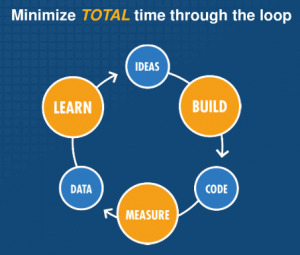
Ries hammered home the idea that a startup really is just an experiment, where you are testing a set of assumptions as cheap as possible.  If proven wrong, you “pivot” towards a new set of assumptions and continue down the path of establishing a scalable and repeatable business model.

“The goal is to Reduce the time between pivots, increase odds and runway so your company can survive until you find a repeatable and scalable model.”

He also noted the new approach to The startup Way, focusing on four areas of the company.

  • people
  • culture
  • process
  • accountability

Among a number of new terms, Validated Learning jumps out at me as something to internalize.  It is a process on determining value and waste… Then optimize accordingly.  Find the value (what is working) and do more of it.  Find the waste (what is not) and put it aside, leave it behind.  Sounds pretty simple, right?  Well yes.  Yet it is funny how so many startups fail because they did not get to the point of repeatable value creation.  What Reis is saying is “get to this point as fast as you can”.  So measure everything.  Study it and validate your learning.

To sum it up, here are 3 things to focus on if you are a founder:

  • Establish the baseline MVP
  • Tune the engine
  • Pivot or persevere

Other notable speakers include:

Brian Wong
Kiip – As a young founder, Wong laid out six thoughts to help first time entrepreneurs on their journey.

1. Set the direction
2. Law of serendipity
3. You = motivator
4. Won’t have a clue
5. No time to spend
6. Crazy things

Rand Fishkin

SEOmoz – Rand spoke on the challenging topic of Failure, noting that it happens to all of us and how we approach it will determine our success.

  • Fail early
  • Have metrics
  • Fail survivably

Ask yourself the hard questions

  • do we have wrong assumptions?
  • do we have the wrong people?
  • odds we screw up again?
Glenn Kelmann
Redfin -Glenn had some great advice on how best to approach the initial stages of your product, everything from focusing on “problems in your life” to “deadly sins”.
  • Build off of others ideas
  • Delight the first user
  • Focus on Seven deadly sins

3 Clear Signs Your Startup Is Heading In The Right Direction

Pinning down the main idea of a business and determining your startup’s core value proposition is a difficult task, especially for first time founders. It’s even harder when you are innovating in a uncharted waters, with lots of intangibles and no clear leader.   As entrepreneurs we tend to focus too inwardly and only see problems or possible solutions from our point of view.  Most of the time this does’t connect with others.

Yet taking the early steps to correctly position your company in the general public is one of the most important tasks on a founder’s to do list.  So how the hell do you know if you are even heading in the right direction?

Thankfully, there are some specific ways you can gauge your value proposition and see how it is fitting with your target market.  Listening to people when you pitch and observing how it’s coming across can lead to deeper understanding of your business.

Here are 3 clear signs you and your product are heading in the right direction.

Listen: People Are Demanding Your Solution

I recently attended StartupDay here in Seattle and had an experienced I will never forget.  A very well known CEO of a well-known company started his talk by noting great entrepreneurs first look for problems in their own lives, and then determine how best to solve them.  Next, he proceeded to list off some problems he sees in his life, and pretty much pitched our idea to the audience.  He quickly described the problem Order SM is attacking and demanded a solution. He said “interacting with local merchants and restaurants is such an inconvenience… will someone please give me a system where I can order food, like a burrito, without having to call the business. I just want to text the order to them, pay for it and just swing by to grab it. Someone please build it, cause I would use it!

BAM!  He just nailed one of the main value propositions of Order SM, and we are rolling out with our beta test customers this week!

When I heard this and about fell out of my chair, since this speaker is well respected and anything they would request falls into the “good idea” category.   Talk about validation.

Do you hear people causally talking about the problem you are trying to solve?  And are they vehemently asking for your solution?  Hmm, better listen up!

Lesson: You know you are heading in the right direction when well-respected people are publicly demanding your solution in their lives.

Watch: People Get Excited When You Pitch

Each day when I am asked “what I am working on” or when I talk about Order SM, I proceed through my basic pitch. Every time, without fail, people react the same way. “duuuuude, I need that! I would use that all the time! This is a great idea…. When can I start using it.”  

When you pitch your idea, do people respond with that much excitement and energy?  If not, I hate to tell you but your idea is not good enough.  It just isn’t.  If people are not moved by the value proposition your concept holds, the fact is not enough people will use your service or technology for it to gain any attention.

It’s a tough pill to swallow, I should know.  My first attempt at a startup, Loyaltize, did not have a strong enough value proposition for people to jump at it. They usually would respond with “so, let me get this straight…. you guys are like…. and you are doing X and Y, right? Hmm, that’s interesting?” I hated the fact that I had to describe what we were doing like 3 times before they really got anything from my pitch.

Lesson: If people don’t jump out of their skin when you pitch your startup, do yourself a favor and go back to the drawing board to either re-word around a different problem or find a completely different idea.

Embrace: More And More Competitors

Competition is a good thing.  I get the feeling most founders are deathly afraid of any company, large or small, entering into their market with a similar value proposition.  Unfortunately that is a sign of weakness and lack of confidence in your own business.  I say: Awesome!  This validates, measures as well as directs my overall strategic alignment.  Bring it.

It seems like every day we are discovering new attempts around mobile ordering/payments/messaging for local consumers. Some seem to be going in a similar direction as Order SM; many are not. This is fine in our opinion. The market is so young and fragmented; it still has a long way to go in terms of maturity before one platform emerges as the definite market leader.

But one thing is for sure – it’s validated as an incredibly big market, a trillion dollar market in fact.  Anytime a market see’s increased attention and activity, big things are about to happen.  Mobile payments, mobile communications, mobile ordering, social commerce, local CRM – all these markets are getting red hot and are experiencing abnormal attention lately.  It will now come down to who can execute with the optimal technology, team on an appropriate time line.

If you are not seeing more entrants into your territory you should probably do some evaluation. The market might not be very promising or it’s too mature for any new players.  Identify this early enough and you might be able to make adjustments before it’s too late.

Lesson: If you are seeing growing action and innovation within your specific market, you are indeed heading in the right direction.

@jnickhughes

Good Lord, All I Need Is Another Darn App In My Life…

I think I am like most other people.  I use a few apps daily… like Facebook, Twitter, LinkedIn, the weather app, email, maps, texting, and some various other ones I can’t remember their names but I do remember what they look like and where they sit on my phone.

I flip through 6 or so “screens” of apps each day just to find the one I need. This is too much in my opinion.  It feels as if we are drowning in a sea of apps.

So do we really need more apps in our life?  And should you rest your company’s future on thinking people will want to download another one to their device?

Here are some stats:

  • The most used Android apps in the US are Google Maps, Gmail and Facebook, according to research from Nielsen.
  • More than 500,000 apps have been approved in the Apple App store.
  • Total App Store revenue before the break-down is almost $3.6 billion in aggregate.

There’s half a billion apps are available for me to download… and how many will actually end up on my device?  Very little.  And once some have made it to  my iPhone, will I even use it after the first time?  I fear not…

The message here is :

1) if you are a mobile phone user, you have to dig through so much clutter to find useful apps today.  This is inconvenient and it sucks, so we will remain with our “tried and true” apps and not venture to download many more.

2) if you are a business, maybe the app store approach is not such a good idea.  Fighting for shelf space is getting more difficult as they days go by because I think most people think similar to me.  Why put such barriers to everyday usage for your web service?  My opinion is if you are  solely depending on a app store positioning, the odds are you will get lost in the clutter.

Does anyone else have this problem?

The Mechanics Of A Sustainable Business Model

I am just going to say it: I don’t buy it – Groupon’s decision to postpone their IPO has little to do with market conditions and more to do with recent missteps and investor doubts on the sustainability of their business.What do I mean?

Everyone has their own opinions, and here is mine – Groupon rushed an IPO as fast as they could knowing their current model was unsustainable, and is in need of an influx of cash before the bricks started falling off the building.  It seems the beginning of the end is already upon them.

We can speculate how the story will end but in reality I don’t know any more than you do.  This might be a good time to back up a bit and get a grasp of how an early stage company can sidestep this mess all together.

The Startup:

The purpose of a startup is to find a repeatable and sustainable business model.

Repeatable.  Sustainable.  Business.  Model.  Scalable.  Period.

It is easy to get jealous of stratospheric growth companies such as Groupon.  I mean who wouldn’t want to be a major shareholder of such a hot web startup.  Yet let’s get something straight: Groupon’s daily deals model is not sustainable.  It’s repeatable, yes.  But sustainable?  No.  When you are paying off past customer debt with today’s customer revenue and never seeing black ink, the model is broken.  When the majority of your “customers” (read businesses) aren’t coming back in troves to frequently repeat their experience, the model is broken.

I doubted the validity of the mass discount daily deals concept from the beginning.  Over the last few years I have kept a keen eye on the emergence of this entire “deals” market, and have been pleasantly proven correct.  Like a miser with my palms together and a snarky smile, I have watched as everyone jumped in the fray only to realize they are chasing after the pot of gold at the end of a seemingly never-ending rainbow.

Incidentally, I am not alone in thinking about daily deals un-sustainability.  Here’s one.  And another oneAnd here’s another one.  (search “daily deals not sustainable” and see what pops up.)

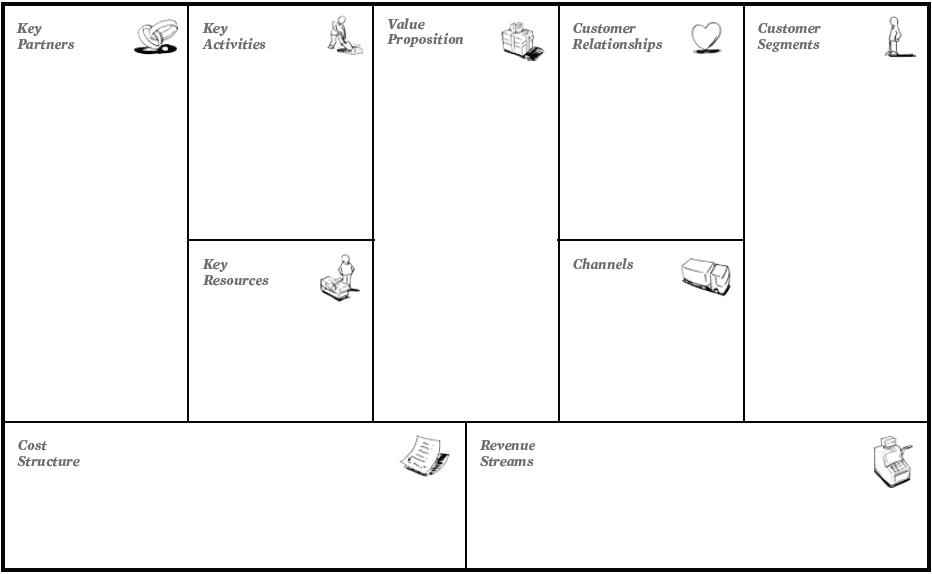
I wonder if any of these deal companies ever sat down to draw out their model, expand their business model canvas, if you will, and determine who is involved, where value is created and how it can be sustained?

My guess is no.

Groupon stumbled upon an anomaly when it was still called ThePoint.  All the other’s observed Groupon’s rapidly growth and rather than doing the hard work of critical thinking, they just determined it was a solid business.  They figured copying was they best idea.  Until it wasn’t…

The Business Model

A business model describes the rationale of how an organization creates, delivers and captures value.

So how do you figure out a sustainable model to orient your business around?

As the CEO of Order SM, it is my job to figure out how to strategically grow and sustain our business.  Here’s how we approaching it.

When building out a startup one of the most important pieces to the puzzle is revenue generation, or the business model.  Using the Business Model Canvas, Order SM has been able to lay out all the components of the business and visually illustrate where value is created.  We have adopted much from the book Business Model Generation: A Handbook For Visionaries, Game Changers and Challengers, including using the canvas to extrapolate various business models within Order SM.  (This book is a MUST for any early stage startup.  Don’t be so cocky as to think you know exactly what your business models are when you design and launch your product.  Do yourself a favor and use this book)

Below are the various sections of the canvas, with associated questions we are evaluating as we move forward developing our business model(s).  I have laid it out to help you get a better mental perspective as you start to approach your business model canvas.  Adapted from the book, I hope this is enough to nudge you in purchasing it – it’s awesome!

Customer Segments

The customer segments building block defines the different groups of people or organizations an enterprise aims to reach and serve.  Without paying (and profitable) customers, a business cannot survive for long.

For whom are we creating value?  What are our most important customers?

Value Propositions

The value propositions building block describes the bundle of products and services that create value for a specific customer segment.  The value proposition is the reason why customers will turn to one company over the other.  It solves a customer problem or satisfies a customer need.

What value do we deliver to the customer?  Which one of our customers problems are we helping to solve?  Which customer needs are we satisfying?

Channels

The channels building block describes how a company communicates with and reaches its customer segments to deliver a value proposition.  Communication, distribution and sales channels comprise a companies interface with customers.

Through which channels do our customer segments want to be reached?  How are we reaching them now?  How are our channels integrated?  Which ones work best?  Which ones are most cost efficient?

Customer Relationships

The customer relationships building block describes the types of relationships a company establishes with specific customer segments.  A company should clarify the type of relationship it wants to establish with each customer segment.

What type of relationships does each of our customer segments expect us to establish and maintain with them?  Which ones have we established?  How costly are they?  How are they integrated with the rest of our business model?

Revenue Streams

The revenue streams building block represents the cash a company generates from each customer segment.  If customers comprise the heart of the business, revenue streams are it’s arteries.

For what value are our customers really willing to pay?  For what do they currently pay?  How are they currently paying?  How would they prefer to pay?  How much does each revenue stream contribute to overall revenues?

Key Resources

The key resources building block describes the most important assets required to make a business model work.  These key resources allow an enterprise to create and offer a value proposition, reach markets, maintain relationships with customer segments and earn revenues.

What key resources do our value propositions require?  Our distribution channels?  Customer relationships?  Revenue streams?

Key Activities

The key activities building block describes the most important things a company must do to make its business model work.  These activities are the most important actions a company must take to operate successfully.

What key activities do our value propositions require?  Our distribution channels?  Customer relationships?  Revenue streams? 

Key Partnerships

The key partnerships building block describes the network of suppliers and partners that make the business model work.  Companies forge partnerships for many reasons, and partnerships are becoming the cornerstone of many business models.

Who are our key partners?  Who are our key suppliers?  Which key resources are we acquiring from partners?  Which key activities do partners perform?

Cost Structure

The cost structure describes all the costs incurred to operate a business model.  These are the most important costs incurred while operating under a particular business model.

What are the most important costs inherent in our business model?  Which key resources are most expensive?  Which key activities are most expensive?

The building blocks above are essential to mapping out your areas of value creation and value extraction.  Paramount to any startup is the ability to identify the main components of their business.  Once visualized, it becomes much easier to identify where value is created, whom is involved, what direction the equation is flowing, which parties are involved, what partners your business depends on, which partners your business must depend on, etc…  You get the point.

I am not sure Groupon actually took these critical steps from the onset to determine proper business model generation, and now they are feeling the affects.  Here’s to you not making the same mistake.

@jnickhughes


Employees Want More Recognition Over More Money. Here’s How With Facebook

I think we we can all admit: corporate life can be at times, just plain boring.  That might be the main reason a large number of employees tend to meander over to social sites such as Facebook or Twitter to see what is going on outside the firewall.

But are social technologies really a distraction?  Or can they be used to actually enhance the morale and engagement of the workforce?

The Taraci Social MediaMgr™, from Taraci Motivation, is an incentive marketing application that allows organizations to host and run employee incentive marketing programs entirely through Facebook.  It allows an organization to integrate the social and communications tools of Facebook into traditional incentive marketing programs.  Their vision is to transform how organizations run incentive programs by helping them fully integrate the power of social media.

“According to Gallop , about 10% of employees are highly engaged and since profitability is tied to employee attitude and moral, it’s more important than ever to motivate employees,” says Tom Taraci.

Basically, they help corporations leverage Facebook to offer employee incentives to keep them happy.

Well, if you can’t beat em, join em!

It’s an intelligent move, leveraging Facebook to get more from your work force rather than just firewall it.  The underlying message sent to employees when blocking a site like Facebook is one of distrust.  Using Taraci Social MediaMgr let’s your employees know “you get it” and “you understand.”

For example, the ‘like’ feature can be used to show friends and family a product users like within the catalog. Opinions can be posted to the wall. Participants can also ‘send’ messages to friends, family and co-workers to get feedback on their product selection or to let them know about their achievements in the workplace.

Current Incentives can include:

  • Length of service — Rewards employees on their employment anniversary date
  • Sale incentives — Rewards salespeople for reaching their goals
  • Wellness programs — Rewards employees for achieving health & fitness goals
  • Safety programs — Rewards workers for reducing workplace accidents, reducing absenteeism
  • Recognition programs — Rewards employees for accomplishing a specific task, or tasks, over a period of time
  • Referral programs — Rewards employees or customers for recommending a new client
  • Loyalty Programs – Rewards employees for length of service to an organization
  • Casino Players Clubs – Rewards casino players with points for dollars wagered which can be redeemed for merchandise.

Incentive 2.o?

In the past, incentive programs were hosted on a standalone web site or simply through a printed catalog.  For corporations, it’s now possible to communicate real-time incentive marketing program updates, from adding rewards to celebrating winners.  Program administrators can also engage in a daily two-way dialogue with participants, not feasible with traditional online or print incentive programs.

It’s not a secret employees are spending more and more time on Facebook throughout the work day.   Corporations are realizing they need to join them in their environment, not just block the site.  The application is designed to improve corporations’ presence in social media by building their corporate communities and increasing the number of their followers on Facebook. By hosting the incentive program on corporate Facebook pages, there’s finally a way for corporations to connect with employees in an effective way through Facebook.

How it works

1 – A branded incentive marketing catalog is created for the corporation’s Facebook page by Taraci Motivation

2 – Once the program is officially launched, participants are directed to the corporation’s official Facebook Page

3 – By entering their username and password, employees can see their point totals and redeem rewards.

Recognition Over Money?

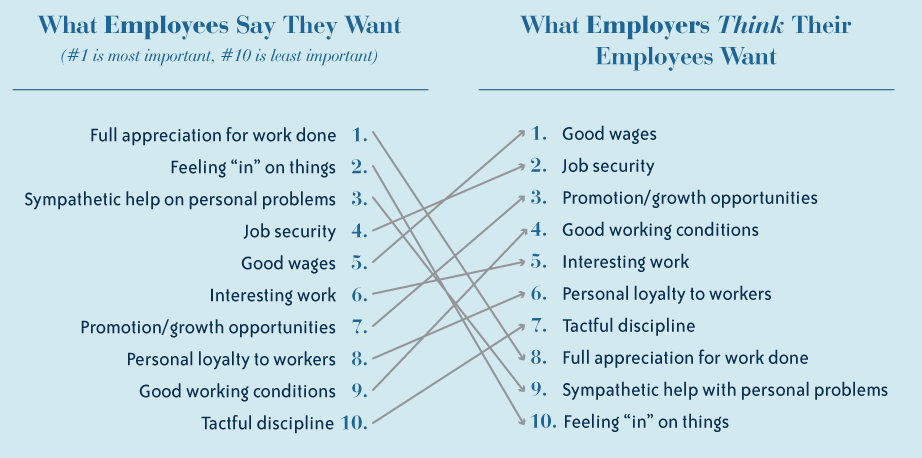
During this tough economic climate it’s more important than ever to motivate employees who are frustrated due to many factors, including constant downsizing, lack of promotions and salaries being frozen.   A simple  “Good Job” or public employee appreciation in front of other employees on a social application will go a long way to keep employees happy.    Looks like Taraci Motivation understands how employees actually feel, here is an interesting list of what employees say they want compared to what employers think employees want.  Quite the disconnect if you ask me.

Employees just want to be recognized.  They want it over more money, more interesting work, job security, or good working conditions.

Seriously, just telling your employees they are doing a good job, more publicly and more often will greatly increase your company morale.  I wish my last employer knew that.  Oh well…

According to Taraci, the response to the Taraci Social Media Mgr has been tremendous.  The Taraci Motivation Mgr was first released in May 2011 and enhancements are continually being added to the application. “We’re  set to launch a number of new programs on Facebook in Q4 and continue to be in active discussions with a variety of category leaders in travel, shipping, entertainment, finance, marketing, consumer products and services, and more.”

From the looks of it, maybe more corporations should look into Taraci Motivation.  I hope so… with 10% of the workforce highly engaged, companies need to do whatever it takes to keep their best employees happy.  I know I am.

@jnickhughes

NYC, Seattle or Silicon Valley? If You’re A Flounder It Don’t Matter

Every so often a proverbial argument reverberates around the tech world.

It will sound something like “How can we be more like Silicon Valley?”  or, “New York is now a more hip Silicon Valley”

We here in Seattle have even gotten some flack lately from predominant VC’s trying their best to state their respect for the city at the same time point out it’s obvious flaws.  That is a difficult position to hold for sure.

Then this was written last weekend on GeekWire.  Choice quote: What we do need is to go and build some fucking companies.

I must say I was a bit taken back with Kirill’s approach.  It just felt like someone blowing his hardest in an effort to make a forest fire burn stronger.

But ya know, I do agree with Kirill  in principal.  Yes, we all need shut up and go build some companies.  And let me also agree with others who are stating “there is just something unique about the valley… and as a founder you should start your company here.”  It does not take a genius to realize there are certain subtle aspects about Silicon Valley which can help founders build great companies.

But let me frame this argument slightly differently: If a founder builds the next billion dollar company outside the valley, is he in fact a better entrepreneur since he did it without the resources and luxury of Silicon Valley?  What if he did it without going to Stanford?  How about without being part of the latest YC batch?

I say Yes.

Or read differently: are we just mind-sweeping ourselves into thinking since we aren’t in Silicon Valley we cannot build great technology companies.  Although not the entire reason, I believe this is playing a somewhat significant role in the perception of the “Silicon Valley Only Success.”

Let me go on record as saying there is more than one city in the country.  There are also millions of people who (currently employer or unemployed) are not in the valley and would almost die for a great opportunity.  There is also something called the web, something that has connected humans and money like nothing ever before in history.  My point: proximity is getting less and less important is time goes on.

But Nick, why the typo in the title?

Being a Founder is one thing.  I think that describes the ones who start companies and instantly compare themselves to Silicon Valley . They use the word Founder like it’s a surname.  They are worried about “who funds them, who’s party they are going to, who will be their next prominent acquisition, who is writing about them, etc.. ”  Founders get sucked into tunnel vision, influenced by group think and worried what the Jones’s are doing.   They have two eyes looking straight ahead and focused on the ground.

Don’t get me wrong, these things are important to the success of a company.  But they are not the only thing  just as makeup, dresses and friends don’t really make the ultimate girl.

Being a Flounder is a whole other level of entrepreneur.  They have one eye on the ground and one on the horizon.  Ever notice flounders (the fish) seem to be looking in two directions at once?  That’s called vision.  And I believe the best entrepreneurs always have one eye on the ground (present) and one eye on the horizon (future).  They are Flounders.

A Flounder isn’t bothered by where he builds his empire.  He just builds it.  He doesn’t care if his company isn’t written about as the next hottest thing.  He builds it large enough and becomes the largest thing.  Flounders have such a strong sense of purpose they attract others to join the mission and turn any naysayer on their head with amazing and consistent results.  Flounders have an eerie way of being calm in the storm, so much so they freak you out.  Why?  Flounders can see what you can’t.

So next time you start to fall into the Founder hole, think Flounder.  Think Vision.  Think about seeing with one eye here and one eye over there on the horizon.  You will start to realize most of the B.S. all other founders are talking/bitching/complaining about really, in the end, doesn’t add up to much.  With better perspective Flounders see the big picture and stay the course.

@jnickhughes

How To Stop The Insanity, CEO Style

Being a first time CEO can be confusing, intimidating and downright scary.

You have a hundred things to do and no idea which way to look.  Email this person…. talk to that person.  Introduce yourself to another potential investor or partner.    There are so many different people to connect with but it’s difficult to determine the ones you really should to spend your precious and limited time with.

You also need to deal with legal, financial, organizational, strategic and other parts of the company on a daily basis yet might not be fully comfortable with each area of the business.

You look in the mirror , shake your head and whisper “ha, I’m the CEO?”  Yes, you are and everything now rides on your shoulders.

The crazy thing with being a first time CEO is you really don’t know what you don’t know.  This is a blessing and a curse.  Blessing because if you were able to get a glimpse all the things you don’t understand you would probably turn and run for the door.  It’s a curse since there are quite a few important aspects of building a business which require keen awareness and solid judgment, which by definition rookies just don’t have.   It is at this stage where we lean on others who have gone before us to help give perspective and a nudge in the right direction.   I don’t pretend to know these things since I too am “technically” a first time CEO and on the constant lookout for helpful mentors.  [I say technically because my first startup was a failed attempted at a bootstrapped startup.  We didn’t even get to seed stage so although I grew through it, it really wasn’t much more than a warm-up.  It’s safe to say I am now entering the open seas with only my compass in my hand.]

So how do you keep your sanity amongst all this madness?  I reached out polled a few fellow young founders and asked them to give some thoughts on the matter.

Phillip Estrada Reichen, CEO of LocalUncle.

Maintaining focus is all about saying “NO”. Sounds easy in theory, but in practice it’s harder than most people think. Saying NO means leaving out product features that you’ve been dreaming about because you have to hit a certain deadline. It means saying NO to reading everything that is being written/said about your industry and accepting the fact that you’ll have to maneuver the best you can with the limited information that you have. Saying NO also means not working on your other five great ideas and keep executing just this one thing that you chose to do at this point in time. Even when you hit your lowest lows (oh, and you will hit them) and you’ll want to throw everything away, saying NO means not giving up and stick to your initial idea.

In order to stay sane and not be overwhelmed and burn out you need to get off the grid regularly. Exit the Matrix. Don’t do anything work related. This is especially hard if you work in mobile/web because you can work from anywhere at anytime. Go running in the park without iPod or iPhone (no music allowed! just listen to the “real”, offline world for a couple of minutes). Get home after work and do not go online till the next day. Read a book, cook a meal or draw a painting. No matter how much work there needs to be done, you have to have non-electronic, non-work related hobbies or activities like that to stay healthy and balanced. 

Chris Lynch, CEO of Thoughtful.co

A friend of mine said it best: a startup is a marathon, not a sprint. Know where you’re going, and then tell yourself it’s going to be hard. But even then, know it will be more difficult than you imagined. That being said, I’ve noticed that people deal with stress in a number of ways, but there is a common trait among CEOs in startups that always is true: they can take a lot of stress and keep pushing forward. In some ways it doesn’t surprise me, because a startup is a Herculean task.

Great advice from emerging leaders in their respective industries.  I will provide four strong points to consider and add my perspective for trying to stop the insanity.

Movement

Philip alluded to this one and I strongly concur – getting off the grid and back into the physical world is probably the best way to stay sane.  Get outside [or on the treadmill] and get some movement.  Expending energy is the best way to decompress and release all the pent up tightness within your body.  Basically, when we sit at a desk in front of our screens all day long our bodies are placed under continual stress.  This stress, if not released in a healthy manner, constantly builds up and will cause us to crack under pressure.

If you are feel like you have “had it up to here” and just need a break, you are burned out and need to start moving more often.  I mean every day.  Go on walks, hikes, run, play a recreation sport, unplug… whatever you do, get away from the office and just do it.  Your body and mind will be so much clearer when you return.

Prioritize

As I stated before, most CEO’s just feel overwhelmed.  It helps if you can list out the top 3 things you need to get done each day, and only focus on those things.  I mean don’t think about any other task.  Only when you accomplish those top 3 things should you move on to doing anything else.  How do you determine the top 3?  Look at the overall direction of your company, determine what is mission critical and what YOU, THE LEADER, can only do and go do it.  Then delegate the rest.  Try this for a week and see what happens.  I guarantee you will feel like you are doing less yet more seems to be getting done.  Amazing.

Socialize

Getting out and connecting with people [should be] a CEO’s main objective.  Why?  Since they generally are the face of the company and it is up to the leader to fill out the team, socializing connect you with more people quite frankly, it just comes with the CEO territory.  The side effect of socializing is you will start to learn more about how people work, how they think, and whom you would like to eventually join your team.

Being social also releases chemicals called endorphins, which are required to carry out natural processes within your metabolic system.  Interestingly, if you lack adequate amount of social interaction your body will start shutting down.  That might sound a bit drastic, but the premise is still true – we all need social interactions to maintain our sanity.  Get out and have some fun every once in a while.

Mentorship

First time CEO’s have it tough: we lack the foresight to understand what is in front of us at the same time lacking the hindsight of lessons learned from a previous experience to help us make better decisions.  Amazingly, there are individuals who have gone and done it before and look to pay it forward by mentoring young leaders in their field.  If you are a first time CEO and serious about moving forward in your life, you must go find someone willing to give you some of their time.  Ask them questions, detailed and specific questions related to your unique situation and then shut up.  Just sit and listen.  Record the conversation if possible.  Then check in with them every few weeks or month and provide them some context of how you are using their lessons to positively influence your life.

Oh, and one last thing: if you respect someone’s time, they will give you more… if you disrespect their time, they will never give you another minute.

Now, stop the insanity.

@jnickhughes

Image courtesy of Flickr user My Melting Bryan.